 Add to Chrome
 Add to Firefox
 Add to Edge
Are LLMs Ready for TOON? Benchmarking Structural Correctness-Sustainability Trade-offs in Novel Structured Output Formats
Jan 17, 2026
Large Language Models (LLMs) are increasingly required to generate structured, machine-readable outputs for downstream systems. While recent benchmarks have focused on evaluating the structural correctness of such outputs, the environmental impact of inference for different output formats has largely been overlooked. In this paper, we argue that structured output formats should be assessed not only in terms of correctness, but also with respect to their environmental efficiency. To this end, we introduce a sustainability-aware evaluation framework for structured generation that measures token usage, generation time, and estimated carbon emissions. Within this framework, we propose the Environment-Aware Generation Correctness Score (GCS_env), a unified metric that integrates structural correctness with carbon-aware efficiency. Using this framework, we systematically benchmark the novel TOON format against established representations (JSON, XML, YAML) across multiple LLMs spanning different architectures and parameter scales. Our results reveal a consistent trade-off: TOON yields markedly more compact outputs and lower emissions, but lower structural correctness when models lack native support. We show that increased model capacity reduces this gap and that environment-aware scoring can shift format rankings depending on deployment priorities. highlighting the need for sustainability-inclusive benchmarking and provides empirical evidence that compact representations such as TOON can offer practical advantages in large-scale, carbon-conscious LLM deployments.

Automating AI Failure Tracking: Semantic Association of Reports in AI Incident Database
Jul 31, 2025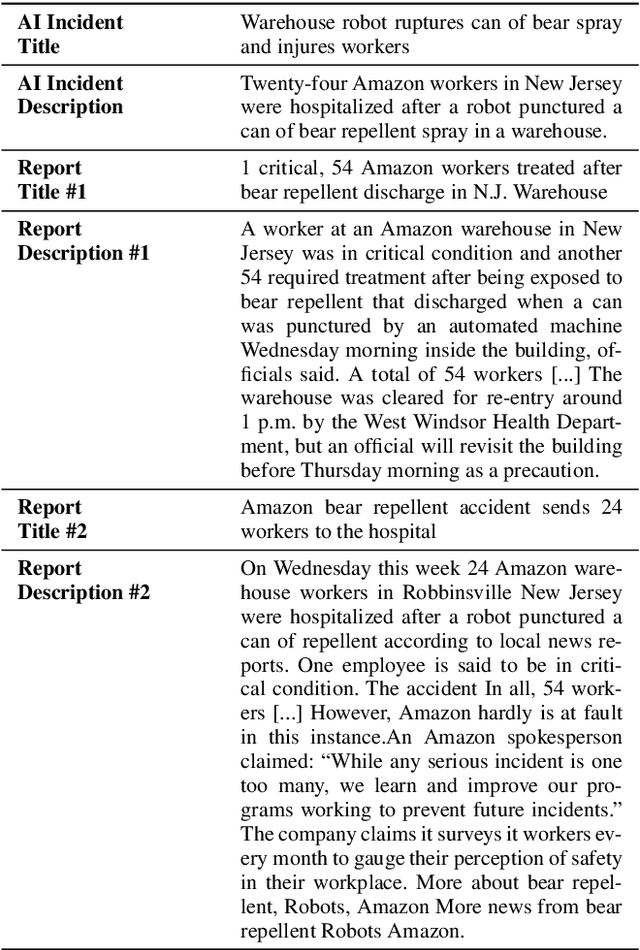
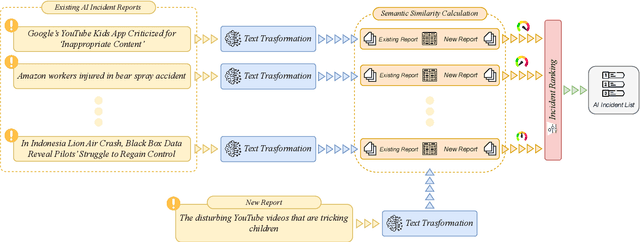
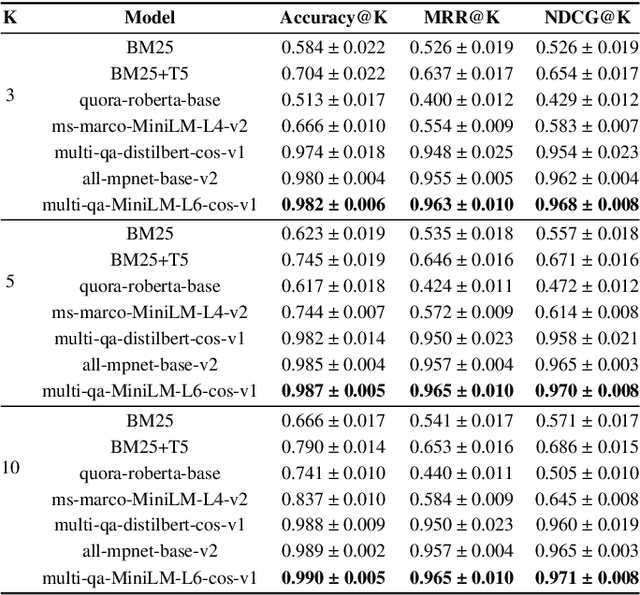

Artificial Intelligence (AI) systems are transforming critical sectors such as healthcare, finance, and transportation, enhancing operational efficiency and decision-making processes. However, their deployment in high-stakes domains has exposed vulnerabilities that can result in significant societal harm. To systematically study and mitigate these risk, initiatives like the AI Incident Database (AIID) have emerged, cataloging over 3,000 real-world AI failure reports. Currently, associating a new report with the appropriate AI Incident relies on manual expert intervention, limiting scalability and delaying the identification of emerging failure patterns. To address this limitation, we propose a retrieval-based framework that automates the association of new reports with existing AI Incidents through semantic similarity modeling. We formalize the task as a ranking problem, where each report-comprising a title and a full textual description-is compared to previously documented AI Incidents based on embedding cosine similarity. Benchmarking traditional lexical methods, cross-encoder architectures, and transformer-based sentence embedding models, we find that the latter consistently achieve superior performance. Our analysis further shows that combining titles and descriptions yields substantial improvements in ranking accuracy compared to using titles alone. Moreover, retrieval performance remains stable across variations in description length, highlighting the robustness of the framework. Finally, we find that retrieval performance consistently improves as the training set expands. Our approach provides a scalable and efficient solution for supporting the maintenance of the AIID.
Assessing the Potential of Generative Agents in Crowdsourced Fact-Checking
Apr 24, 2025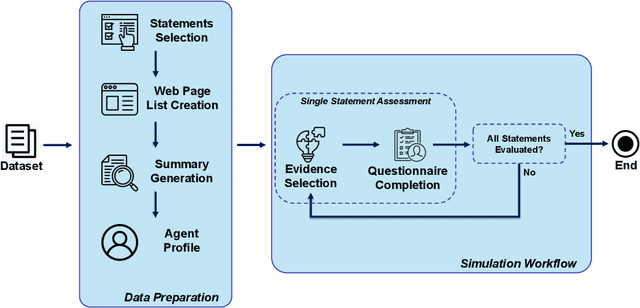
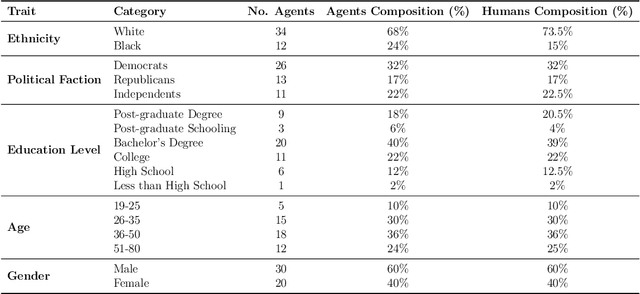
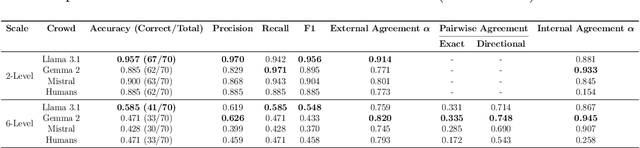
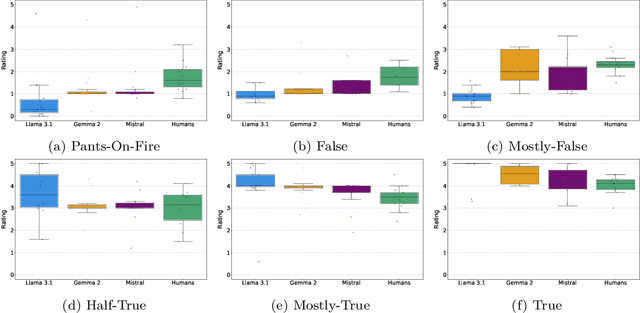
The growing spread of online misinformation has created an urgent need for scalable, reliable fact-checking solutions. Crowdsourced fact-checking - where non-experts evaluate claim veracity - offers a cost-effective alternative to expert verification, despite concerns about variability in quality and bias. Encouraged by promising results in certain contexts, major platforms such as X (formerly Twitter), Facebook, and Instagram have begun shifting from centralized moderation to decentralized, crowd-based approaches. In parallel, advances in Large Language Models (LLMs) have shown strong performance across core fact-checking tasks, including claim detection and evidence evaluation. However, their potential role in crowdsourced workflows remains unexplored. This paper investigates whether LLM-powered generative agents - autonomous entities that emulate human behavior and decision-making - can meaningfully contribute to fact-checking tasks traditionally reserved for human crowds. Using the protocol of La Barbera et al. (2024), we simulate crowds of generative agents with diverse demographic and ideological profiles. Agents retrieve evidence, assess claims along multiple quality dimensions, and issue final veracity judgments. Our results show that agent crowds outperform human crowds in truthfulness classification, exhibit higher internal consistency, and show reduced susceptibility to social and cognitive biases. Compared to humans, agents rely more systematically on informative criteria such as Accuracy, Precision, and Informativeness, suggesting a more structured decision-making process. Overall, our findings highlight the potential of generative agents as scalable, consistent, and less biased contributors to crowd-based fact-checking systems.