 Add to Chrome
 Add to Firefox
 Add to Edge
Lambdas at the Far Edge: a Tale of Flying Lambdas and Lambdas on Wheels
Mar 04, 2026
Aggregate Programming (AP) is a paradigm for programming the collective behaviour of sets of distributed devices, possibly situated at the network far edge, by relying on asynchronous proximity-based interactions. The eXchange Calculus (XC), a recently proposed foundational model for AP, is essentially a typed lambda calculus extended with an operator (the exchange operator) providing an implicit communication mechanism between neighbour devices. This paper provides a gentle introduction to XC and to its implementation as a C++ library, called FCPP. The FCPP library and toolchain has been mainly developed at the Department of Computer Science of the University of Turin, where Stefano Berardi spent most of his academic career conducting outstanding research about logical foundation of computer science and transmitting his passion for research to students and young researchers, often exploiting typed lambda calculi. An FCCP program is essentially a typed lambda term, and FCPP has been used to write code that has been deployed on devices at the far edge of the network, including rovers and (soon) Uncrewed Aerial Vehicles (UAVs); hence the title of the paper.
* In Proceedings LTT 2026, arXiv:2603.02912

Game-theoretical trajectory planning enhances social acceptability for humans
Mar 29, 2022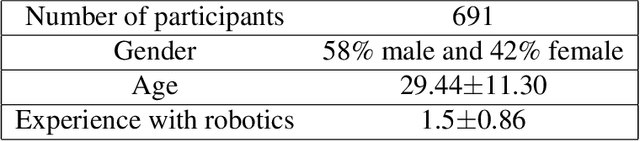
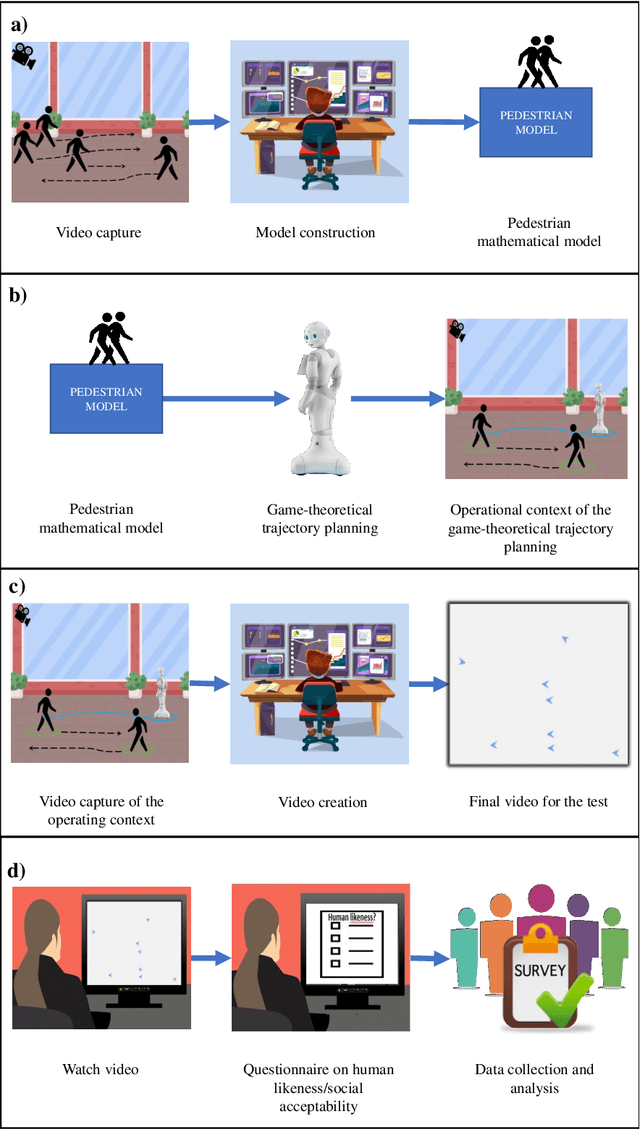
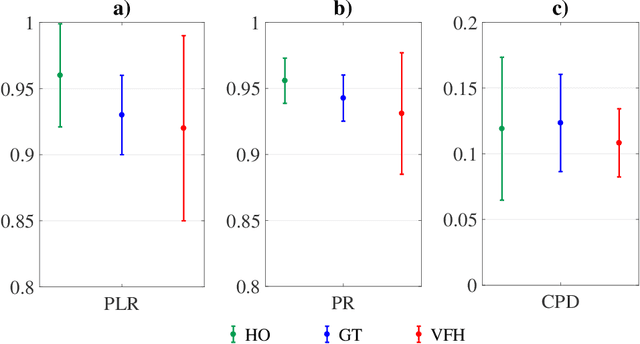
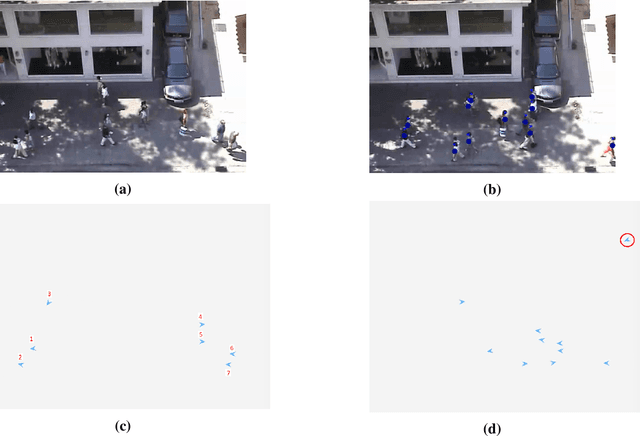
Since humans and robots are increasingly sharing portions of their operational spaces, experimental evidence is needed to ascertain the safety and social acceptability of robots in human-populated environments. Although several studies have aimed at devising strategies for robot trajectory planning to perform \emph{safe} motion in populated environments, a few efforts have \emph{measured} to what extent a robot trajectory is \emph{accepted} by humans. Here, we present a navigation system for autonomous robotics that ensures safety and social acceptability of robotic trajectories. We overcome the typical reactive nature of state-of-the-art trajectory planners by leveraging non-cooperative game theory to design a planner that encapsulates human-like features of preservation of a vital space, recognition of groups, sequential and strategized decision making, and smooth obstacle avoidance. Social acceptability is measured through a variation of the Turing test administered in the form of a survey questionnaire to a pool of 691 participants. Comparison terms for our tests are a state-of-the-art navigation algorithm (Enhanced Vector Field Histogram, VFH) and purely human trajectories. While all participants easily recognized the non-human nature of VFH-generated trajectories, the distinction between game-theoretical trajectories and human ones were hardly revealed. These results mark a strong milestone toward the full integration of robots in social environments.