 Add to Chrome
 Add to Firefox
 Add to Edge
Distributed Quantum Gaussian Processes for Multi-Agent Systems
Feb 16, 2026
Gaussian Processes (GPs) are a powerful tool for probabilistic modeling, but their performance is often constrained in complex, largescale real-world domains due to the limited expressivity of classical kernels. Quantum computing offers the potential to overcome this limitation by embedding data into exponentially large Hilbert spaces, capturing complex correlations that remain inaccessible to classical computing approaches. In this paper, we propose a Distributed Quantum Gaussian Process (DQGP) method in a multiagent setting to enhance modeling capabilities and scalability. To address the challenging non-Euclidean optimization problem, we develop a Distributed consensus Riemannian Alternating Direction Method of Multipliers (DR-ADMM) algorithm that aggregates local agent models into a global model. We evaluate the efficacy of our method through numerical experiments conducted on a quantum simulator in classical hardware. We use real-world, non-stationary elevation datasets of NASA's Shuttle Radar Topography Mission and synthetic datasets generated by Quantum Gaussian Processes. Beyond modeling advantages, our framework highlights potential computational speedups that quantum hardware may provide, particularly in Gaussian processes and distributed optimization.
* 9 pages, 4 figures, accepted at AAMAS 2026 (International Conference on Autonomous Agents and Multiagent Systems)

Path-Based Sensors: Will the Knowledge of Correlation in Random Variables Accelerate Information Gathering?
May 11, 2023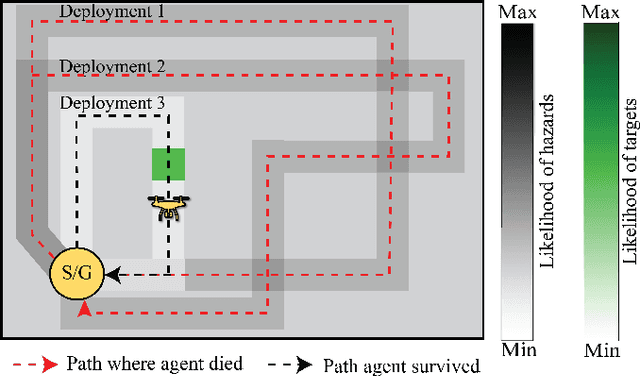
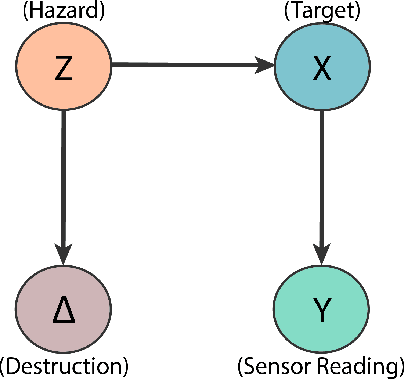
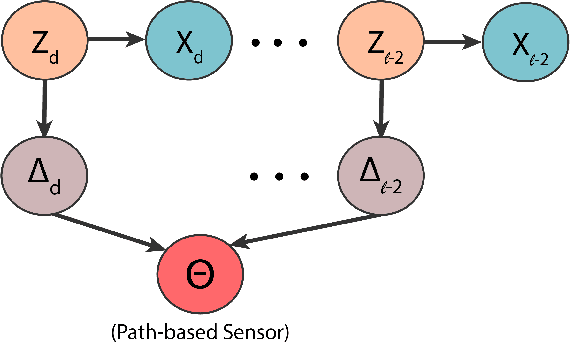
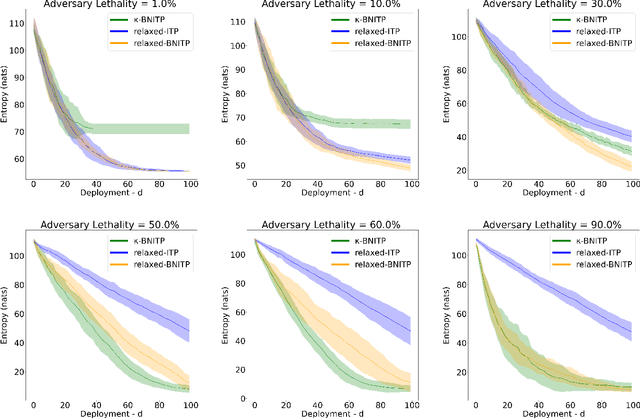
Effective communication is crucial for deploying robots in mission-specific tasks, but inadequate or unreliable communication can greatly reduce mission efficacy, for example in search and rescue missions where communication-denied conditions may occur. In such missions, robots are deployed to locate targets, such as human survivors, but they might get trapped at hazardous locations, such as in a trapping pit or by debris. Thus, the information the robot collected is lost owing to the lack of communication. In our prior work, we developed the notion of a path-based sensor. A path-based sensor detects whether or not an event has occurred along a particular path, but it does not provide the exact location of the event. Such path-based sensor observations are well-suited to communication-denied environments, and various studies have explored methods to improve information gathering in such settings. In some missions it is typical for target elements to be in close proximity to hazardous factors that hinder the information-gathering process. In this study, we examine a similar scenario and conduct experiments to determine if additional knowledge about the correlation between hazards and targets improves the efficiency of information gathering. To incorporate this knowledge, we utilize a Bayesian network representation of domain knowledge and develop an algorithm based on this representation. Our empirical investigation reveals that such additional information on correlation is beneficial only in environments with moderate hazard lethality, suggesting that while knowledge of correlation helps, further research and development is necessary for optimal outcomes.
Fully Decentralized, Scalable Gaussian Processes for Multi-Agent Federated Learning
Mar 06, 2022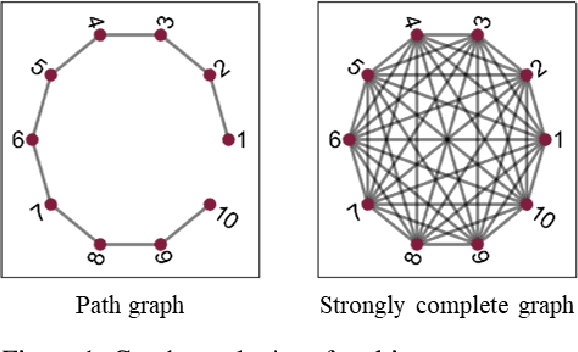
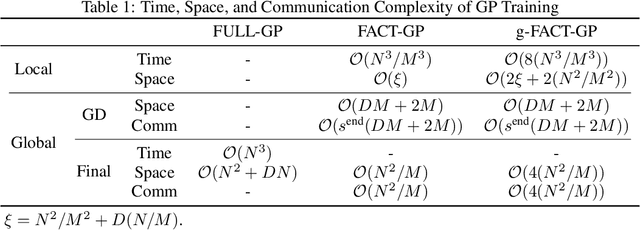
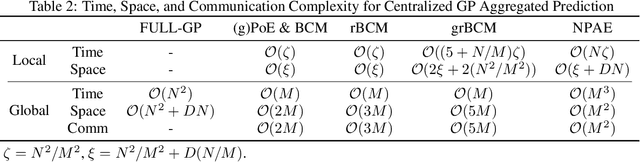
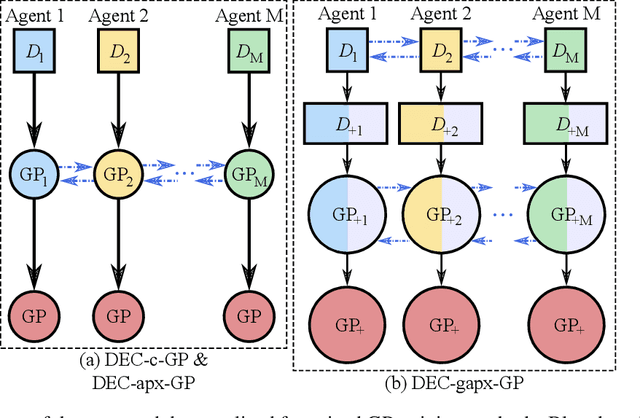
In this paper, we propose decentralized and scalable algorithms for Gaussian process (GP) training and prediction in multi-agent systems. To decentralize the implementation of GP training optimization algorithms, we employ the alternating direction method of multipliers (ADMM). A closed-form solution of the decentralized proximal ADMM is provided for the case of GP hyper-parameter training with maximum likelihood estimation. Multiple aggregation techniques for GP prediction are decentralized with the use of iterative and consensus methods. In addition, we propose a covariance-based nearest neighbor selection strategy that enables a subset of agents to perform predictions. The efficacy of the proposed methods is illustrated with numerical experiments on synthetic and real data.