 Add to Chrome
 Add to Firefox
 Add to Edge
How English Print Media Frames Human-Elephant Conflicts in India
Apr 23, 2026
Human-elephant conflict (HEC) is rising across India as habitat loss and expanding human settlements force elephants into closer contact with people. While the ecological drivers of conflict are well-studied, how the news media portrays them remains largely unexplored. This work presents the first large-scale computational analysis of media framing of HEC in India, examining 1,968 full-length news articles consisting of 28,986 sentences, from a major English-language outlet published between January 2022 and September 2025. Using a multi-model sentiment framework that combines long-context transformers, large language models, and a domain-specific Negative Elephant Portrayal Lexicon, we quantify sentiment, extract rationale sentences, and identify linguistic patterns that contribute to negative portrayals of elephants. Our findings reveal a dominance of fear-inducing and aggression-related language. Since the media framing can shape public attitudes toward wildlife and conservation policy, such narratives risk reinforcing public hostility and undermining coexistence efforts. By providing a transparent, scalable methodology and releasing all resources through an anonymized repository, this study highlights how Web-scale text analysis can support responsible wildlife reporting and promote socially beneficial media practices.

A Parameterized Perspective on Protecting Elections
May 28, 2019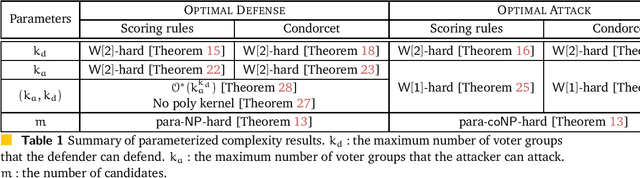
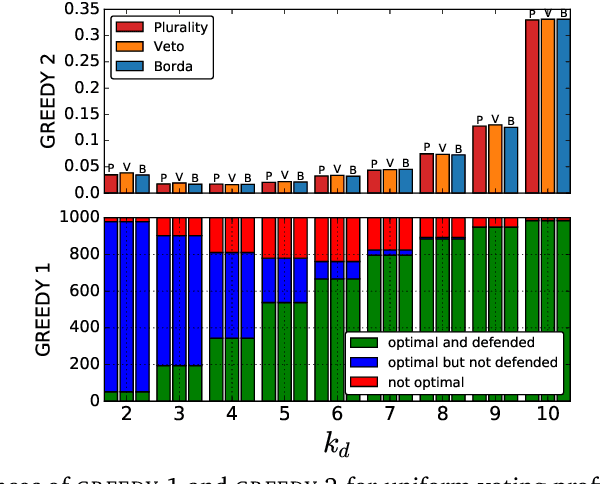
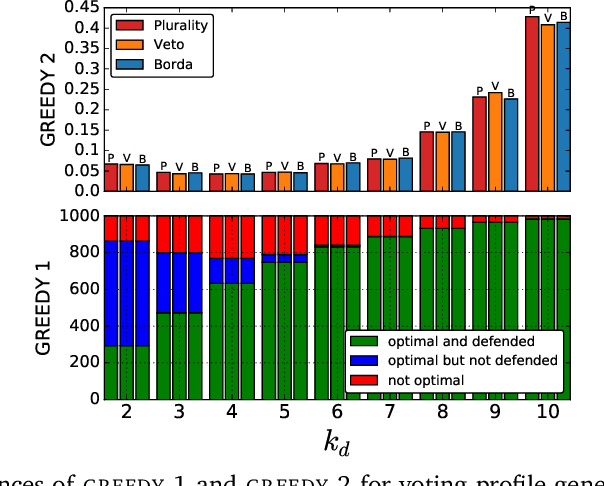
We study the parameterized complexity of the optimal defense and optimal attack problems in voting. In both the problems, the input is a set of voter groups (every voter group is a set of votes) and two integers $k_a$ and $k_d$ corresponding to respectively the number of voter groups the attacker can attack and the number of voter groups the defender can defend. A voter group gets removed from the election if it is attacked but not defended. In the optimal defense problem, we want to know if it is possible for the defender to commit to a strategy of defending at most $k_d$ voter groups such that, no matter which $k_a$ voter groups the attacker attacks, the outcome of the election does not change. In the optimal attack problem, we want to know if it is possible for the attacker to commit to a strategy of attacking $k_a$ voter groups such that, no matter which $k_d$ voter groups the defender defends, the outcome of the election is always different from the original (without any attack) one.
Testing Preferential Domains Using Sampling
Feb 24, 2019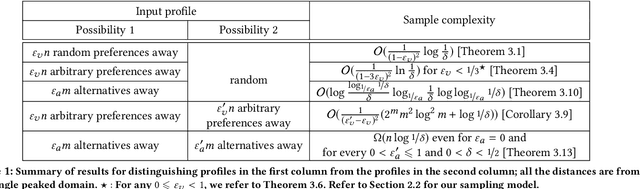
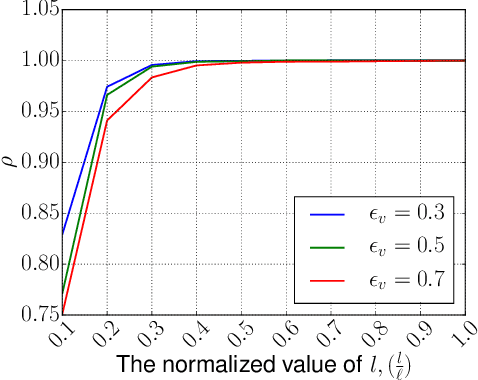
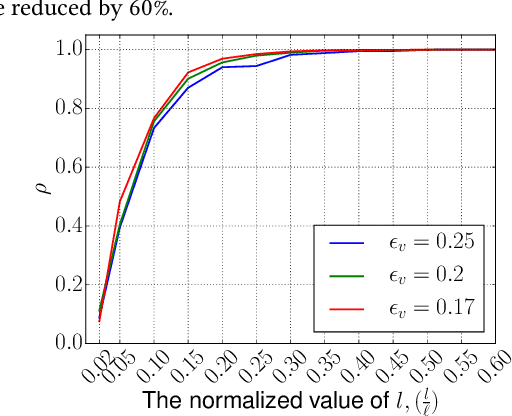
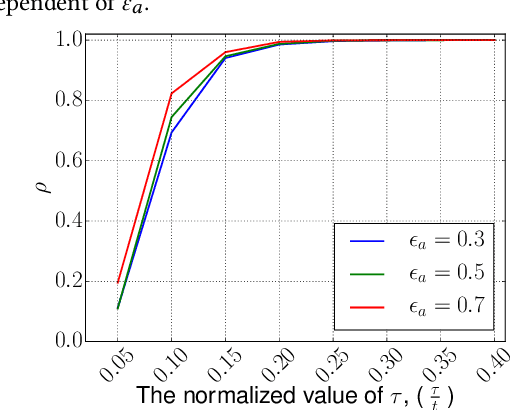
A preferential domain is a collection of sets of preferences which are linear orders over a set of alternatives. These domains have been studied extensively in social choice theory due to both its practical importance and theoretical elegance. Examples of some extensively studied preferential domains include single peaked, single crossing, Euclidean, etc. In this paper, we study the sample complexity of testing whether a given preference profile is close to some specific domain. We consider two notions of closeness: (a) closeness via preferences, and (b) closeness via alternatives. We further explore the effect of assuming that the {\em outlier} preferences/alternatives to be random (instead of arbitrary) on the sample complexity of the testing problem. In most cases, we show that the above testing problem can be solved with high probability for all commonly used domains by observing only a small number of samples (independent of the number of preferences, $n$, and often the number of alternatives, $m$). In the remaining few cases, we prove either impossibility results or $\Omega(n)$ lower bound on the sample complexity. We complement our theoretical findings with extensive simulations to figure out the actual constant factors of our asymptotic sample complexity bounds.