 Add to Chrome
 Add to Firefox
 Add to Edge
Multi-Agent Coordinated Rename Refactoring
Jan 01, 2026
The primary value of AI agents in software development lies in their ability to extend the developer's capacity for reasoning and action, not to supplant human involvement. To showcase how to use agents working in tandem with developers, we designed a novel approach for carrying out coordinated renaming. Coordinated renaming, where a single rename refactoring triggers refactorings in multiple, related identifiers, is a frequent yet challenging task. Developers must manually propagate these rename refactorings across numerous files and contexts, a process that is both tedious and highly error-prone. State-of-the-art heuristic-based approaches produce an overwhelming number of false positives, while vanilla Large Language Models (LLMs) provide incomplete suggestions due to their limited context and inability to interact with refactoring tools. This leaves developers with incomplete refactorings or burdens them with filtering too many false positives. Coordinated renaming is exactly the kind of repetitive task that agents can significantly reduce the developers' burden while keeping them in the driver's seat. We designed, implemented, and evaluated the first multi-agent framework that automates coordinated renaming. It operates on a key insight: a developer's initial refactoring is a clue to infer the scope of related refactorings. Our Scope Inference Agent first transforms this clue into an explicit, natural-language Declared Scope. The Planned Execution Agent then uses this as a strict plan to identify program elements that should undergo refactoring and safely executes the changes by invoking the IDE's own trusted refactoring APIs. Finally, the Replication Agent uses it to guide the project-wide search. We first conducted a formative study on the practice of coordinated renaming in 609K commits in 100 open-source projects and surveyed 205 developers ...

IRepair: An Intent-Aware Approach to Repair Data-Driven Errors in Large Language Models
Feb 12, 2025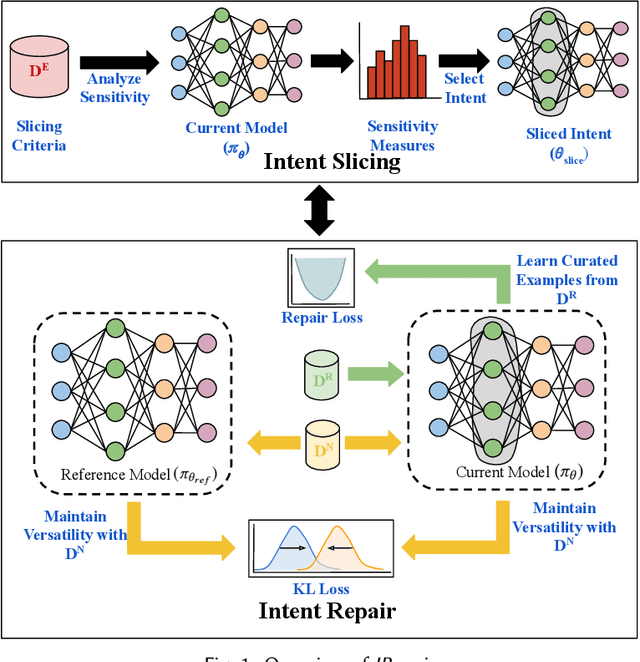
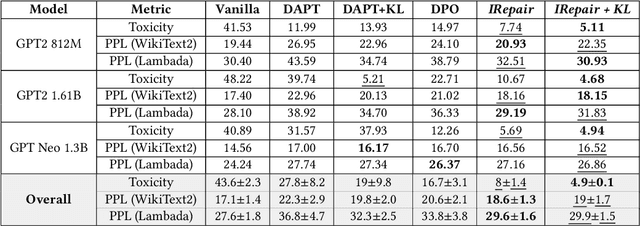
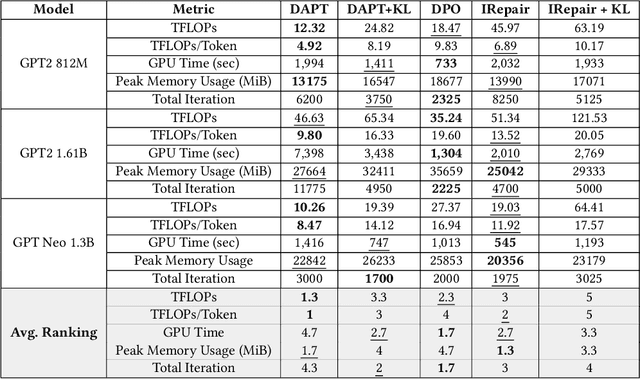
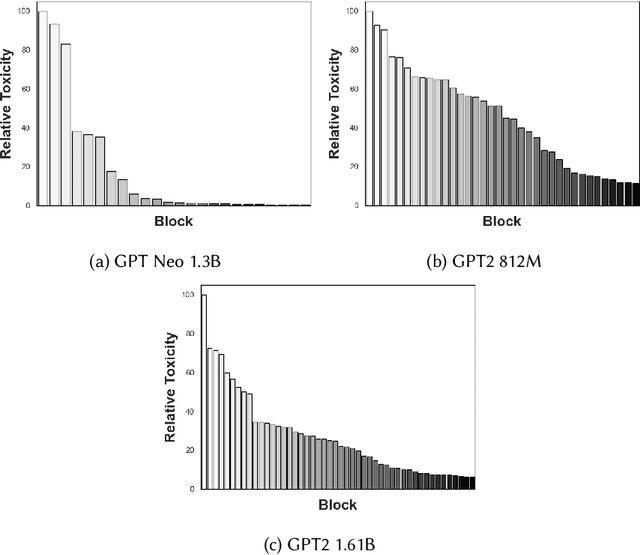
Not a day goes by without hearing about the impressive feats of large language models (LLMs), and equally, not a day passes without hearing about their challenges. LLMs are notoriously vulnerable to biases in their dataset, leading to issues such as toxicity. While domain-adaptive training has been employed to mitigate these issues, these techniques often address all model parameters indiscriminately during the repair process, resulting in poor repair quality and reduced model versatility. In this paper, we introduce a novel dynamic slicing-based intent-aware LLM repair strategy, IRepair. This approach selectively targets the most error-prone sections of the model for repair. Specifically, we propose dynamically slicing the model's most sensitive layers that require immediate attention, concentrating repair efforts on those areas. This method enables more effective repairs with potentially less impact on the model's overall performance by altering a smaller portion of the model. We evaluated our technique on three models from the GPT2 and GPT-Neo families, with parameters ranging from 800M to 1.6B, in a toxicity mitigation setup. Our results show that IRepair repairs errors 43.6% more effectively while causing 46% less disruption to general performance compared to the closest baseline, direct preference optimization. Our empirical analysis also reveals that errors are more concentrated in a smaller section of the model, with the top 20% of layers exhibiting 773% more error density than the remaining 80\%. This highlights the need for selective repair. Additionally, we demonstrate that a dynamic selection approach is essential for addressing errors dispersed throughout the model, ensuring a robust and efficient repair.
Decomposing a Recurrent Neural Network into Modules for Enabling Reusability and Replacement
Dec 15, 2022


Can we take a recurrent neural network (RNN) trained to translate between languages and augment it to support a new natural language without retraining the model from scratch? Can we fix the faulty behavior of the RNN by replacing portions associated with the faulty behavior? Recent works on decomposing a fully connected neural network (FCNN) and convolutional neural network (CNN) into modules have shown the value of engineering deep models in this manner, which is standard in traditional SE but foreign for deep learning models. However, prior works focus on the image-based multiclass classification problems and cannot be applied to RNN due to (a) different layer structures, (b) loop structures, (c) different types of input-output architectures, and (d) usage of both nonlinear and logistic activation functions. In this work, we propose the first approach to decompose an RNN into modules. We study different types of RNNs, i.e., Vanilla, LSTM, and GRU. Further, we show how such RNN modules can be reused and replaced in various scenarios. We evaluate our approach against 5 canonical datasets (i.e., Math QA, Brown Corpus, Wiki-toxicity, Clinc OOS, and Tatoeba) and 4 model variants for each dataset. We found that decomposing a trained model has a small cost (Accuracy: -0.6%, BLEU score: +0.10%). Also, the decomposed modules can be reused and replaced without needing to retrain.