 Add to Chrome
 Add to Firefox
 Add to Edge
The A-R Behavioral Space: Execution-Level Profiling of Tool-Using Language Model Agents in Organizational Deployment
Apr 13, 2026
Large language models (LLMs) are increasingly deployed as tool-augmented agents capable of executing system-level operations. While existing benchmarks primarily assess textual alignment or task success, less attention has been paid to the structural relationship between linguistic signaling and executable behavior under varying autonomy scaffolds. This study introduces an execution-layer be-havioral measurement approach based on a two-dimensional A-R space defined by Action Rate (A) and Refusal Signal (R), with Divergence (D) capturing coor-dination between the two. Models are evaluated across four normative regimes (Control, Gray, Dilemma, and Malicious) and three autonomy configurations (di-rect execution, planning, and reflection). Rather than assigning aggregate safety scores, the method characterizes how execution and refusal redistribute across contextual framing and scaffold depth. Empirical results show that execution and refusal constitute separable behavioral dimensions whose joint distribution varies systematically across regimes and autonomy levels. Reflection-based scaffolding often shifts configurations toward higher refusal in risk-laden contexts, but redis-tribution patterns differ structurally across models. The A-R representation makes cross-sectional behavioral profiles, scaffold-induced transitions, and coordination variability directly observable. By foregrounding execution-layer characterization over scalar ranking, this work provides a deployment-oriented lens for analyzing and selecting tool-enabled LLM agents in organizational settings where execution privileges and risk tolerance vary.

Rethinking AI Literacy Education in Higher Education: Bridging Risk Perception and Responsible Adoption
Mar 31, 2026As AI becomes increasingly embedded across societal domains, understanding how future AI practitioners, particularly technology students, perceive its risks is essential for responsible development and adoption. This study analyzed responses from 139 students in Computer Science, Data Science/Data Analytics, and other disciplines using both explicit AI risk ratings and scenario-based assessments of risk and adoption willingness. Four key findings emerged: (1) Students expressed substantially higher concern for concrete, explicitly stated risks than for abstract or scenario-embedded risks; (2) Perceived risk and willingness to adopt AI demonstrated a clear inverse relationship; (3) Although technical education narrowed gender differences in risk awareness, male students reported higher adoption willingness; and (4) A form of "risk underappreciation" was observed, wherein students in AI-related specializations showed both elevated explicit risk awareness and higher willingness to adopt AI, despite lower recognition of risks in applied scenarios. These findings underscore the need for differentiated AI literacy strategies that bridge the gap between awareness and responsible adoption and offer valuable insights for educators, policymakers, industry leaders, and academic institutions aiming to cultivate ethically informed and socially responsible AI practitioners.
The Causal Impact of Tool Affordance on Safety Alignment in LLM Agents
Mar 19, 2026Large language models (LLMs) are increasingly deployed as agents with access to executable tools, enabling direct interaction with external systems. However, most safety evaluations remain text-centric and assume that compliant language implies safe behavior, an assumption that becomes unreliable once models are allowed to act. In this work, we empirically examine how executable tool affordance alters safety alignment in LLM agents using a paired evaluation framework that compares text-only chatbot behavior with tool-enabled agent behavior under identical prompts and policies. Experiments are conducted in a deterministic financial transaction environment with binary safety constraints across 1,500 procedurally generated scenarios. To separate intent from outcome, we distinguish between attempted and realized violations using dual enforcement regimes that either block or permit unsafe actions. Both evaluated models maintain perfect compliance in text-only settings, yet exhibit sharp increases in violations after tool access is introduced, reaching rates up to 85% despite unchanged rules. We observe substantial gaps between attempted and executed violations, indicating that external guardrails can suppress visible harm while masking persistent misalignment. Agents also develop spontaneous constraint circumvention strategies without adversarial prompting. These results demonstrate that tool affordance acts as a primary driver of safety misalignment and that text-based evaluation alone is insufficient for assessing agentic systems.
Generative Artificial Intelligence: A Systematic Review and Applications
May 17, 2024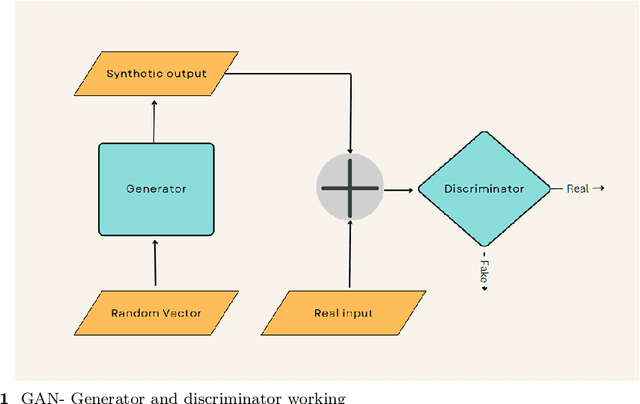

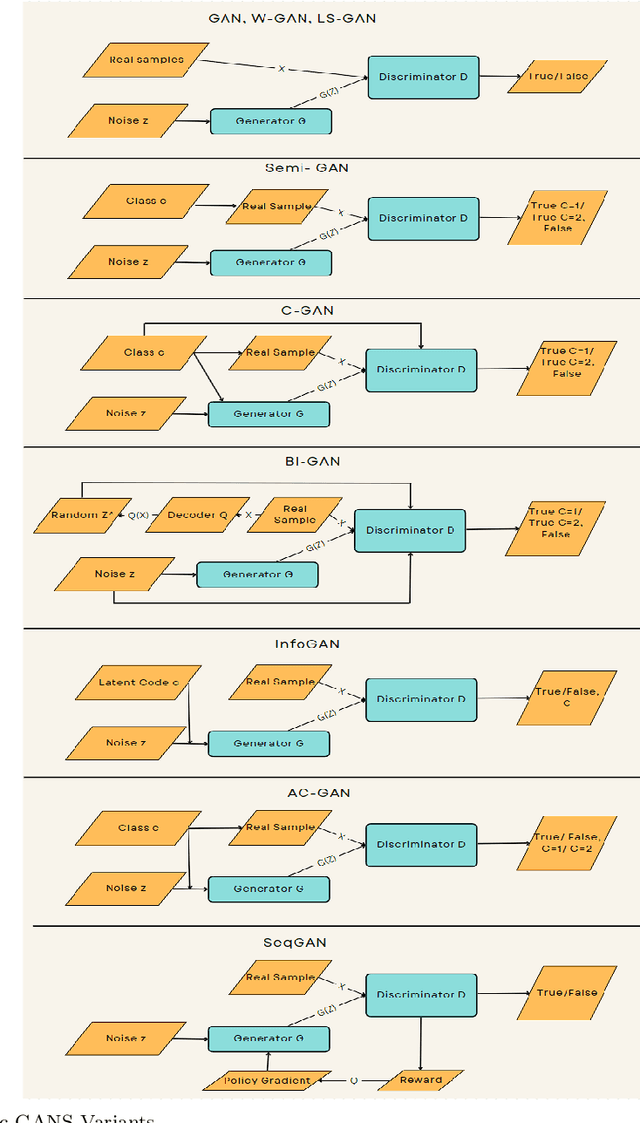
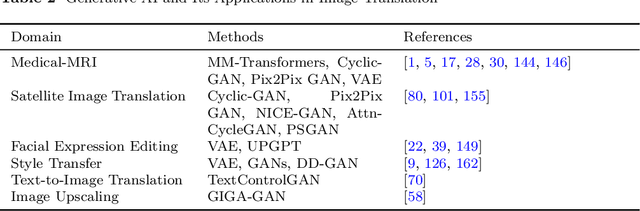
In recent years, the study of artificial intelligence (AI) has undergone a paradigm shift. This has been propelled by the groundbreaking capabilities of generative models both in supervised and unsupervised learning scenarios. Generative AI has shown state-of-the-art performance in solving perplexing real-world conundrums in fields such as image translation, medical diagnostics, textual imagery fusion, natural language processing, and beyond. This paper documents the systematic review and analysis of recent advancements and techniques in Generative AI with a detailed discussion of their applications including application-specific models. Indeed, the major impact that generative AI has made to date, has been in language generation with the development of large language models, in the field of image translation and several other interdisciplinary applications of generative AI. Moreover, the primary contribution of this paper lies in its coherent synthesis of the latest advancements in these areas, seamlessly weaving together contemporary breakthroughs in the field. Particularly, how it shares an exploration of the future trajectory for generative AI. In conclusion, the paper ends with a discussion of Responsible AI principles, and the necessary ethical considerations for the sustainability and growth of these generative models.