 Add to Chrome
 Add to Firefox
 Add to Edge
Towards Realistic 3D Sonar Simulation
Jun 04, 2026
As underwater robotics research increasingly addresses complex 3D perception and autonomous navigation, the fidelity of sonar simulation has become a key factor in algorithm development. Current simulation frameworks typically rely on geometry-driven rendering, approximating 3D sonar as an underwater equivalent to LiDAR, which fails to account for fundamental acoustic phenomena such as refraction, multi-path interference, and phase-dependent signal formation. This paper proposes a modular architecture for realistic 3D sonar simulation that integrates GPU-accelerated graphics engines with physically grounded acoustic propagation principles. We implement a volumetric 3D sonar model within the NVIDIA Isaac Sim environment, modeled after the Water Linked 3D-15 sensor, and integrate it into a comprehensive underwater simulation framework. The system is validated through a hardware-in-the-loop configuration, where a modified FastLIO2 SLAM pipeline, executed on an NVIDIA Jetson Orin Nano, performs sensor fusion using synthetic 3D sonar, DVL, IMU, and pressure data. Finally, a qualitative comparison between simulated outputs and real-world data from harbor sheet-pile inspections is provided, characterizing the remaining sim-to-real gap and establishing a roadmap toward fully acoustics-driven volumetric sensing.

System Architecture and Communication Infrastructure for the RoboVaaS project
Jun 10, 2022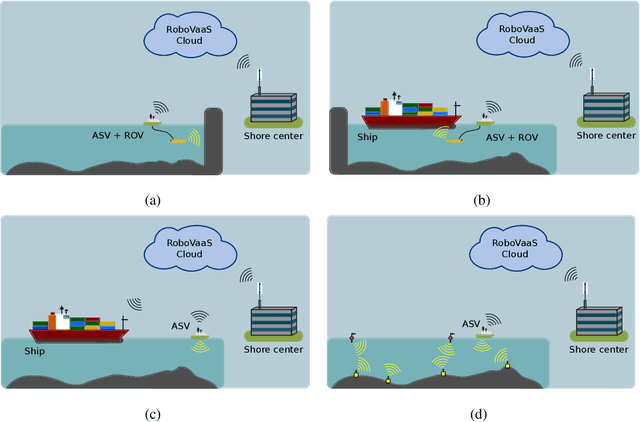
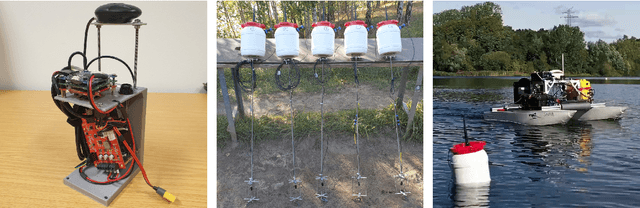
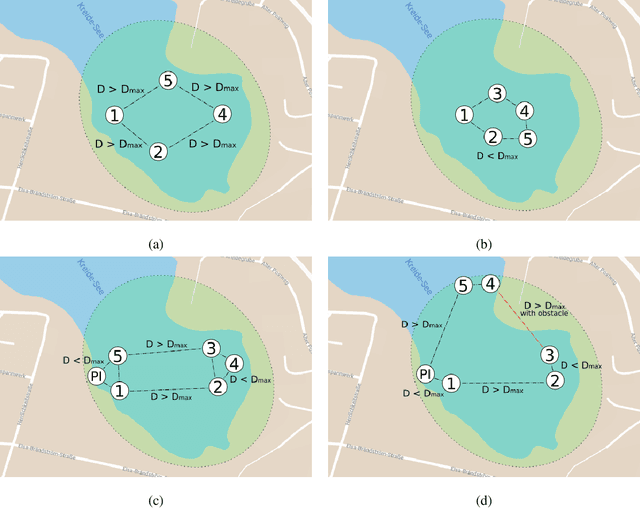
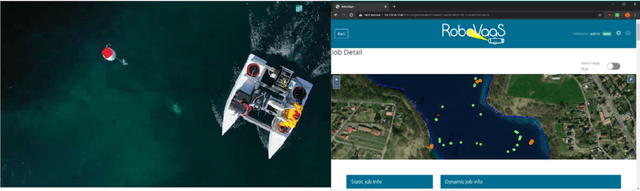
Current advancements in waterborne autonomous systems, together with the development of cloud-based service-oriented architectures and the recent availability of low-cost underwater acoustic modems and long-range above water wireless devices, enabled the development of new applications to support ships and port activities. Unmanned Surface Vehicle (USV) can, for instance, be used to perform bathymetry and environmental data collection tasks to ensure under-keel clearance and to monitor the quality of the water. Similarly, Remotely Operated Vehicles (ROVs) can be deployed to inspect ship hulls and typical port infrastructure elements, such as quay and sheet pilling walls. In this paper we present the complete system deployed for the small-scale demonstrations of the Robotic Vessels as-a-Service (RoboVaaS) project, which introduces an on-demand service-based cloud system that dispatches Unmanned Vehicles (UVs) capable of performing the required service either autonomously or piloted. These vessels are able to interact with sensors deployed in the port and with the shore station through an integrated underwater and above water network. The developed system has been validated through sea trials and showcased through an underwater sensor data collection service. The results of the test presented in this paper provide a proof-of-concept of the system design and indicate its technical feasibility. It also shows the need for further developments for a mature technology allowing on-demand robotic maritime assistance services in real operational scenarios.