 Add to Chrome
 Add to Firefox
 Add to Edge
Generative Thermal Design Through Boundary Representation and Multi-Agent Cooperative Environment
Aug 16, 2022
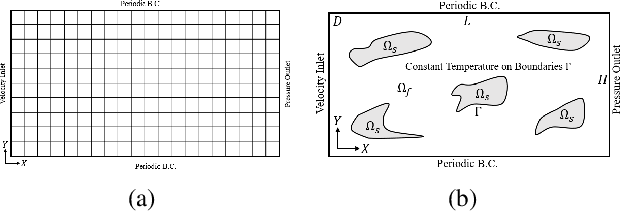
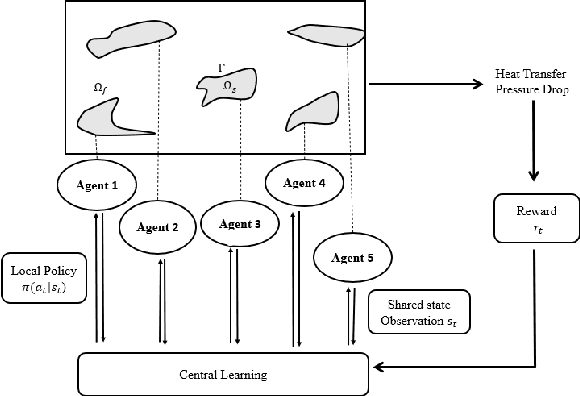
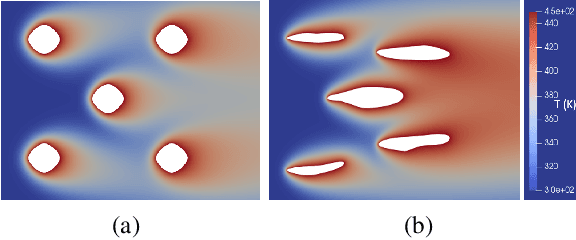
Generative design has been growing across the design community as a viable method for design space exploration. Thermal design is more complex than mechanical or aerodynamic design because of the additional convection-diffusion equation and its pertinent boundary interaction. We present a generative thermal design using cooperative multi-agent deep reinforcement learning and continuous geometric representation of the fluid and solid domain. The proposed framework consists of a pre-trained neural network surrogate model as an environment to predict heat transfer and pressure drop of the generated geometries. The design space is parameterized by composite Bezier curve to solve multiple fin shape optimization. We show that our multi-agent framework can learn the policy for design strategy using multi-objective reward without the need for shape derivation or differentiable objective function.

Deep convolutional surrogates and degrees of freedom in thermal design
Aug 16, 2022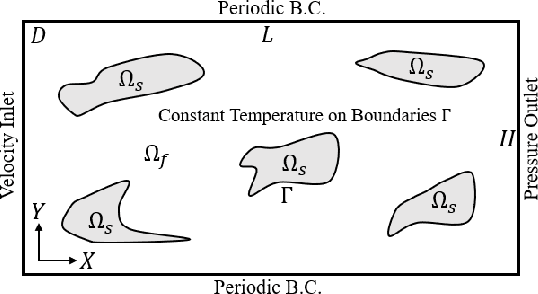
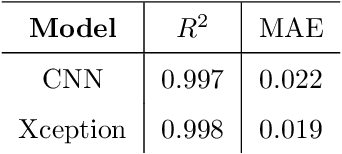
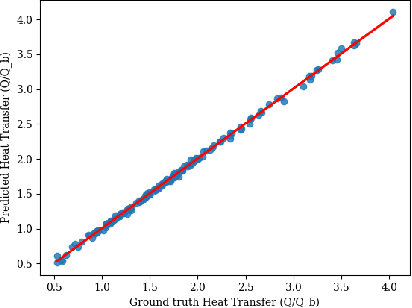
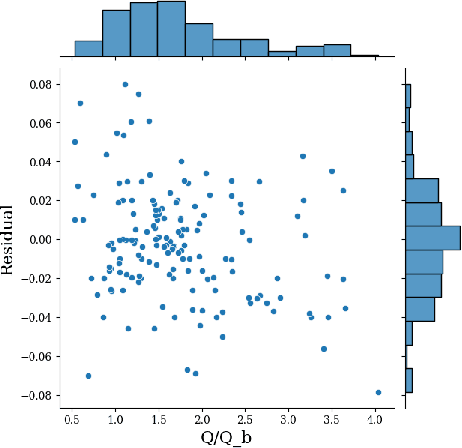
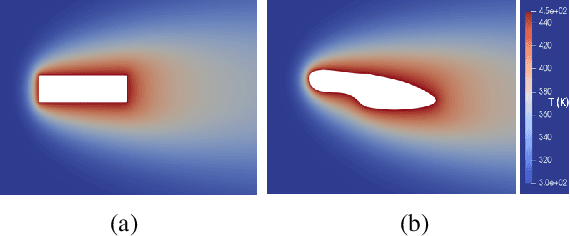
We present surrogate models for heat transfer and pressure drop prediction of complex fin geometries generated using composite Bezier curves. Thermal design process includes iterative high fidelity simulation which is complex, computationally expensive, and time-consuming. With the advancement in machine learning algorithms as well as Graphics Processing Units (GPUs), we can utilize the parallel processing architecture of GPUs rather than solely relying on CPUs to accelerate the thermo-fluid simulation. In this study, Convolutional Neural Networks (CNNs) are used to predict results of Computational Fluid Dynamics (CFD) directly from topologies saved as images. The case with a single fin as well as multiple morphable fins are studied. A comparison of Xception network and regular CNN is presented for the case with a single fin design. Results show that high accuracy in prediction is observed for single fin design particularly using Xception network. Increasing design freedom to multiple fins increases the error in prediction. This error, however, remains within three percent for pressure drop and heat transfer estimation which is valuable for design purpose.