 Add to Chrome
 Add to Firefox
 Add to Edge
Flow Matching on Symmetric Spaces
May 05, 2026
We introduce a general framework for training flow matching models on Riemannian symmetric spaces, a large class of manifolds that includes the sphere, hyperbolic space and Grassmannians. We exploit their algebraic structure to reformulate flow matching on symmetric spaces as flow matching on a subspace of the Lie algebra of their isometry group, thus linearizing the problem and greatly simplifying the handling of geodesics. As an application, we showcase our framework on the real Grassmannians $\operatorname{SO}(n) / \operatorname{SO}(k) \times \operatorname{SO}(n-k)$.

A Multi-Label Temporal Convolutional Framework for Transcription Factor Binding Characterization
Mar 12, 2026Transcription factors (TFs) regulate gene expression through complex and co-operative mechanisms. While many TFs act together, the logic underlying TFs binding and their interactions is not fully understood yet. Most current approaches for TF binding site prediction focus on individual TFs and binary classification tasks, without a full analysis of the possible interactions among various TFs. In this paper we investigate DNA TF binding site recognition as a multi-label classification problem, achieving reliable predictions for multiple TFs on DNA sequences retrieved in public repositories. Our deep learning models are based on Temporal Convolutional Networks (TCNs), which are able to predict multiple TF binding profiles, capturing correlations among TFs andtheir cooperative regulatory mechanisms. Our results suggest that multi-label learning leading to reliable predictive performances can reveal biologically meaningful motifs and co-binding patterns consistent with known TF interactions, while also suggesting novel relationships and cooperation among TFs.
Bioinspired CNNs for border completion in occluded images
Mar 11, 2026We exploit the mathematical modeling of the border completion problem in the visual cortex to design convolutional neural network (CNN) filters that enhance robustness to image occlusions. We evaluate our CNN architecture, BorderNet, on three occluded datasets (MNIST, Fashion-MNIST, and EMNIST) under two types of occlusions: stripes and grids. In all cases, BorderNet demonstrates improved performance, with gains varying depending on the severity of the occlusions and the dataset.
Sheaf Neural Networks and biomedical applications
Jan 29, 2026The purpose of this paper is to elucidate the theory and mathematical modelling behind the sheaf neural network (SNN) algorithm and then show how SNN can effectively answer to biomedical questions in a concrete case study and outperform the most popular graph neural networks (GNNs) as graph convolutional networks (GCNs), graph attention networks (GAT) and GraphSage.
Enhancing CNNs robustness to occlusions with bioinspired filters for border completion
Apr 24, 2025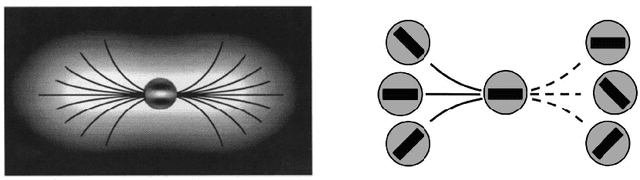

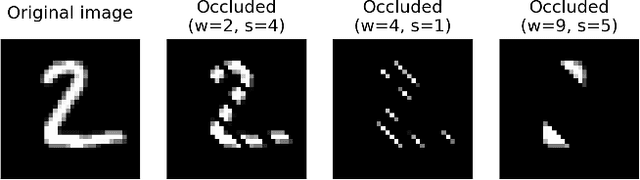
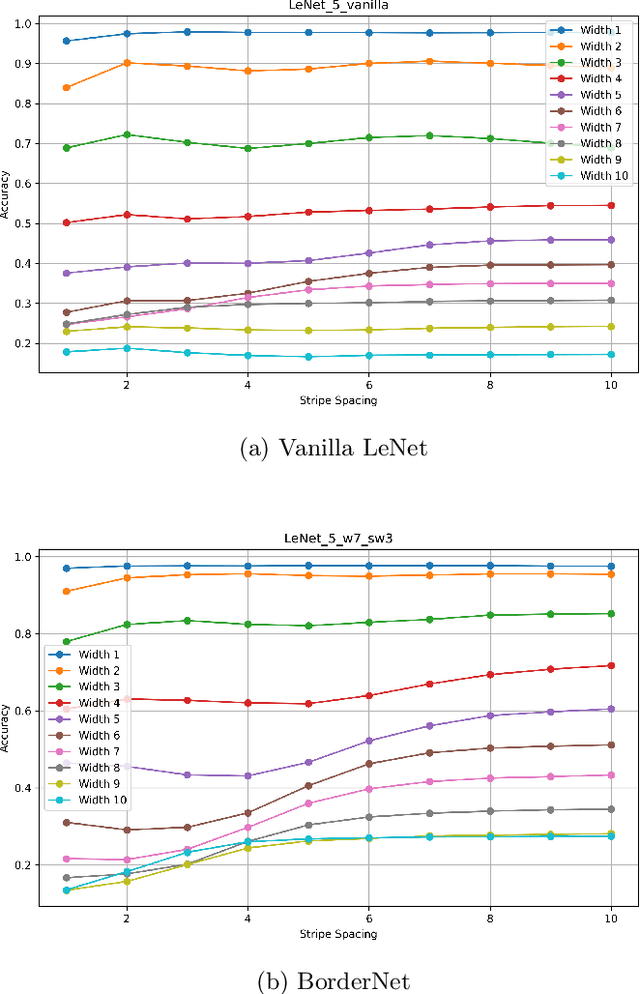
We exploit the mathematical modeling of the visual cortex mechanism for border completion to define custom filters for CNNs. We see a consistent improvement in performance, particularly in accuracy, when our modified LeNet 5 is tested with occluded MNIST images.
Graph Neural Networks and Time Series as Directed Graphs for Quality Recognition
Oct 04, 2023

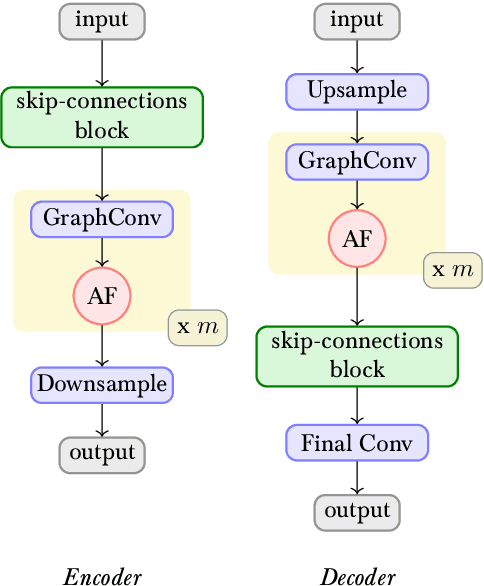
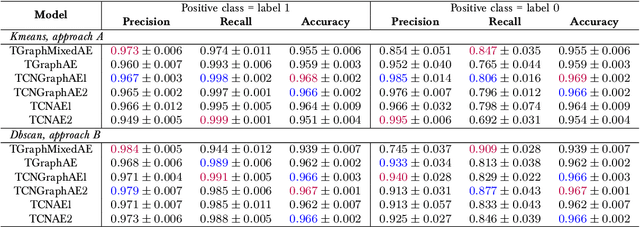
Graph Neural Networks (GNNs) are becoming central in the study of time series, coupled with existing algorithms as Temporal Convolutional Networks and Recurrent Neural Networks. In this paper, we see time series themselves as directed graphs, so that their topology encodes time dependencies and we start to explore the effectiveness of GNNs architectures on them. We develop two distinct Geometric Deep Learning models, a supervised classifier and an autoencoder-like model for signal reconstruction. We apply these models on a quality recognition problem.