 Add to Chrome
 Add to Firefox
 Add to Edge
Optimized Federated Knowledge Distillation with Distributed Neural Architecture Search
May 20, 2026
Federated Learning (FL) enables collaborative model training without centralizing data. However, real-world deployments must simultaneously address statistical heterogeneity across client data (non-IID), system heterogeneity in device capabilities, and communication efficiency. Existing FL approaches mitigate these challenges through improved aggregation, personalization, or knowledge distillation, but they almost universally assume a fixed client architecture, limiting adaptability to heterogeneous data complexity and hardware constraints. This architectural constraint often leads to suboptimal trade-offs between accuracy and efficiency in real-world FL systems. This work introduces FedKDNAS, a distillation-driven FL framework that combines client-side neural architecture selection with distillation of server-coordinated knowledge. Each client autonomously selects a lightweight model under accuracy-resource constraints. It then trains it locally using a hybrid objective combining supervised learning and knowledge distillation and shares only predictions on a public reference set. The server then aggregates and smooths these predictions, optionally combining them with a teacher model, to produce stable distillation targets for the next round. Extensive evaluation on six datasets against six representative FL baselines (FedAvg, Ditto, FedMD, FedDF, FedDistill, Local-KD) demonstrates that FedKDNAS consistently achieves superior Pareto efficiency, improving accuracy by up to 15\% under non-IID conditions, reducing client CPU usage by approximately 28\%, and decreasing communication overhead by up to 44 times while maintaining lightweight logit-based communication.

FedCSD: A Federated Learning Based Approach for Code-Smell Detection
May 31, 2023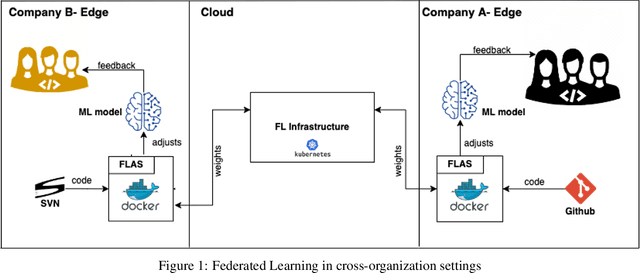
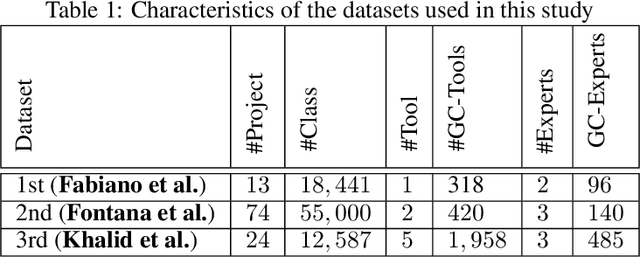
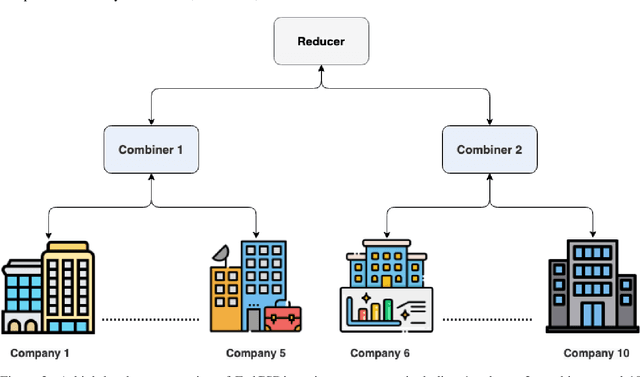
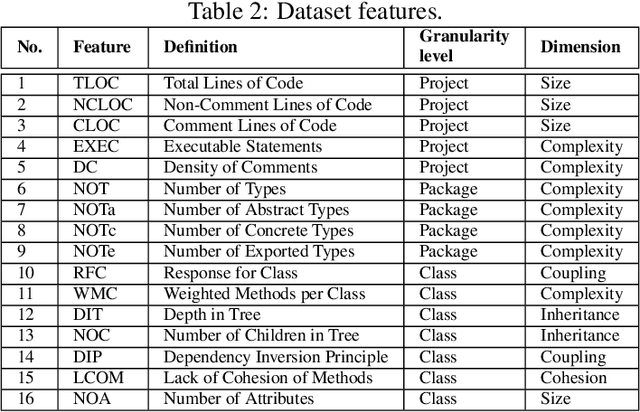
This paper proposes a Federated Learning Code Smell Detection (FedCSD) approach that allows organizations to collaboratively train federated ML models while preserving their data privacy. These assertions have been supported by three experiments that have significantly leveraged three manually validated datasets aimed at detecting and examining different code smell scenarios. In experiment 1, which was concerned with a centralized training experiment, dataset two achieved the lowest accuracy (92.30%) with fewer smells, while datasets one and three achieved the highest accuracy with a slight difference (98.90% and 99.5%, respectively). This was followed by experiment 2, which was concerned with cross-evaluation, where each ML model was trained using one dataset, which was then evaluated over the other two datasets. Results from this experiment show a significant drop in the model's accuracy (lowest accuracy: 63.80\%) where fewer smells exist in the training dataset, which has a noticeable reflection (technical debt) on the model's performance. Finally, the last and third experiments evaluate our approach by splitting the dataset into 10 companies. The ML model was trained on the company's site, then all model-updated weights were transferred to the server. Ultimately, an accuracy of 98.34% was achieved by the global model that has been trained using 10 companies for 100 training rounds. The results reveal a slight difference in the global model's accuracy compared to the highest accuracy of the centralized model, which can be ignored in favour of the global model's comprehensive knowledge, lower training cost, preservation of data privacy, and avoidance of the technical debt problem.