 Add to Chrome
 Add to Firefox
 Add to Edge
Bridging the reality gap in quantum devices with physics-aware machine learning
Nov 22, 2021
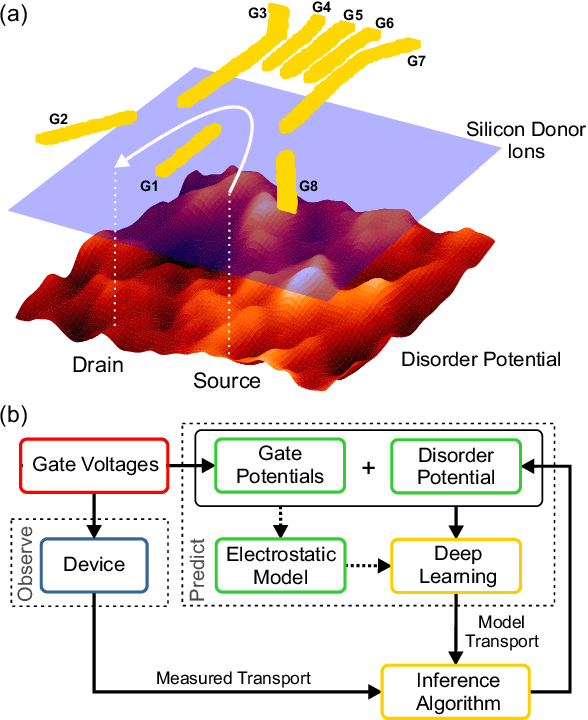
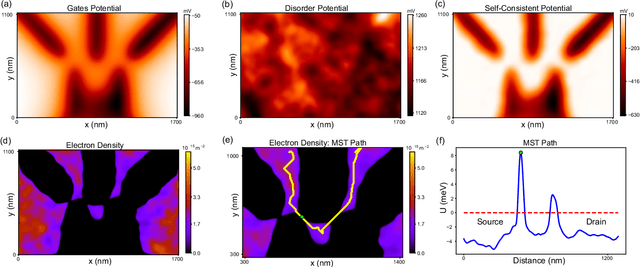
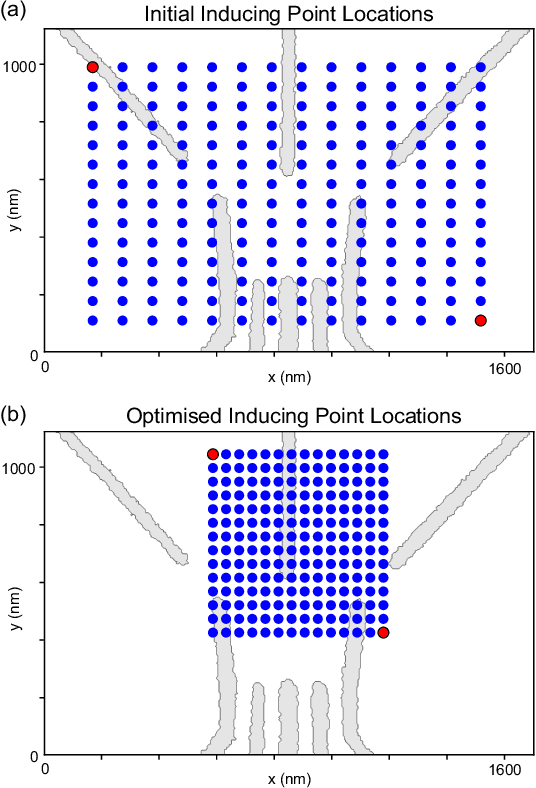
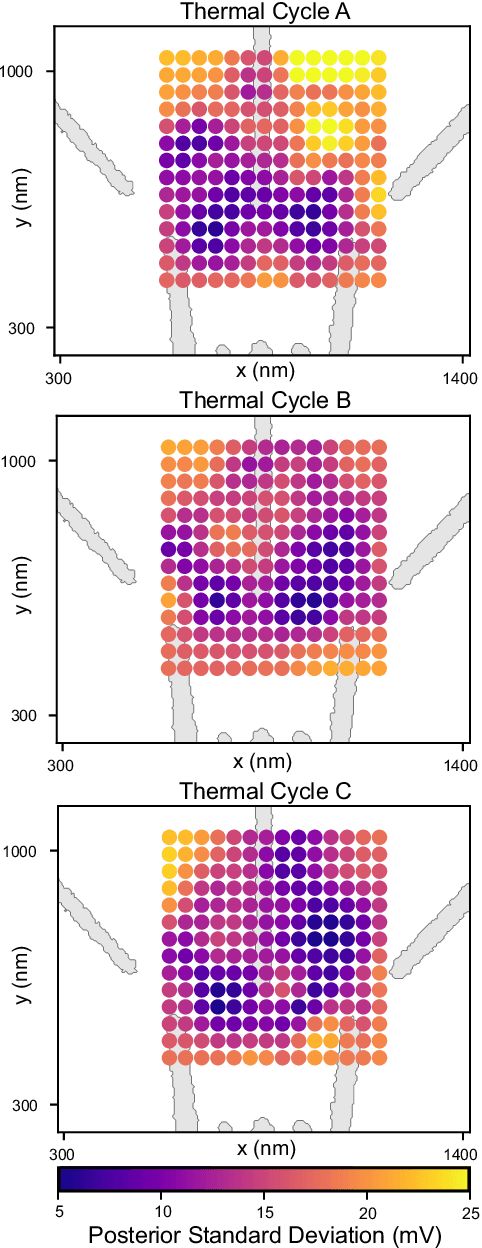
The discrepancies between reality and simulation impede the optimisation and scalability of solid-state quantum devices. Disorder induced by the unpredictable distribution of material defects is one of the major contributions to the reality gap. We bridge this gap using physics-aware machine learning, in particular, using an approach combining a physical model, deep learning, Gaussian random field, and Bayesian inference. This approach has enabled us to infer the disorder potential of a nanoscale electronic device from electron transport data. This inference is validated by verifying the algorithm's predictions about the gate voltage values required for a laterally-defined quantum dot device in AlGaAs/GaAs to produce current features corresponding to a double quantum dot regime.

Cross-architecture Tuning of Silicon and SiGe-based Quantum Devices Using Machine Learning
Jul 27, 2021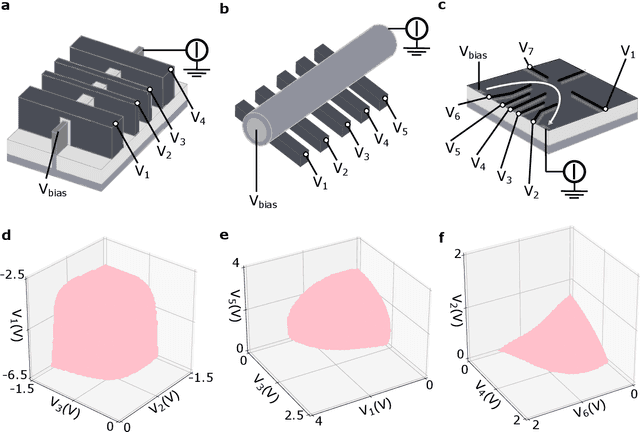
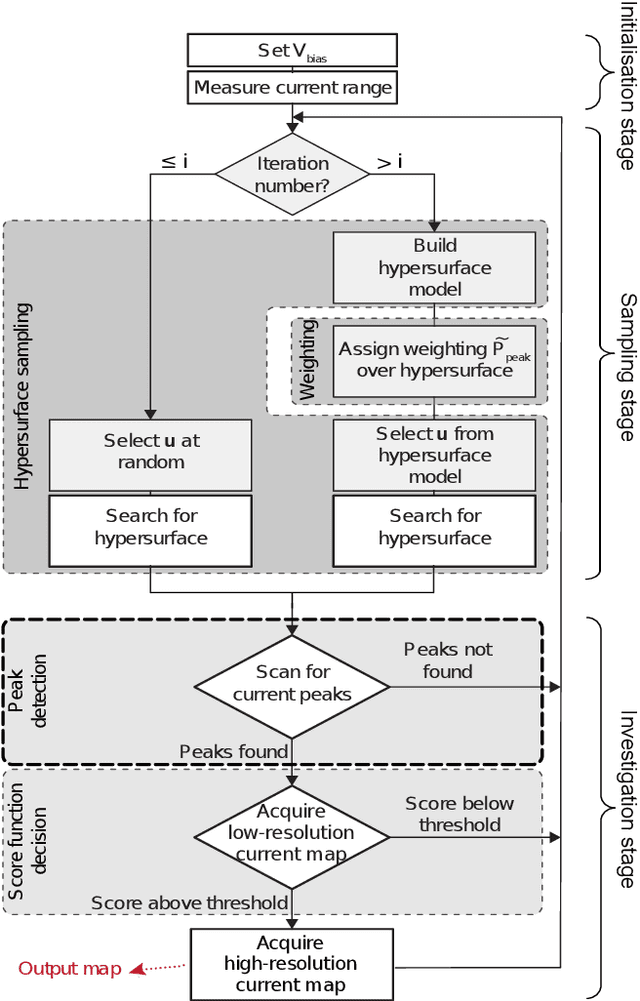
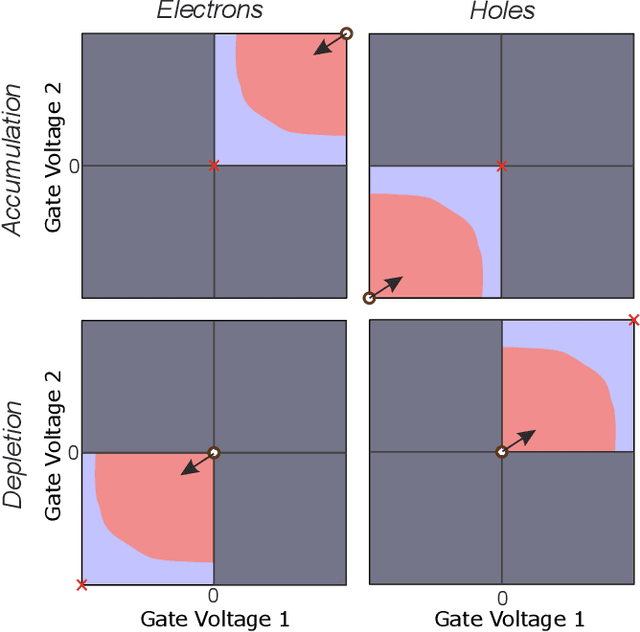
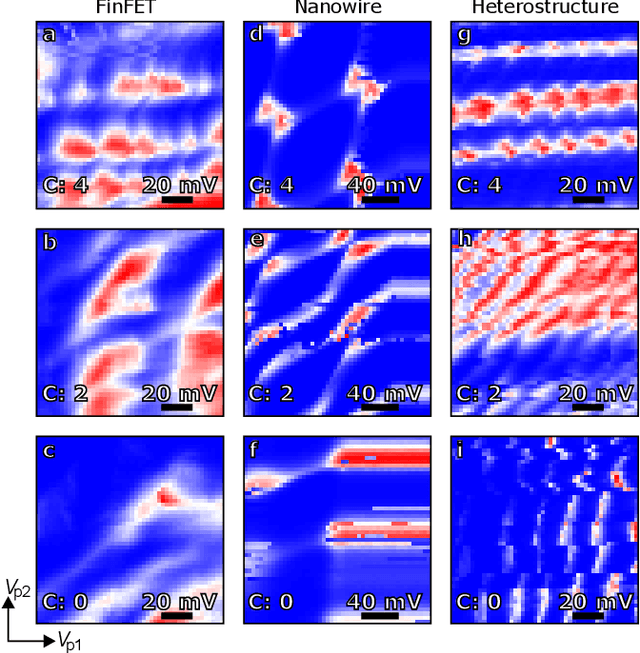
The potential of Si and SiGe-based devices for the scaling of quantum circuits is tainted by device variability. Each device needs to be tuned to operation conditions. We give a key step towards tackling this variability with an algorithm that, without modification, is capable of tuning a 4-gate Si FinFET, a 5-gate GeSi nanowire and a 7-gate SiGe heterostructure double quantum dot device from scratch. We achieve tuning times of 30, 10, and 92 minutes, respectively. The algorithm also provides insight into the parameter space landscape for each of these devices. These results show that overarching solutions for the tuning of quantum devices are enabled by machine learning.