 Add to Chrome
 Add to Firefox
 Add to Edge
Multi-Task Crack Foundation Model for Engineering-Reliable Crack Representation and Topology Preservation in Civil Infrastructure
Jun 04, 2026
Reliable crack assessment requires not only accurate pixel-level masks but also connected crack geometry and confidence estimates that remain stable under domain shift. However, existing segmentation models can achieve high overlap scores while fragmenting cracks, missing fine branches, and providing no calibrated uncertainty. To address this gap, this paper proposes CrackGeoFM, a multi-task framework that combines a frozen visual foundation backbone with crack-specific adaptation for mask prediction, skeleton reconstruction, and uncertainty estimation. The framework integrates a Frequency-Guided Crack Enhancement Module (FCEM) to enhance high-frequency crack cues, a Crack-Domain Feature Adaptation Module (CFAM) to adapt frozen backbone features to crack-domain patterns, and a Structure-Aware Multi-Task Decoder (SMTD) to jointly decode masks, skeletons, and uncertainty. Across 20 crack datasets, CrackGeoFM achieves state-of-the-art segmentation, improved topology preservation, calibrated uncertainty, and effective few-shot adaptation with only five labeled images. These results support reliable, generalizable, and engineering-oriented crack analysis for infrastructure assessment.

PaveSync: A Unified and Comprehensive Dataset for Pavement Distress Analysis and Classification
Dec 23, 2025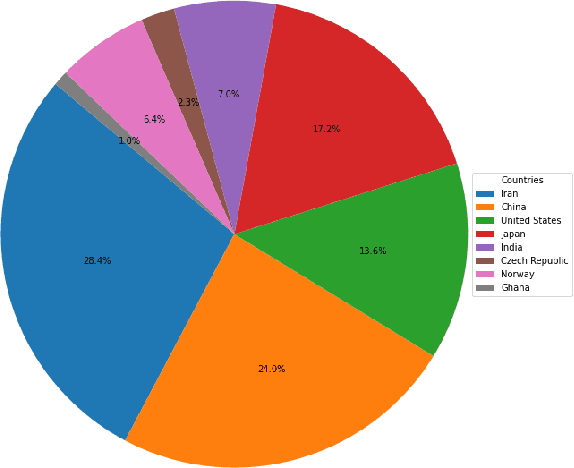
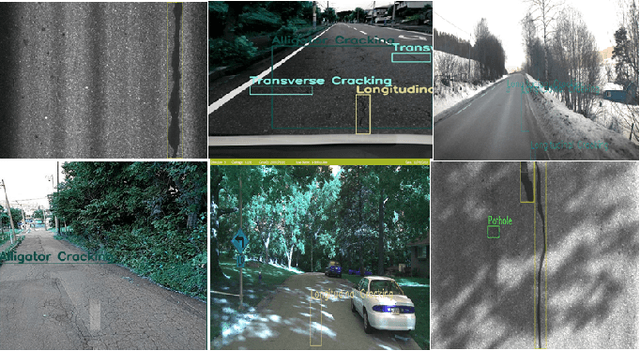
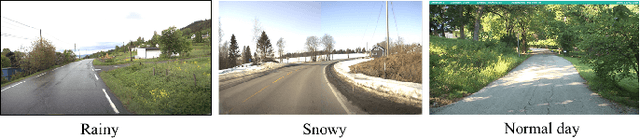
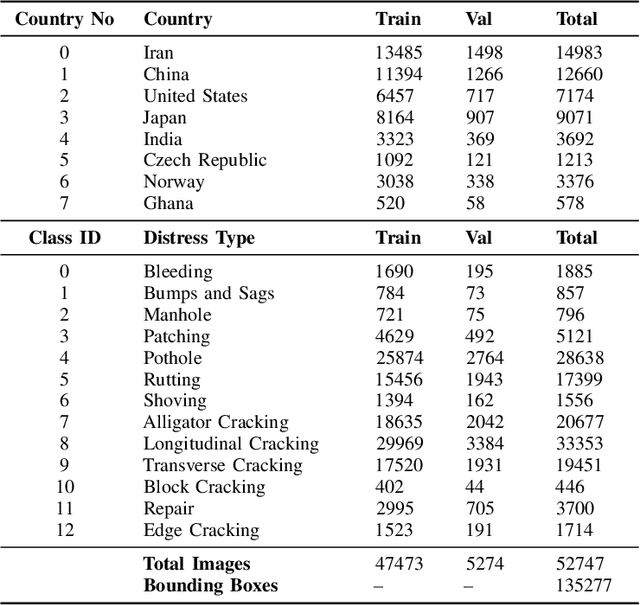
Automated pavement defect detection often struggles to generalize across diverse real-world conditions due to the lack of standardized datasets. Existing datasets differ in annotation styles, distress type definitions, and formats, limiting their integration for unified training. To address this gap, we introduce a comprehensive benchmark dataset that consolidates multiple publicly available sources into a standardized collection of 52747 images from seven countries, with 135277 bounding box annotations covering 13 distinct distress types. The dataset captures broad real-world variation in image quality, resolution, viewing angles, and weather conditions, offering a unique resource for consistent training and evaluation. Its effectiveness was demonstrated through benchmarking with state-of-the-art object detection models including YOLOv8-YOLOv12, Faster R-CNN, and DETR, which achieved competitive performance across diverse scenarios. By standardizing class definitions and annotation formats, this dataset provides the first globally representative benchmark for pavement defect detection and enables fair comparison of models, including zero-shot transfer to new environments.
Integrating Travel Behavior Forecasting and Generative Modeling for Predicting Future Urban Mobility and Spatial Transformations
Mar 27, 2025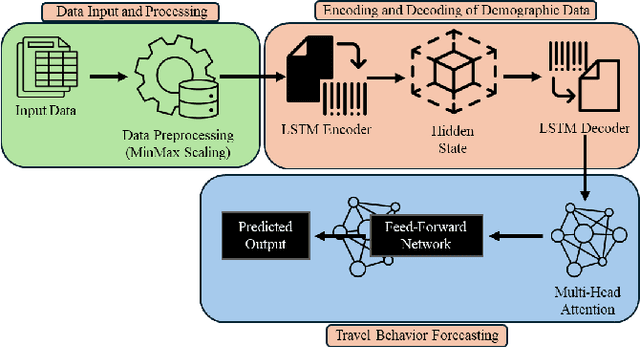
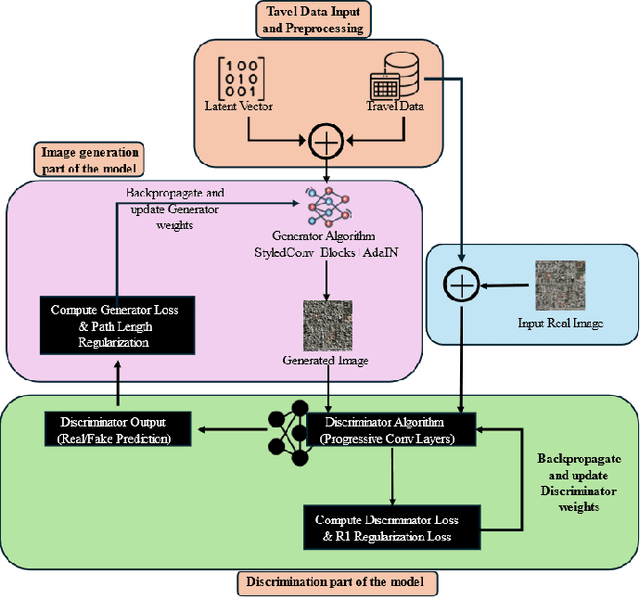
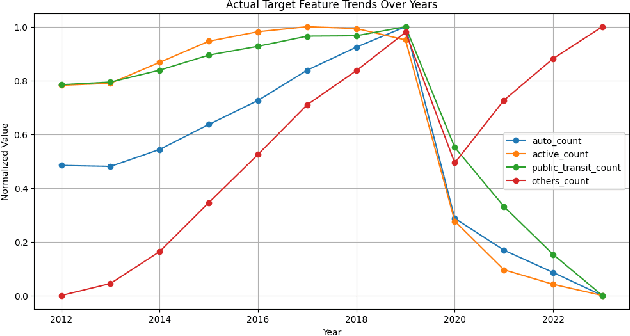
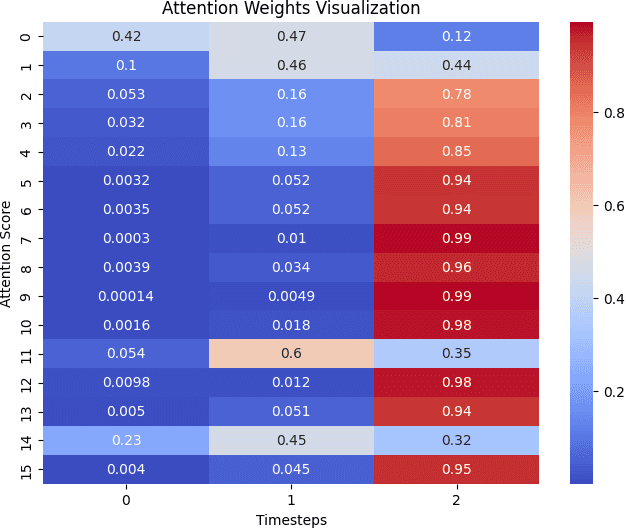
Transportation planning plays a critical role in shaping urban development, economic mobility, and infrastructure sustainability. However, traditional planning methods often struggle to accurately predict long-term urban growth and transportation demands. This may sometimes result in infrastructure demolition to make room for current transportation planning demands. This study integrates a Temporal Fusion Transformer to predict travel patterns from demographic data with a Generative Adversarial Network to predict future urban settings through satellite imagery. The framework achieved a 0.76 R-square score in travel behavior prediction and generated high-fidelity satellite images with a Structural Similarity Index of 0.81. The results demonstrate that integrating predictive analytics and spatial visualization can significantly improve the decision-making process, fostering more sustainable and efficient urban development. This research highlights the importance of data-driven methodologies in modern transportation planning and presents a step toward optimizing infrastructure placement, capacity, and long-term viability.