 Add to Chrome
 Add to Firefox
 Add to Edge
Reasoning for Social Audio-Visual Question Answering: Where Do We Stand?
Aug 13, 2026
Training Multimodal Large Language Models for audio-visual social understanding is a crucial step toward embodied social intelligence. Chain-of-thought (CoT) reasoning has become the dominant approach, with HumanOmniV2 and its IntentBench benchmark as a prominent reference point. In this context, we report three findings. First, IntentBench is highly noisy: $\sim$7% of questions are broken and $\sim$23% are trivially answerable without the video input. We remove the affected questions and release Intentbench-Prime. Second, current reasoning approaches are expensive and surprisingly ineffective. A simple Vanilla SFT baseline matches or outperforms existing reasoning methods across three benchmarks at a fraction of the cost, establishing it as an essential baseline for evaluating novel fine-tuning techniques. Third, our analysis reveals that substantial priors can be learned solely from the text modality and that using a textual caption instead of the video yields performance on par with Vanilla SFT. These surprising findings reveal the limitations of current MLLMs when it comes to social understanding. IntentBench-Prime, Vanilla SFT model, and code are publicly available.

CAST: Clustering Self-Attention using Surrogate Tokens for Efficient Transformers
Feb 06, 2024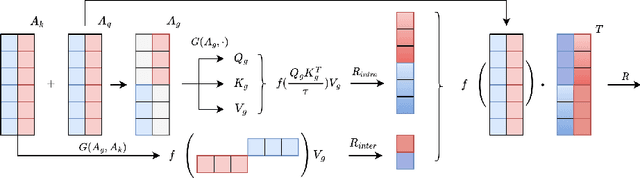

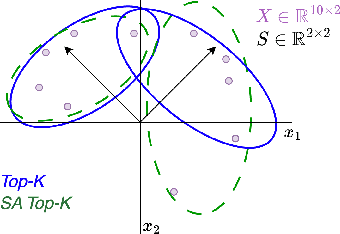

The Transformer architecture has shown to be a powerful tool for a wide range of tasks. It is based on the self-attention mechanism, which is an inherently computationally expensive operation with quadratic computational complexity: memory usage and compute time increase quadratically with the length of the input sequences, thus limiting the application of Transformers. In this work, we propose a novel Clustering self-Attention mechanism using Surrogate Tokens (CAST), to optimize the attention computation and achieve efficient transformers. CAST utilizes learnable surrogate tokens to construct a cluster affinity matrix, used to cluster the input sequence and generate novel cluster summaries. The self-attention from within each cluster is then combined with the cluster summaries of other clusters, enabling information flow across the entire input sequence. CAST improves efficiency by reducing the complexity from $O(N^2)$ to $O(\alpha N)$ where N is the sequence length, and {\alpha} is constant according to the number of clusters and samples per cluster. We show that CAST performs better than or comparable to the baseline Transformers on long-range sequence modeling tasks, while also achieving higher results on time and memory efficiency than other efficient transformers.
HR-Crime: Human-Related Anomaly Detection in Surveillance Videos
Jul 31, 2021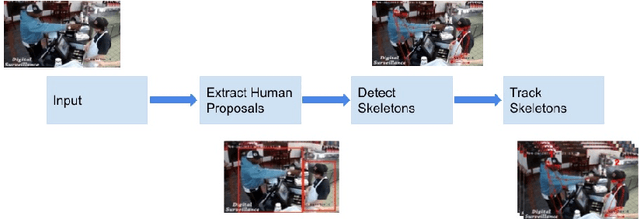
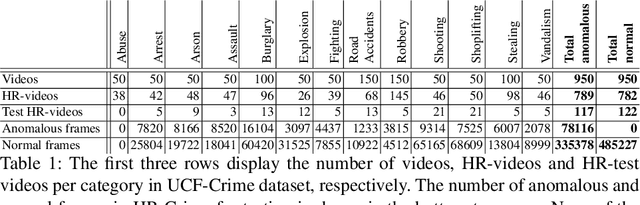
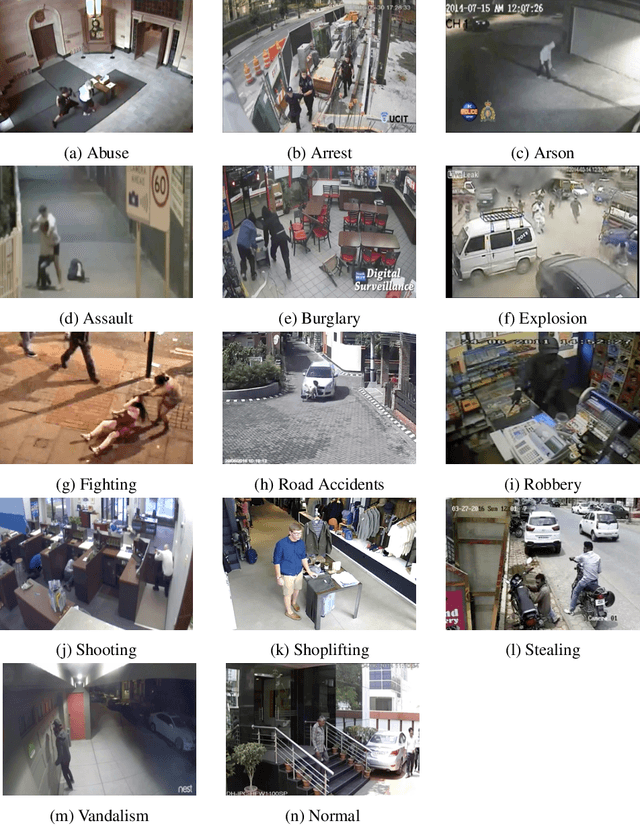
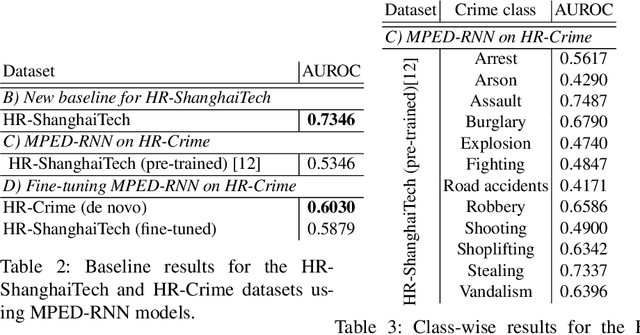
The automatic detection of anomalies captured by surveillance settings is essential for speeding the otherwise laborious approach. To date, UCF-Crime is the largest available dataset for automatic visual analysis of anomalies and consists of real-world crime scenes of various categories. In this paper, we introduce HR-Crime, a subset of the UCF-Crime dataset suitable for human-related anomaly detection tasks. We rely on state-of-the-art techniques to build the feature extraction pipeline for human-related anomaly detection. Furthermore, we present the baseline anomaly detection analysis on the HR-Crime. HR-Crime as well as the developed feature extraction pipeline and the extracted features will be publicly available for further research in the field.
Visual Summary of Egocentric Photostreams by Representative Keyframes
May 06, 2015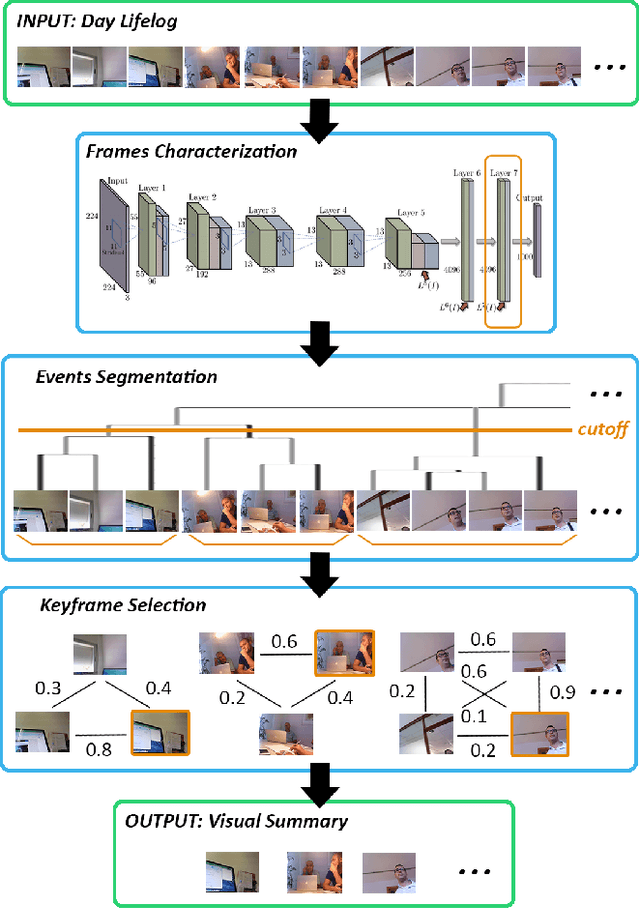

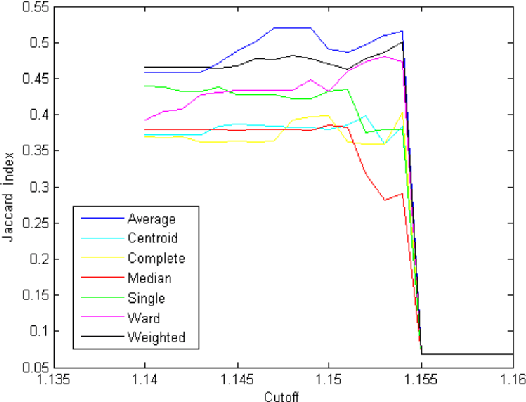
Building a visual summary from an egocentric photostream captured by a lifelogging wearable camera is of high interest for different applications (e.g. memory reinforcement). In this paper, we propose a new summarization method based on keyframes selection that uses visual features extracted by means of a convolutional neural network. Our method applies an unsupervised clustering for dividing the photostreams into events, and finally extracts the most relevant keyframe for each event. We assess the results by applying a blind-taste test on a group of 20 people who assessed the quality of the summaries.