 Add to Chrome
 Add to Firefox
 Add to Edge
Publishing FAIR and Machine-actionable Reviews in Materials Science: The Case for Symbolic Knowledge in Neuro-symbolic Artificial Intelligence
Jan 08, 2026
Scientific reviews are central to knowledge integration in materials science, yet their key insights remain locked in narrative text and static PDF tables, limiting reuse by humans and machines alike. This article presents a case study in atomic layer deposition and etching (ALD/E) where we publish review tables as FAIR, machine-actionable comparisons in the Open Research Knowledge Graph (ORKG), turning them into structured, queryable knowledge. Building on this, we contrast symbolic querying over ORKG with large language model-based querying, and argue that a curated symbolic layer should remain the backbone of reliable neurosymbolic AI in materials science, with LLMs serving as complementary, symbolically grounded interfaces rather than standalone sources of truth.

LLMs4SchemaDiscovery: A Human-in-the-Loop Workflow for Scientific Schema Mining with Large Language Models
Apr 01, 2025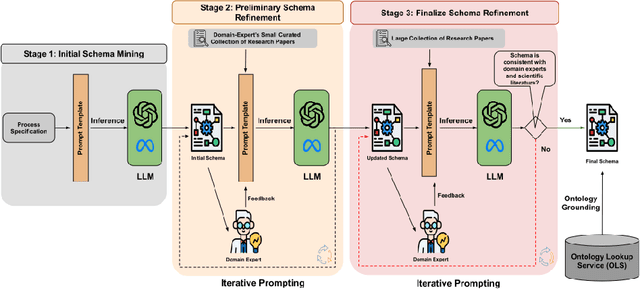
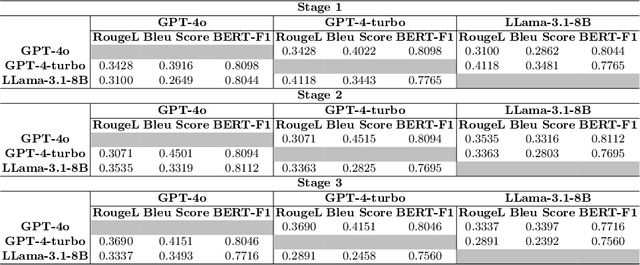
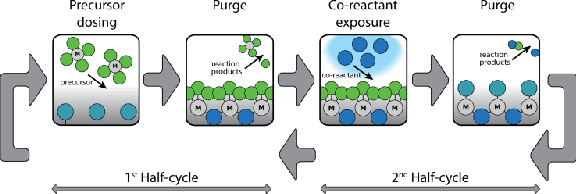
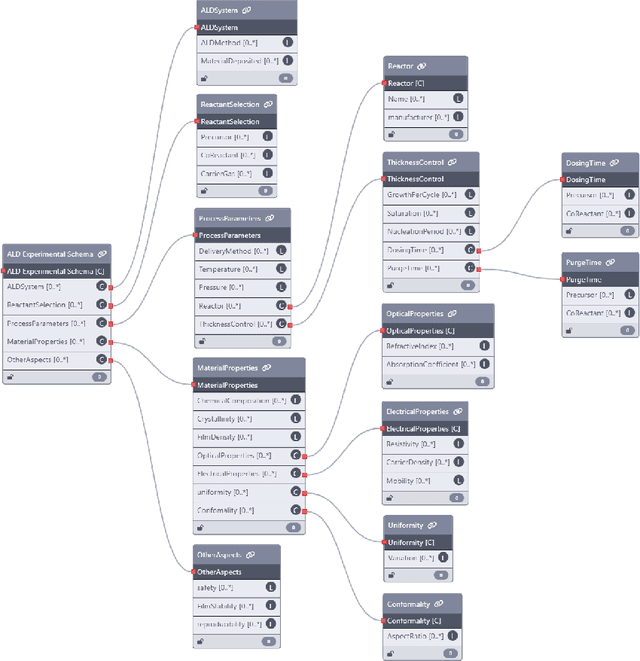
Extracting structured information from unstructured text is crucial for modeling real-world processes, but traditional schema mining relies on semi-structured data, limiting scalability. This paper introduces schema-miner, a novel tool that combines large language models with human feedback to automate and refine schema extraction. Through an iterative workflow, it organizes properties from text, incorporates expert input, and integrates domain-specific ontologies for semantic depth. Applied to materials science--specifically atomic layer deposition--schema-miner demonstrates that expert-guided LLMs generate semantically rich schemas suitable for diverse real-world applications.