 Add to Chrome
 Add to Firefox
 Add to Edge
Semantic Allocation in Ordered Bottlenecks: Predictive Residual Inference for Visual Representation Learning
Jun 23, 2026
Ordered bottlenecks aim to provide utility at flexible budgets by assigning coarse information to early tokens and task-relevant detail to later ones. Prior work, including tail dropping (TD), typically enforces ordering by means of a masking-based ordering pressure (MBOP): Late tokens are masked more frequently than early tokens and are therefore encouraged to store less essential fine details. We introduce predictive residual inference for ordered representations (PRIOR), a framework designed to address inherent weaknesses of MBOP. MBOP is prone to weak late-token utility because it lacks an explicit refinement objective and uses gradient exposure as a proxy for importance. Furthermore, representations may become particularly brittle in optimization-sensitive settings, such as when using discrete or quantized token representations. PRIOR replaces activation-rate control with log2-scaled levels and level-wise predictors. These predictors separate already explained from unexplained information, focusing each level on residual error. We compare PRIOR against MBOP-TD and independent tail-biased dropout (MBOP-ITD) in contrastive learning and image reconstruction tasks. Unlike the baselines, PRIOR learns well-ordered representations across experiments: low budgets provide coarse descriptors, while high budgets add refinements. Simultaneously, full-budget performance with PRIOR is higher in all but one experimental setting, where performance remains comparable. MBOP baselines are severely limited in discrete and quantized settings, while PRIOR approaches the performance of continuous counterparts. Taken together, these findings establish PRIOR as an effective framework for ordered representation learning.

Quick and Accurate Affordance Learning
May 13, 2024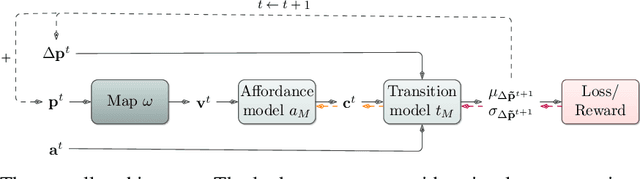
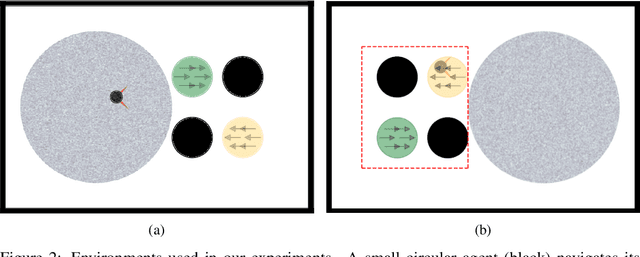
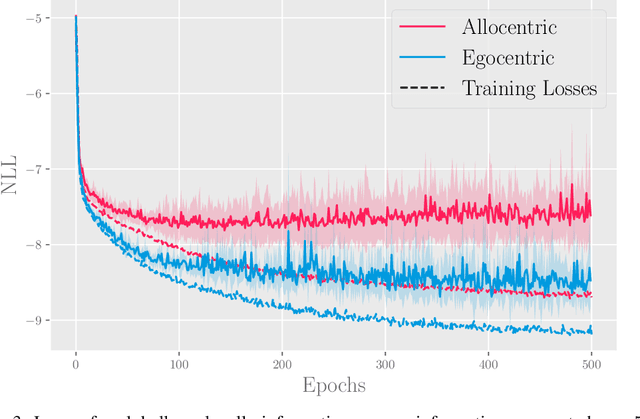
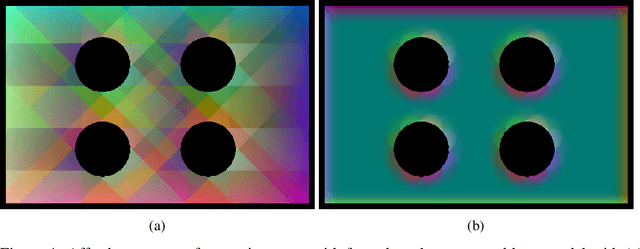
Infants learn actively in their environments, shaping their own learning curricula. They learn about their environments' affordances, that is, how local circumstances determine how their behavior can affect the environment. Here we model this type of behavior by means of a deep learning architecture. The architecture mediates between global cognitive map exploration and local affordance learning. Inference processes actively move the simulated agent towards regions where they expect affordance-related knowledge gain. We contrast three measures of uncertainty to guide this exploration: predicted uncertainty of a model, standard deviation between the means of several models (SD), and the Jensen-Shannon Divergence (JSD) between several models. We show that the first measure gets fooled by aleatoric uncertainty inherent in the environment, while the two other measures focus learning on epistemic uncertainty. JSD exhibits the most balanced exploration strategy. From a computational perspective, our model suggests three key ingredients for coordinating the active generation of learning curricula: (1) Navigation behavior needs to be coordinated with local motor behavior for enabling active affordance learning. (2) Affordances need to be encoded locally for acquiring generalized knowledge. (3) Effective active affordance learning mechanisms should use density comparison techniques for estimating expected knowledge gain. Future work may seek collaborations with developmental psychology to model active play in children in more realistic scenarios.