 Add to Chrome
 Add to Firefox
 Add to Edge
Enhanced Mixture 3D CGAN for Completion and Generation of 3D Objects
Feb 08, 2026
The generation and completion of 3D objects represent a transformative challenge in computer vision. Generative Adversarial Networks (GANs) have recently demonstrated strong potential in synthesizing realistic visual data. However, they often struggle to capture complex and diverse data distributions, particularly in scenarios involving incomplete inputs or significant missing regions. These challenges arise mainly from the high computational requirements and the difficulty of modeling heterogeneous and structurally intricate data, which restrict their applicability in real-world settings. Mixture of Experts (MoE) models have emerged as a promising solution to these limitations. By dynamically selecting and activating the most relevant expert sub-networks for a given input, MoEs improve both performance and efficiency. In this paper, we investigate the integration of Deep 3D Convolutional GANs (CGANs) with a MoE framework to generate high-quality 3D models and reconstruct incomplete or damaged objects. The proposed architecture incorporates multiple generators, each specialized to capture distinct modalities within the dataset. Furthermore, an auxiliary loss-free dynamic capacity constraint (DCC) mechanism is introduced to guide the selection of categorical generators, ensuring a balance between specialization, training stability, and computational efficiency, which is critical for 3D voxel processing. We evaluated the model's ability to generate and complete shapes with missing regions of varying sizes and compared its performance with state-of-the-art approaches. Both quantitative and qualitative results confirm the effectiveness of the proposed MoE-DCGAN in handling complex 3D data.

Comparative study on supervised learning methods for identifying phytoplankton species
Jan 23, 2017
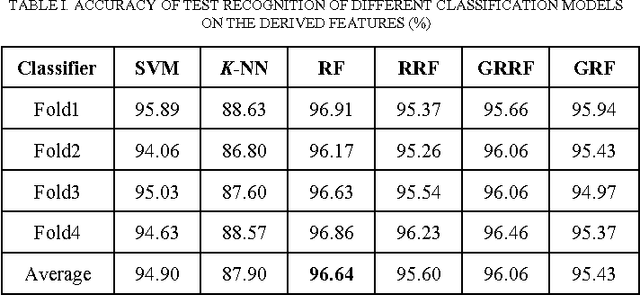

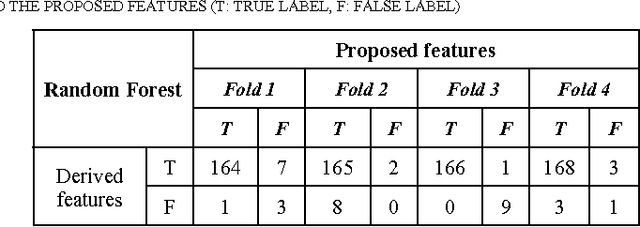
Phytoplankton plays an important role in marine ecosystem. It is defined as a biological factor to assess marine quality. The identification of phytoplankton species has a high potential for monitoring environmental, climate changes and for evaluating water quality. However, phytoplankton species identification is not an easy task owing to their variability and ambiguity due to thousands of micro and pico-plankton species. Therefore, the aim of this paper is to build a framework for identifying phytoplankton species and to perform a comparison on different features types and classifiers. We propose a new features type extracted from raw signals of phytoplankton species. We then analyze the performance of various classifiers on the proposed features type as well as two other features types for finding the robust one. Through experiments, it is found that Random Forest using the proposed features gives the best classification results with average accuracy up to 98.24%.