 Add to Chrome
 Add to Firefox
 Add to Edge
A Definition of Good Explanations and the Challenges Explaining LLM Outputs
Jun 12, 2026
How to define a good explanation is a long-standing philosophical debate which has found recent renewed interest in the context of AI outputs. Explainability is crucial for AI adoption in many contexts, but in order to produce good explanations of AI systems, we must first have an understanding of what good explanations are. In this paper we propose a definition inspired by the notion of counterfactual explanations, however we argue that one must also take into account the interlocutor's prior beliefs in each fact that could be offered in an explanation. We explore the ramifications of this definition for AI explainability and, in particular, why LLM outputs are difficult to produce good explanations for.

Biomedical NER for the Enterprise with Distillated BERN2 and the Kazu Framework
Dec 01, 2022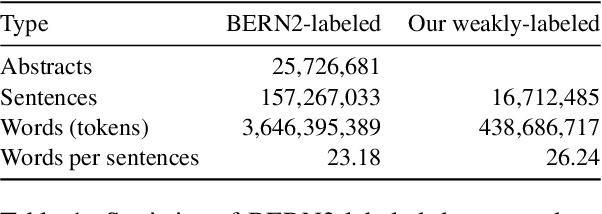
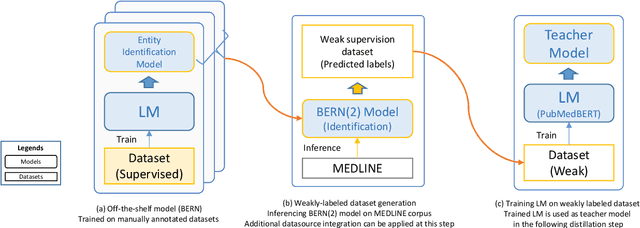
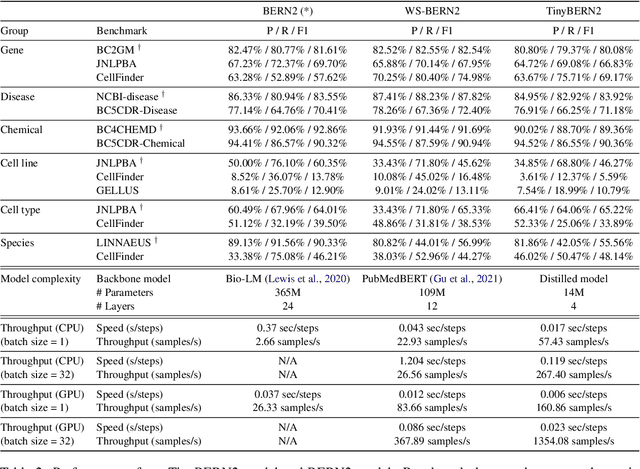
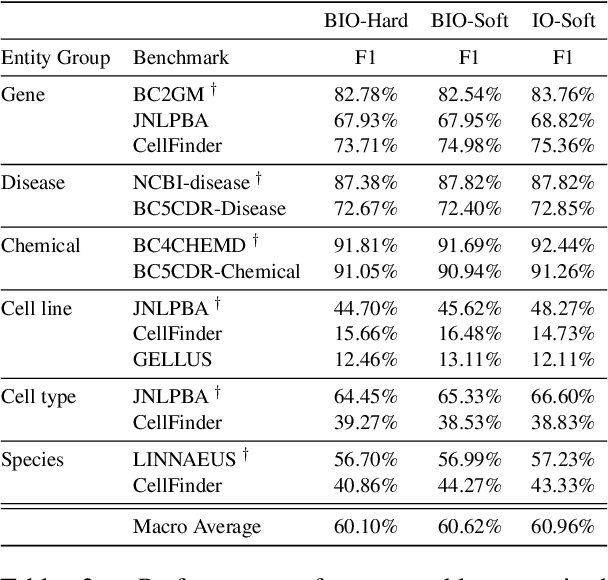
In order to assist the drug discovery/development process, pharmaceutical companies often apply biomedical NER and linking techniques over internal and public corpora. Decades of study of the field of BioNLP has produced a plethora of algorithms, systems and datasets. However, our experience has been that no single open source system meets all the requirements of a modern pharmaceutical company. In this work, we describe these requirements according to our experience of the industry, and present Kazu, a highly extensible, scalable open source framework designed to support BioNLP for the pharmaceutical sector. Kazu is a built around a computationally efficient version of the BERN2 NER model (TinyBERN2), and subsequently wraps several other BioNLP technologies into one coherent system. KAZU framework is open-sourced: https://github.com/AstraZeneca/KAZU