 Add to Chrome
 Add to Firefox
 Add to Edge
Lifting Biomolecular Data Acquisition
Dec 17, 2025
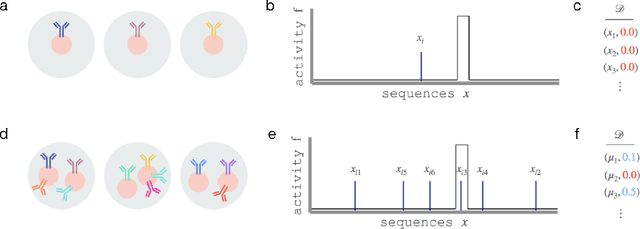
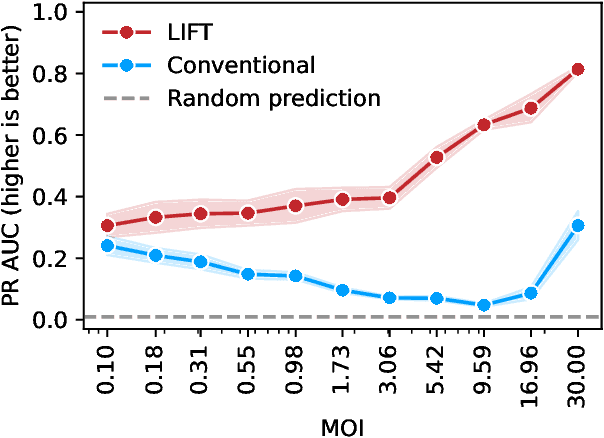
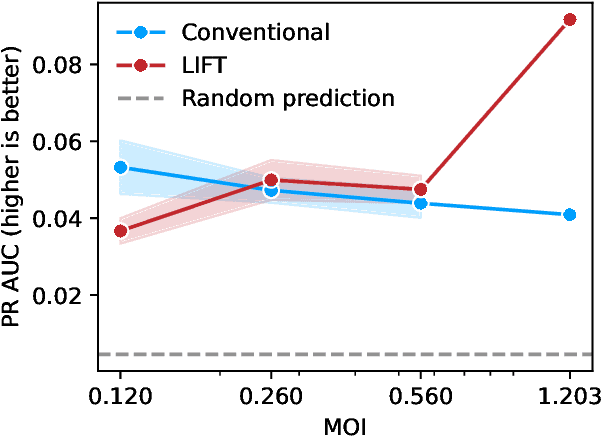
One strategy to scale up ML-driven science is to increase wet lab experiments' information density. We present a method based on a neural extension of compressed sensing to function space. We measure the activity of multiple different molecules simultaneously, rather than individually. Then, we deconvolute the molecule-activity map during model training. Co-design of wet lab experiments and learning algorithms provably leads to orders-of-magnitude gains in information density. We demonstrate on antibodies and cell therapies.

Estimating the Causal Effects of T Cell Receptors
Oct 18, 2024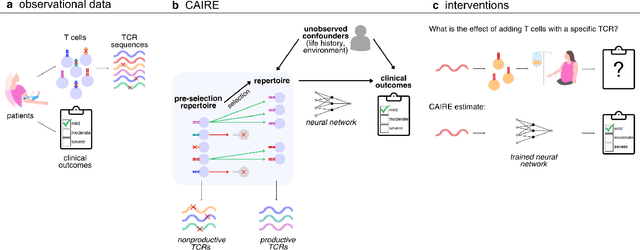

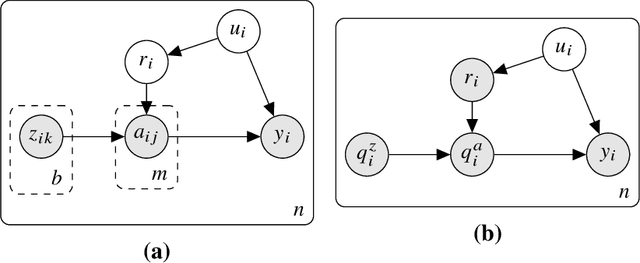
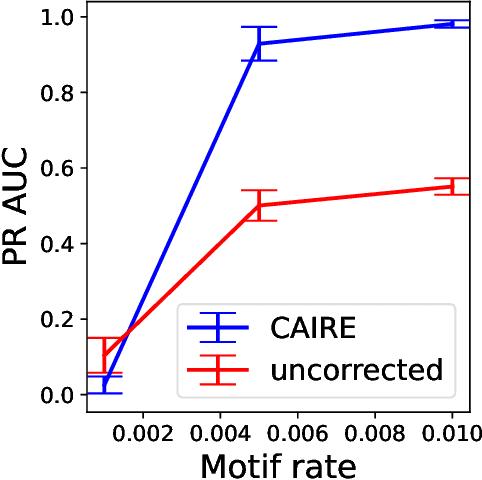
A central question in human immunology is how a patient's repertoire of T cells impacts disease. Here, we introduce a method to infer the causal effects of T cell receptor (TCR) sequences on patient outcomes using observational TCR repertoire sequencing data and clinical outcomes data. Our approach corrects for unobserved confounders, such as a patient's environment and life history, by using the patient's immature, pre-selection TCR repertoire. The pre-selection repertoire can be estimated from nonproductive TCR data, which is widely available. It is generated by a randomized mutational process, V(D)J recombination, which provides a natural experiment. We show formally how to use the pre-selection repertoire to draw causal inferences, and develop a scalable neural-network estimator for our identification formula. Our method produces an estimate of the effect of interventions that add a specific TCR sequence to patient repertoires. As a demonstration, we use it to analyze the effects of TCRs on COVID-19 severity, uncovering potentially therapeutic TCRs that are (1) observed in patients, (2) bind SARS-CoV-2 antigens in vitro and (3) have strong positive effects on clinical outcomes.