 Add to Chrome
 Add to Firefox
 Add to Edge
Are LLMs Ready for TOON? Benchmarking Structural Correctness-Sustainability Trade-offs in Novel Structured Output Formats
Jan 17, 2026
Large Language Models (LLMs) are increasingly required to generate structured, machine-readable outputs for downstream systems. While recent benchmarks have focused on evaluating the structural correctness of such outputs, the environmental impact of inference for different output formats has largely been overlooked. In this paper, we argue that structured output formats should be assessed not only in terms of correctness, but also with respect to their environmental efficiency. To this end, we introduce a sustainability-aware evaluation framework for structured generation that measures token usage, generation time, and estimated carbon emissions. Within this framework, we propose the Environment-Aware Generation Correctness Score (GCS_env), a unified metric that integrates structural correctness with carbon-aware efficiency. Using this framework, we systematically benchmark the novel TOON format against established representations (JSON, XML, YAML) across multiple LLMs spanning different architectures and parameter scales. Our results reveal a consistent trade-off: TOON yields markedly more compact outputs and lower emissions, but lower structural correctness when models lack native support. We show that increased model capacity reduces this gap and that environment-aware scoring can shift format rankings depending on deployment priorities. highlighting the need for sustainability-inclusive benchmarking and provides empirical evidence that compact representations such as TOON can offer practical advantages in large-scale, carbon-conscious LLM deployments.

A Brief Discussion on KPI Development in Public Administration
Dec 12, 2024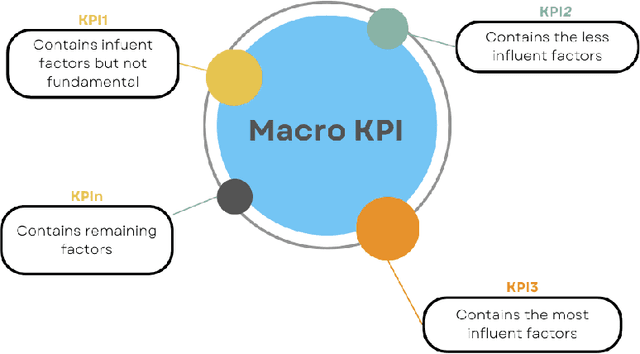
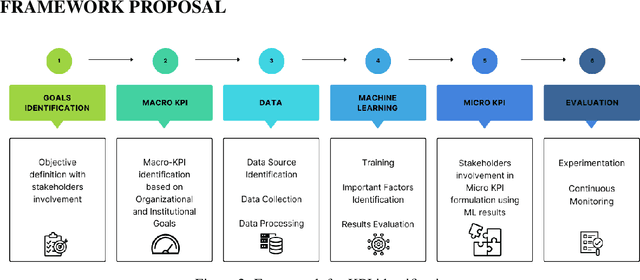
Efficient and effective service delivery in Public Administration (PA) relies on the development and utilization of key performance indicators (KPIs) for evaluating and measuring performance. This paper presents an innovative framework for KPI construction within performance evaluation systems, leveraging Random Forest algorithms and variable importance analysis. The proposed approach identifies key variables that significantly influence PA performance, offering valuable insights into the critical factors driving organizational success. By integrating variable importance analysis with expert consultation, relevant KPIs can be systematically developed, ensuring that improvement strategies address performance-critical areas. The framework incorporates continuous monitoring mechanisms and adaptive phases to refine KPIs in response to evolving administrative needs. This study aims to enhance PA performance through the application of machine learning techniques, fostering a more agile and results-driven approach to public administration.