 Add to Chrome
 Add to Firefox
 Add to Edge
Explain the Flag: Contextualizing Hate Speech Beyond Censorship
Apr 16, 2026
Hate, derogatory, and offensive speech remains a persistent challenge in online platforms and public discourse. While automated detection systems are widely used, most focus on censorship or removal, raising concerns for transparency and freedom of expression, and limiting opportunities to explain why content is harmful. To address these issues, explanatory approaches have emerged as a promising solution, aiming to make hate speech detection more transparent, accountable, and informative. In this paper, we present a hybrid approach that combines Large Language Models (LLMs) with three newly created and curated vocabularies to detect and explain hate speech in English, French, and Greek. Our system captures both inherently derogatory expressions tied to identity characteristics and direct group-targeted content through two complementary pipelines: one that detects and disambiguates problematic terms using the curated vocabularies, and one that leverages LLMs as context-aware evaluators of group-targeting content. The outputs are fused into grounded explanations that clarify why content is flagged. Human evaluation shows that our hybrid approach is accurate, with high-quality explanations, outperforming LLM-only baselines.

Employing Crowdsourcing for Enriching a Music Knowledge Base in Higher Education
Jun 12, 2023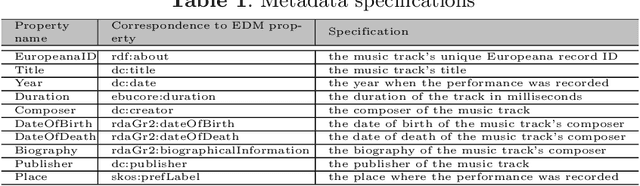
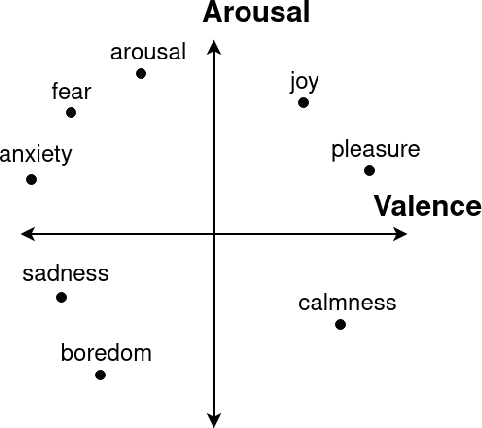
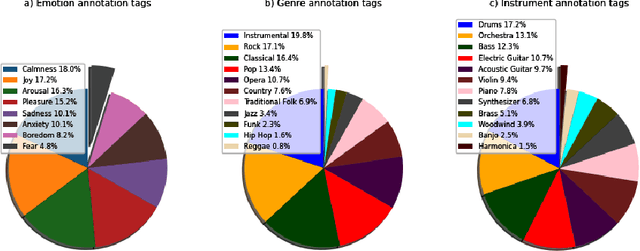

This paper describes the methodology followed and the lessons learned from employing crowdsourcing techniques as part of a homework assignment involving higher education students of computer science. Making use of a platform that supports crowdsourcing in the cultural heritage domain students were solicited to enrich the metadata associated with a selection of music tracks. The results of the campaign were further analyzed and exploited by students through the use of semantic web technologies. In total, 98 students participated in the campaign, contributing more than 6400 annotations concerning 854 tracks. The process also led to the creation of an openly available annotated dataset, which can be useful for machine learning models for music tagging. The campaign's results and the comments gathered through an online survey enable us to draw some useful insights about the benefits and challenges of integrating crowdsourcing into computer science curricula and how this can enhance students' engagement in the learning process.