 Add to Chrome
 Add to Firefox
 Add to Edge
VCG: A Multimodal Retrieval Framework for E-Commerce Video Feeds under Extreme Cold-Start Conditions
Jun 17, 2026
The digital commerce landscape is shifting from static, search-driven catalogs to dynamic, immersive video feeds. This transition introduces an ``extreme cold-start'' problem: unlike traditional items, new short-form videos lack the dense interaction history required for collaborative filtering. Furthermore, immersive feeds introduce strong position and duration biases that distort standard engagement signals. In this paper, we demonstrate the Video Candidate Generation (VCG) system, a scalable multimodal retrieval engine designed to solve these challenges in a large-scale e-commerce environment. By leveraging a domain-adapted vision-language model (based on CLIP), we map users and videos into a shared semantic space, enabling zero-shot retrieval based on visual content rather than behavioral history. We detail the system's architecture and present a rigorous evaluation comparing generative (LLM) vs. discriminative (CLIP) embeddings. Our results show that while generative models excel at attribute prediction, they suffer from embedding space collapse in retrieval tasks. Online A/B testing demonstrates that VCG effectively mitigates engagement biases, yielding a 50\% uplift in deep video completion. To showcase the system's capabilities, we present an interactive demonstration featuring three bi-directional retrieval scenarios: Product-to-Video, Video-to-Product, and Zero-Shot Semantic Search.

Long-Term Embeddings for Balanced Personalization
Apr 09, 2026Modern transformer-based sequential recommenders excel at capturing short-term intent but often suffer from recency bias, overlooking stable long-term preferences. While extending sequence lengths is an intuitive fix, it is computationally inefficient, and recent interactions tend to dominate the model's attention. We propose Long-Term Embeddings (LTE) as a high-inertia contextual anchor to bridge this gap. We address a critical production challenge: the point-in-time consistency problem caused by infrastructure constraints, as feature stores typically host only a single "live" version of features. This leads to an offline-online mismatch during model deployments and rollbacks, as models are forced to process evolved representations they never saw during training. To resolve this, we introduce an LTE framework that constrains embeddings to a fixed semantic basis of content-based item representations, ensuring cross-version compatibility. Furthermore, we investigate integration strategies for causal language modeling, considering the data leakage issue that occurs when the LTE and the transformer's short-term sequence share a temporal horizon. We evaluate two representations: a heuristic average and an asymmetric autoencoder with a fixed decoder grounded in the semantic basis to enable behavioral fine-tuning while maintaining stability. Online A/B tests on Zalando demonstrate that integrating LTE as a contextual prefix token using a lagged window yields significant uplifts in both user engagement and financial metrics.
UNICON: A unified framework for behavior-based consumer segmentation in e-commerce
Sep 18, 2023

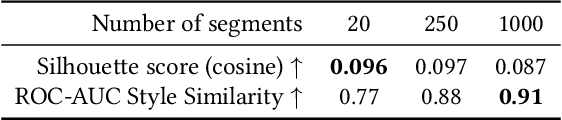
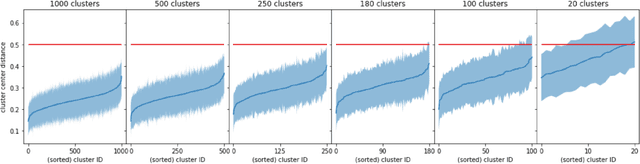
Data-driven personalization is a key practice in fashion e-commerce, improving the way businesses serve their consumers needs with more relevant content. While hyper-personalization offers highly targeted experiences to each consumer, it requires a significant amount of private data to create an individualized journey. To alleviate this, group-based personalization provides a moderate level of personalization built on broader common preferences of a consumer segment, while still being able to personalize the results. We introduce UNICON, a unified deep learning consumer segmentation framework that leverages rich consumer behavior data to learn long-term latent representations and utilizes them to extract two pivotal types of segmentation catering various personalization use-cases: lookalike, expanding a predefined target seed segment with consumers of similar behavior, and data-driven, revealing non-obvious consumer segments with similar affinities. We demonstrate through extensive experimentation our framework effectiveness in fashion to identify lookalike Designer audience and data-driven style segments. Furthermore, we present experiments that showcase how segment information can be incorporated in a hybrid recommender system combining hyper and group-based personalization to exploit the advantages of both alternatives and provide improvements on consumer experience.
On Residual CNN in text-dependent speaker verification task
May 30, 2017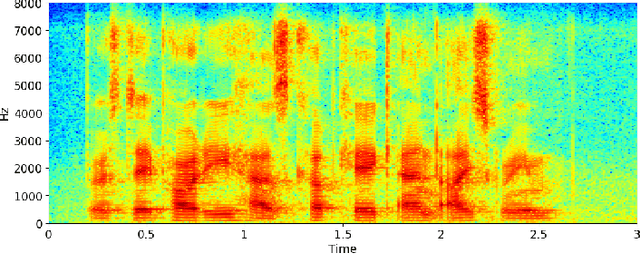
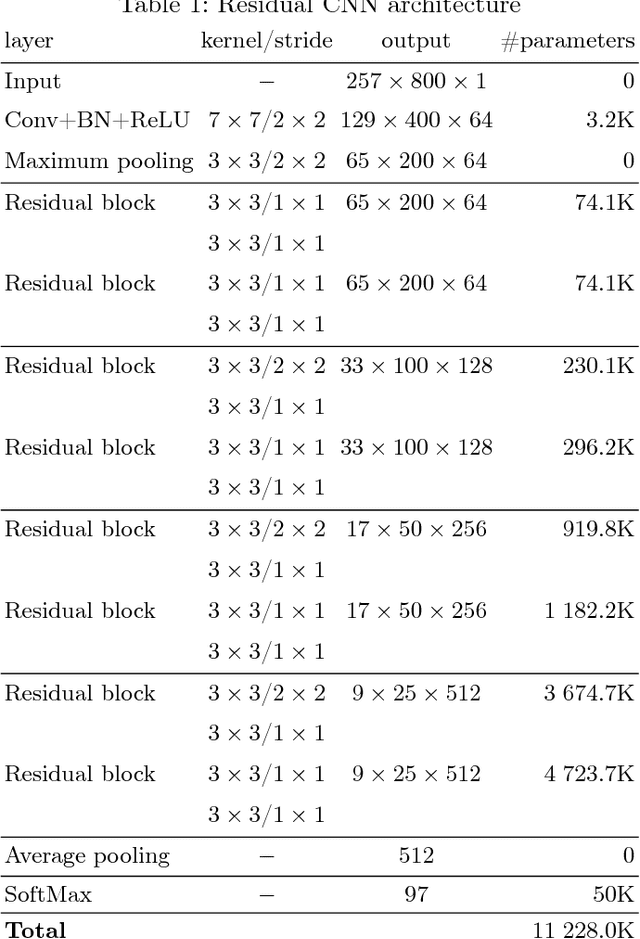
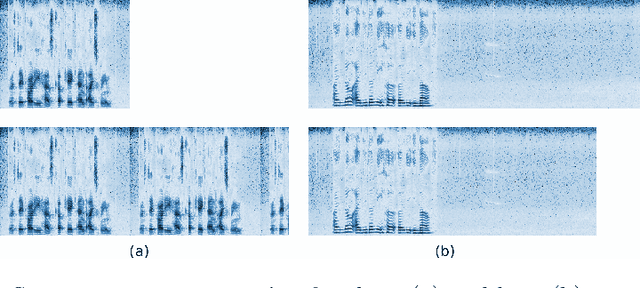
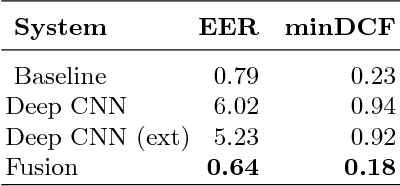
Deep learning approaches are still not very common in the speaker verification field. We investigate the possibility of using deep residual convolutional neural network with spectrograms as an input features in the text-dependent speaker verification task. Despite the fact that we were not able to surpass the baseline system in quality, we achieved a quite good results for such a new approach getting an 5.23% ERR on the RSR2015 evaluation part. Fusion of the baseline and proposed systems outperformed the best individual system by 18% relatively.
Audio-replay attack detection countermeasures
May 24, 2017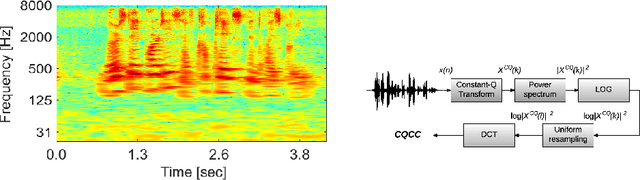


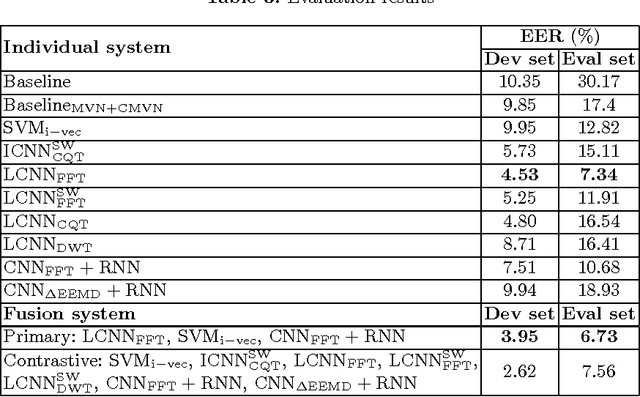
This paper presents the Speech Technology Center (STC) replay attack detection systems proposed for Automatic Speaker Verification Spoofing and Countermeasures Challenge 2017. In this study we focused on comparison of different spoofing detection approaches. These were GMM based methods, high level features extraction with simple classifier and deep learning frameworks. Experiments performed on the development and evaluation parts of the challenge dataset demonstrated stable efficiency of deep learning approaches in case of changing acoustic conditions. At the same time SVM classifier with high level features provided a substantial input in the efficiency of the resulting STC systems according to the fusion systems results.