 Add to Chrome
 Add to Firefox
 Add to Edge
Assessing Cognitive Effort in L2 Idiomatic Processing: An Eye-Tracking Dataset
May 06, 2026
This paper presents the development and validation of an eye-tracking dataset designed to investigate how second-language (L2) learners process idiomatic expressions. While native speakers often rely on direct retrieval of figurative meanings, L2 speakers frequently adopt a literal-first approach, which incurs measurable cognitive costs. This resource captures these costs through ocular metrics recorded from Portuguese L1 speakers of English across all CEFR proficiency levels (A1-C2). Although the study uses entry-level 60 Hz hardware (Tobii Pro Spark), we demonstrate that this sampling rate provides sufficient data density to detect macro-cognitive events such as fixations and regressions in reading. Preliminary analysis validates the dataset by revealing a strong inverse correlation between language proficiency and regressive eye movements. Integrated into the MIA (Modeling Idiomaticity in Human and Artificial Language Processing) initiative, this dataset serves as a cognitively grounded benchmark for evaluating both human processing models and the alignment of large language models with human-like figurative understanding.

Toward Unified Fine-Grained Vehicle Classification and Automatic License Plate Recognition
Apr 07, 2026Extracting vehicle information from surveillance images is essential for intelligent transportation systems, enabling applications such as traffic monitoring and criminal investigations. While Automatic License Plate Recognition (ALPR) is widely used, Fine-Grained Vehicle Classification (FGVC) offers a complementary approach by identifying vehicles based on attributes such as color, make, model, and type. Although there have been advances in this field, existing studies often assume well-controlled conditions, explore limited attributes, and overlook FGVC integration with ALPR. To address these gaps, we introduce UFPR-VeSV, a dataset comprising 24,945 images of 16,297 unique vehicles with annotations for 13 colors, 26 makes, 136 models, and 14 types. Collected from the Military Police of Paraná (Brazil) surveillance system, the dataset captures diverse real-world conditions, including partial occlusions, nighttime infrared imaging, and varying lighting. All FGVC annotations were validated using license plate information, with text and corner annotations also being provided. A qualitative and quantitative comparison with established datasets confirmed the challenging nature of our dataset. A benchmark using five deep learning models further validated this, revealing specific challenges such as handling multicolored vehicles, infrared images, and distinguishing between vehicle models that share a common platform. Additionally, we apply two optical character recognition models to license plate recognition and explore the joint use of FGVC and ALPR. The results highlight the potential of integrating these complementary tasks for real-world applications. The UFPR-VeSV dataset is publicly available at: https://github.com/Lima001/UFPR-VeSV-Dataset.
Sovereign AI-based Public Services are Viable and Affordable
Mar 02, 2026The rapid expansion of AI-based remote services has intensified debates about the long-term implications of growing structural concentration in infrastructure and expertise. As AI capabilities become increasingly intertwined with geopolitical interests, the availability and reliability of foundational AI services can no longer be taken for granted. This issue is particularly pressing for AI-enabled public services for citizens, as governments and public agencies are progressively adopting 24/7 AI-driven support systems typically operated through commercial offerings from a small oligopoly of global technology providers. This paper challenges the prevailing assumption that general-purpose architectures, offered by these providers, are the optimal choice for all application contexts. Through practical experimentation, we demonstrate that viable and cost-effective alternatives exist. Alternatives that align with principles of digital and cultural sovereignty. Our findings provide an empirical illustration that sovereign AI-based public services are both technically feasible and economically sustainable, capable of operating effectively on premises with modest computational and financial resources while maintaining cultural and digital autonomy. The technical insights and deployment lessons reported here are intended to inform the adoption of similar sovereign AI public services by national agencies and governments worldwide.
Toward Enhancing Vehicle Color Recognition in Adverse Conditions: A Dataset and Benchmark
Aug 21, 2024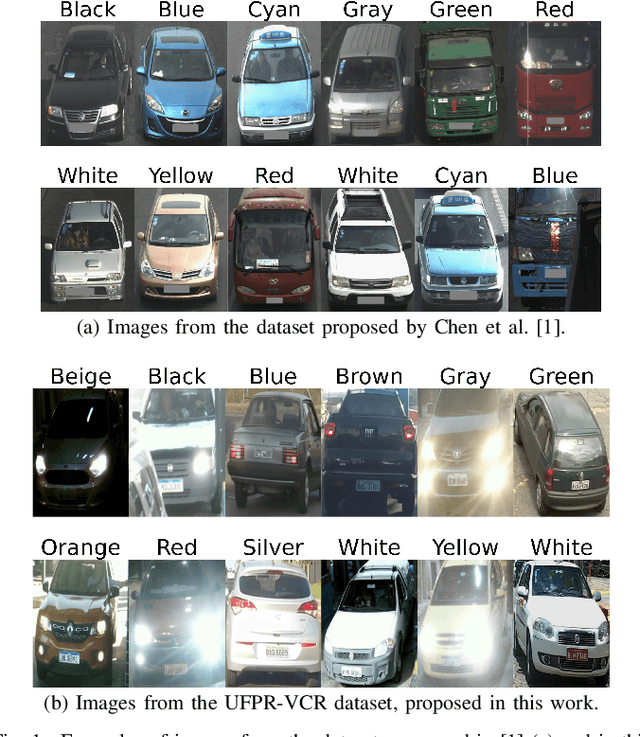
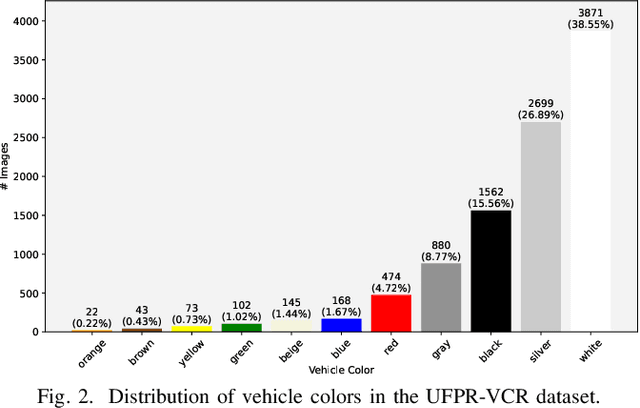
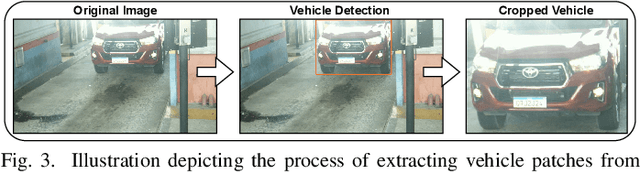
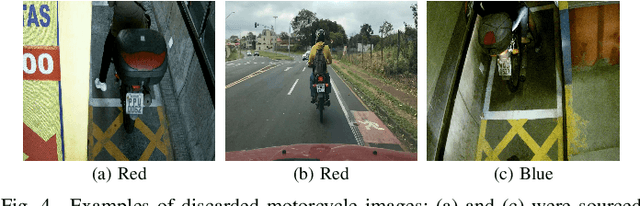
Vehicle information recognition is crucial in various practical domains, particularly in criminal investigations. Vehicle Color Recognition (VCR) has garnered significant research interest because color is a visually distinguishable attribute of vehicles and is less affected by partial occlusion and changes in viewpoint. Despite the success of existing methods for this task, the relatively low complexity of the datasets used in the literature has been largely overlooked. This research addresses this gap by compiling a new dataset representing a more challenging VCR scenario. The images - sourced from six license plate recognition datasets - are categorized into eleven colors, and their annotations were validated using official vehicle registration information. We evaluate the performance of four deep learning models on a widely adopted dataset and our proposed dataset to establish a benchmark. The results demonstrate that our dataset poses greater difficulty for the tested models and highlights scenarios that require further exploration in VCR. Remarkably, nighttime scenes account for a significant portion of the errors made by the best-performing model. This research provides a foundation for future studies on VCR, while also offering valuable insights for the field of fine-grained vehicle classification.