 Add to Chrome
 Add to Firefox
 Add to Edge
Depth-Enhanced YOLO-SAM2 Detection for Reliable Ballast Insufficiency Identification
Feb 21, 2026
This paper presents a depth-enhanced YOLO-SAM2 framework for detecting ballast insufficiency in railway tracks using RGB-D data. Although YOLOv8 provides reliable localization, the RGB-only model shows limited safety performance, achieving high precision (0.99) but low recall (0.49) due to insufficient ballast, as it tends to over-predict the sufficient class. To improve reliability, we incorporate depth-based geometric analysis enabled by a sleeper-aligned depth-correction pipeline that compensates for RealSense spatial distortion using polynomial modeling, RANSAC, and temporal smoothing. SAM2 segmentation further refines region-of-interest masks, enabling accurate extraction of sleeper and ballast profiles for geometric classification. Experiments on field-collected top-down RGB-D data show that depth-enhanced configurations substantially improve the detection of insufficient ballast. Depending on bounding-box sampling (AABB or RBB) and geometric criteria, recall increases from 0.49 to as high as 0.80, and F1-score improves from 0.66 to over 0.80. These results demonstrate that integrating depth correction with YOLO-SAM2 yields a more robust and reliable approach for automated railway ballast inspection, particularly in visually ambiguous or safety-critical scenarios.

A YOLO-Based Semi-Automated Labeling Approach to Improve Fault Detection Efficiency in Railroad Videos
Apr 01, 2025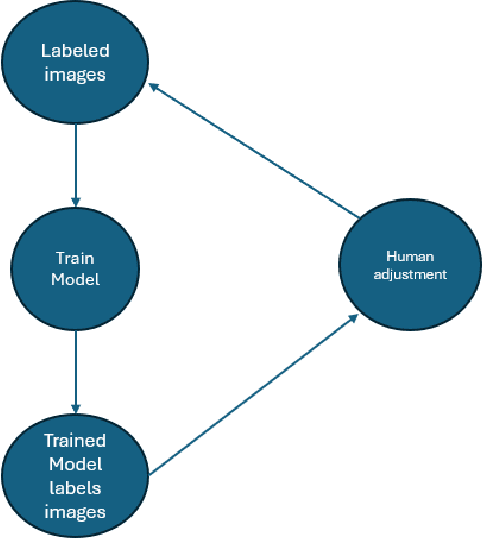
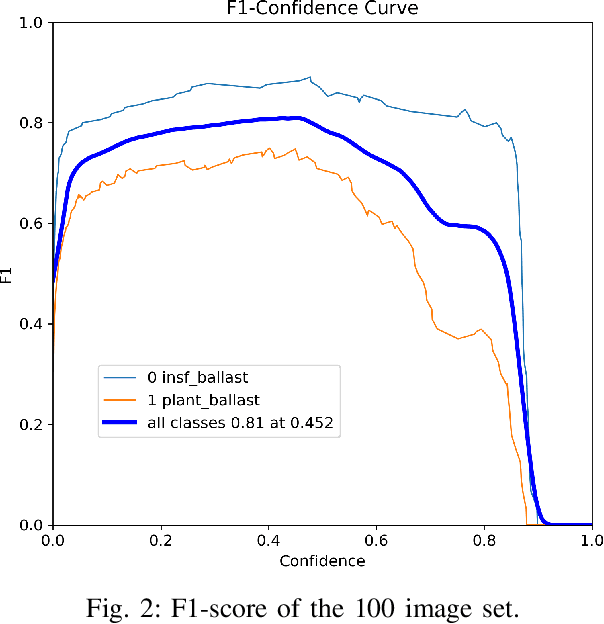
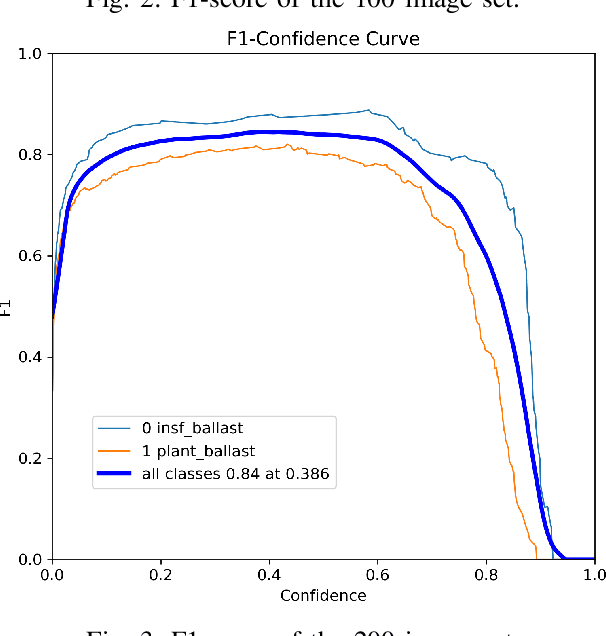
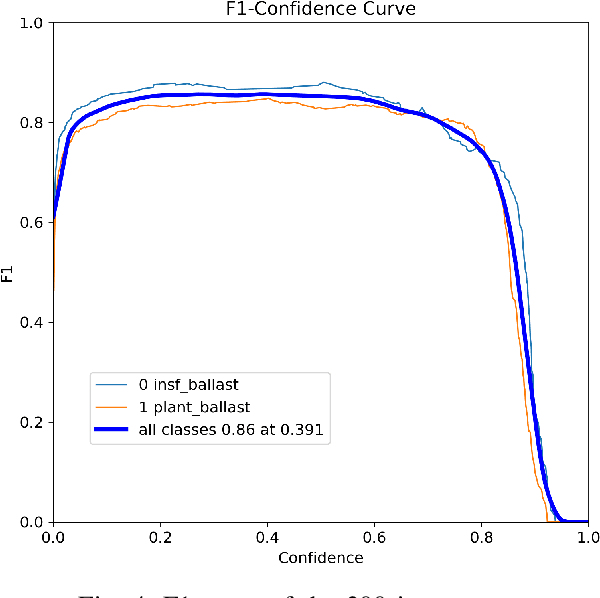
Manual labeling for large-scale image and video datasets is often time-intensive, error-prone, and costly, posing a significant barrier to efficient machine learning workflows in fault detection from railroad videos. This study introduces a semi-automated labeling method that utilizes a pre-trained You Only Look Once (YOLO) model to streamline the labeling process and enhance fault detection accuracy in railroad videos. By initiating the process with a small set of manually labeled data, our approach iteratively trains the YOLO model, using each cycle's output to improve model accuracy and progressively reduce the need for human intervention. To facilitate easy correction of model predictions, we developed a system to export YOLO's detection data as an editable text file, enabling rapid adjustments when detections require refinement. This approach decreases labeling time from an average of 2 to 4 minutes per image to 30 seconds to 2 minutes, effectively minimizing labor costs and labeling errors. Unlike costly AI based labeling solutions on paid platforms, our method provides a cost-effective alternative for researchers and practitioners handling large datasets in fault detection and other detection based machine learning applications.