 Add to Chrome
 Add to Firefox
 Add to Edge
Layer-Specific Lipschitz Modulation for Fault-Tolerant Multimodal Representation Learning
Mar 26, 2026
Modern multimodal systems deployed in industrial and safety-critical environments must remain reliable under partial sensor failures, signal degradation, or cross-modal inconsistencies. This work introduces a mathematically grounded framework for fault-tolerant multimodal representation learning that unifies self-supervised anomaly detection and error correction within a single architecture. Building upon a theoretical analysis of perturbation propagation, we derive Lipschitz- and Jacobian-based criteria that determine whether a neural operator amplifies or attenuates localized faults. Guided by this theory, we propose a two-stage self-supervised training scheme: pre-training a multimodal convolutional autoencoder on clean data to preserve localized anomaly signals in the latent space, and expanding it with a learnable compute block composed of dense layers for correction and contrastive objectives for anomaly identification. Furthermore, we introduce layer-specific Lipschitz modulation and gradient clipping as principled mechanisms to control sensitivity across detection and correction modules. Experimental results on multimodal fault datasets demonstrate that the proposed approach improves both anomaly detection accuracy and reconstruction under sensor corruption. Overall, this framework bridges the gap between analytical robustness guarantees and practical fault-tolerant multimodal learning.

Prior-Informed Neural Network Initialization: A Spectral Approach for Function Parameterizing Architectures
Mar 17, 2026Neural network architectures designed for function parameterization, such as the Bag-of-Functions (BoF) framework, bridge the gap between the expressivity of deep learning and the interpretability of classical signal processing. However, these models are inherently sensitive to parameter initialization, as traditional data-agnostic schemes fail to capture the structural properties of the target signals, often leading to suboptimal convergence. In this work, we propose a prior-informed design strategy that leverages the intrinsic spectral and temporal structure of the data to guide both network initialization and architectural configuration. A principled methodology is introduced that uses the Fast Fourier Transform to extract dominant seasonal priors, informing model depth and initial states, and a residual-based regression approach to parameterize trend components. Crucially, this structural alignment enables a substantial reduction in encoder dimensionality without compromising reconstruction fidelity. A supporting theoretical analysis provides guidance on trend estimation under finite-sample regimes. Extensive experiments on synthetic and real-world benchmarks demonstrate that embedding data-driven priors significantly accelerates convergence, reduces performance variability across trials, and improves computational efficiency. Overall, the proposed framework enables more compact and interpretable architectures while outperforming standard initialization baselines, without altering the core training procedure.
Stabilizing Multimodal Autoencoders: A Theoretical and Empirical Analysis of Fusion Strategies
Dec 23, 2025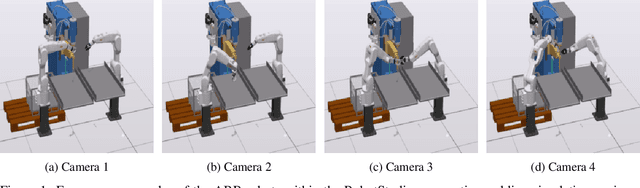

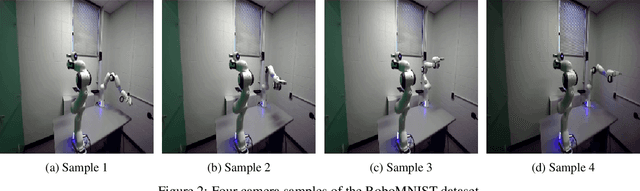
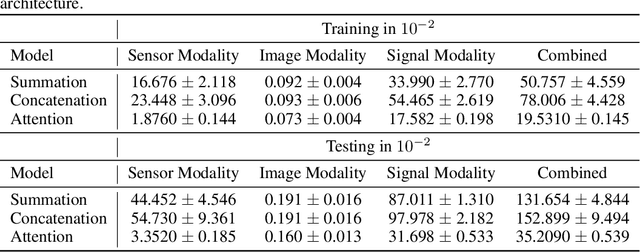
In recent years, the development of multimodal autoencoders has gained significant attention due to their potential to handle multimodal complex data types and improve model performance. Understanding the stability and robustness of these models is crucial for optimizing their training, architecture, and real-world applicability. This paper presents an analysis of Lipschitz properties in multimodal autoencoders, combining both theoretical insights and empirical validation to enhance the training stability of these models. We begin by deriving the theoretical Lipschitz constants for aggregation methods within the multimodal autoencoder framework. We then introduce a regularized attention-based fusion method, developed based on our theoretical analysis, which demonstrates improved stability and performance during training. Through a series of experiments, we empirically validate our theoretical findings by estimating the Lipschitz constants across multiple trials and fusion strategies. Our results demonstrate that our proposed fusion function not only aligns with theoretical predictions but also outperforms existing strategies in terms of consistency, convergence speed, and accuracy. This work provides a solid theoretical foundation for understanding fusion in multimodal autoencoders and contributes a solution for enhancing their performance.