 Add to Chrome
 Add to Firefox
 Add to Edge
A Four-Axis Trustworthiness Benchmark for LLM-as-Judge in Principle-Based Regulation
Aug 14, 2026
Principle-based regulation, with evaluative standards such as "fair, clear, and not misleading" or "deliver good outcomes", cannot be reduced to binary predicates, and LLM-as-judge is increasingly used as the substitute. Our position is that any such judge must be evaluated on four axes: accuracy, paraphrase robustness, adversarial robustness, and calibration. We release Principle-Bench, 168 cryptoasset financial-promotion scenarios mapped to two UK FCA principles, with paraphrase, adversarial keyword-stuffing, and boundary perturbations authored under a pre-registered rubric; the first benchmark covering all four axes for principle-based regulation. We also introduce Ceca (Calibrated Exemplar-Cluster Assessment): a calibrated, auditable assessor that emits exact per-exemplar counterfactual attributions. Across keyword counting, three sentence-transformer embedders, an open-weight LLM-judge, and a calibrated cascade, no method dominates all four axes. A 120B LLM-judge, strongest on benign inputs, loses 47 accuracy points (0.74 to 0.27) on keyword-stuffed Consumer Duty inputs: "compliance theatre." A second judge from a different model family agrees only at Cohen's kappa = 0.16 on that split, localising the failure to the model rather than the corpus. Any deployment-grade LLM-judge for principle-based regulation must report per-principle adversarial deception and post-hoc calibration alongside aggregate accuracy.

From Errors to Proofs: Minimal-Core-Guided Repair for Neuro-Symbolic Constraint Solving
Aug 14, 2026Making language models solve constraint problems reliably often means having them translate the problem into a formal specification and delegating the search to a sound solver. But the translation is itself a language-model task, and an unfaithful translation makes the solver faithfully solve the wrong problem. Existing pipelines repair only translations that crash, returning the solver's error message and falling silent when the program runs but is wrong. We replace the error message with a proof: when the generated program is unsatisfiable, we extract a minimal unsatisfiable core over the model's own constraints and hand it back the exact set that cannot hold together, a leakage-free signal that localizes the fault. On a new benchmark of 77 problems with an exact oracle, translation to Answer Set Programming is faithful on six of seven domains and fails only on aggregate coverage scheduling, which concentrates the translation tax in one diagnosable pattern. A minimal core, rather than a bare error, is what stops a weaker model from fabricating solutions to infeasible problems, cutting fabrication from 79% to 7%. A strong chain-of-thought baseline meanwhile matches the symbolic route on accuracy, so the route's value is not accuracy but certificates and its refusal to fabricate.
Test-Input Generation for Tensor Programs: What Actually Finds Kernel Bugs
Jun 23, 2026Test-input generation for tensor kernels is folkloric. Most projects pick a representative shape and dtype, run a fixed-shape allclose-style check, and ship. We make the choices explicit and measure them. Using the gpuemu op-schema-aware seeded fuzzer (arXiv:2606.20128), we evaluate seven test-generation strategies across a 26-op corpus (16 correct controls and 10 LLM-style buggy variants seeded with documented transcription patterns) on an RTX 3060 GPU instance. Strategies vary the shape candidate set, the dtype mix, and the input value distribution. We report each strategy on two axes: bug recall and control false-positive (FP) rate. Boundary-only shape sampling is the operationally safe winner: 78% recall on the 10 buggy kernels with 0% FP on the 16 controls. Adversarial value sampling reaches higher recall (99%) but inflates control FP to 94% because the strategy injects NaN and Inf inputs and the validator's NaN check fires on every kernel that propagates them, not only on buggy kernels. On the two softmax tail-mask bugs the "regular" strategy (no boundary shapes) catches 0%, while boundary raises recall to 100% and 62% respectively. That gap is the clearest single signal in the data. The corpus result is about which seeded bug patterns each strategy catches, not about the bug rate of any specific deployed LLM.
The Correctness Illusion in LLM-Generated GPU Kernels
Jun 18, 2026Benchmarks for LLM-generated GPU kernels (KernelBench, TritonBench, GEAK) score correctness through fixed-shape, small-sample allclose-style checks. The number of inputs varies between benchmarks. The shape, dtype, and tolerance are fixed for each kernel. We test that oracle empirically. We construct a controlled corpus of 24 Triton and CPU stand-in kernels (15 correct controls and 9 LLM-style buggy variants seeded with documented transcription errors) and re-evaluate it under op-schema-aware seeded fuzzing with a high-precision (fp64) CPU reference and per-(op, dtype) absolute tolerances. The seeded oracle flags 9 of 9 buggy kernels and passes 15 of 15 correct controls, at zero precision cost on controls. We extend the corpus to 26 ops (adding a flash-attention pair) and re-run the same protocol on five GPU classes (RTX 3060, A10, L40S, A100 SXM4, H100 NVL). The verdicts are identical across all five GPUs: 10 of 10 illusions caught and 16 of 16 controls clean. The corpus result is about LLM-style transcription bugs that the allclose-on-one-shape oracle certifies as correct, not about the bug rate of any specific deployed LLM. Every flagged failure replays byte-for-byte from a stored seed.
Before the Pull Request: Mining Multi-Agent Coordination
Jun 17, 2026Autonomous coding agents now open millions of pull requests, yet large-scale studies find their PRs are produced faster but accepted less often - a coordination and trust gap that pull-request-level telemetry cannot explain. We argue the missing signal lives before the PR, in how concurrent agents claim, divide, and collide over shared work. We study this process through grite, our open-source coordination substrate that needs no central server and stores its records inside git itself, so its append-only, signed event log captures the coordination process directly. We show that (i) this shared substrate reduces duplicate and conflicting work at bounded overhead - the share of work that merely re-does a teammate's task falls from 78% to 0% while useful throughput more than triples; (ii) every agent's copy of the log converges to the same state with no write silently dropped, where a file-based tracker loses concurrent writes; and (iii) the log is a mineable artefact from which concrete failure modes - conflicting edits, lock starvation, redundant rediscovery, race-to-close - are automatically recoverable with provenance, several invisible in pull-request history. We release the dataset, harness, and mining toolkit.
Navigating the Knowledge Sea: Planet-scale answer retrieval using LLMs
Feb 07, 2024Information retrieval is a rapidly evolving field of information retrieval, which is characterized by a continuous refinement of techniques and technologies, from basic hyperlink-based navigation to sophisticated algorithm-driven search engines. This paper aims to provide a comprehensive overview of the evolution of Information Retrieval Technology, with a particular focus on the role of Large Language Models (LLMs) in bridging the gap between traditional search methods and the emerging paradigm of answer retrieval. The integration of LLMs in the realms of response retrieval and indexing signifies a paradigm shift in how users interact with information systems. This paradigm shift is driven by the integration of large language models (LLMs) like GPT-4, which are capable of understanding and generating human-like text, thus enabling them to provide more direct and contextually relevant answers to user queries. Through this exploration, we seek to illuminate the technological milestones that have shaped this journey and the potential future directions in this rapidly changing field.
Viz: A QLoRA-based Copyright Marketplace for Legally Compliant Generative AI
Dec 31, 2023This paper aims to introduce and analyze the Viz system in a comprehensive way, a novel system architecture that integrates Quantized Low-Rank Adapters (QLoRA) to fine-tune large language models (LLM) within a legally compliant and resource efficient marketplace. Viz represents a significant contribution to the field of artificial intelligence, particularly in addressing the challenges of computational efficiency, legal compliance, and economic sustainability in the utilization and monetization of LLMs. The paper delineates the scholarly discourse and developments that have informed the creation of Viz, focusing primarily on the advancements in LLM models, copyright issues in AI training (NYT case, 2023), and the evolution of model fine-tuning techniques, particularly low-rank adapters and quantized low-rank adapters, to create a sustainable and economically compliant framework for LLM utilization. The economic model it proposes benefits content creators, AI developers, and end-users, delineating a harmonious integration of technology, economy, and law, offering a comprehensive solution to the complex challenges of today's AI landscape.
TSO: Curriculum Generation using continuous optimization
Jun 16, 2021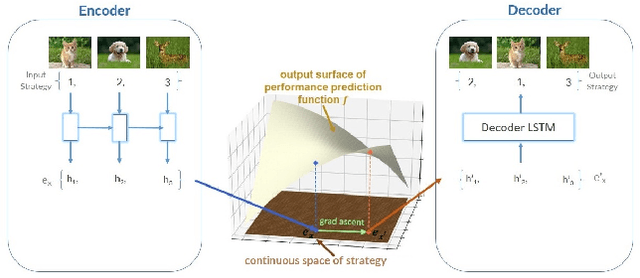
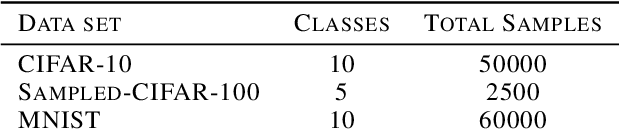
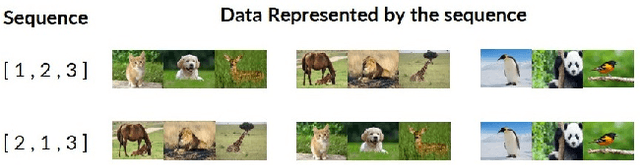

The training of deep learning models poses vast challenges of including parameter tuning and ordering of training data. Significant research has been done in Curriculum learning for optimizing the sequence of training data. Recent works have focused on using complex reinforcement learning techniques to find the optimal data ordering strategy to maximize learning for a given network. In this paper, we present a simple and efficient technique based on continuous optimization. We call this new approach Training Sequence Optimization (TSO). There are three critical components in our proposed approach: (a) An encoder network maps/embeds training sequence into continuous space. (b) A predictor network uses the continuous representation of a strategy as input and predicts the accuracy for fixed network architecture. (c) A decoder further maps a continuous representation of a strategy to the ordered training dataset. The performance predictor and encoder enable us to perform gradient-based optimization in the continuous space to find the embedding of optimal training data ordering with potentially better accuracy. Experiments show that we can gain 2AP with our generated optimal curriculum strategy over the random strategy using the CIFAR-100 dataset and have better boosts than the state of the art CL algorithms. We do an ablation study varying the architecture, dataset and sample sizes showcasing our approach's robustness.
One Shot Audio to Animated Video Generation
Feb 19, 2021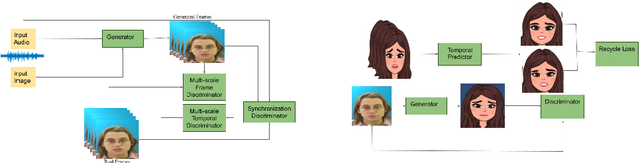
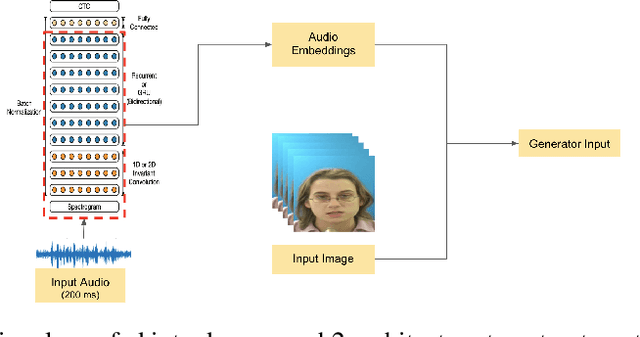
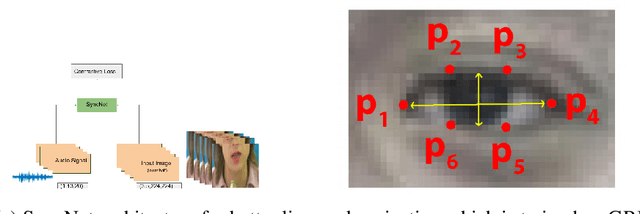

We consider the challenging problem of audio to animated video generation. We propose a novel method OneShotAu2AV to generate an animated video of arbitrary length using an audio clip and a single unseen image of a person as an input. The proposed method consists of two stages. In the first stage, OneShotAu2AV generates the talking-head video in the human domain given an audio and a person's image. In the second stage, the talking-head video from the human domain is converted to the animated domain. The model architecture of the first stage consists of spatially adaptive normalization based multi-level generator and multiple multilevel discriminators along with multiple adversarial and non-adversarial losses. The second stage leverages attention based normalization driven GAN architecture along with temporal predictor based recycle loss and blink loss coupled with lipsync loss, for unsupervised generation of animated video. In our approach, the input audio clip is not restricted to any specific language, which gives the method multilingual applicability. OneShotAu2AV can generate animated videos that have: (a) lip movements that are in sync with the audio, (b) natural facial expressions such as blinks and eyebrow movements, (c) head movements. Experimental evaluation demonstrates superior performance of OneShotAu2AV as compared to U-GAT-IT and RecycleGan on multiple quantitative metrics including KID(Kernel Inception Distance), Word error rate, blinks/sec
CatFedAvg: Optimising Communication-efficiency and Classification Accuracy in Federated Learning
Nov 14, 2020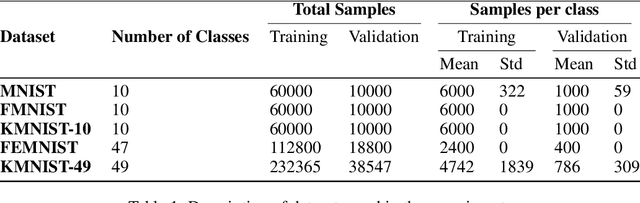
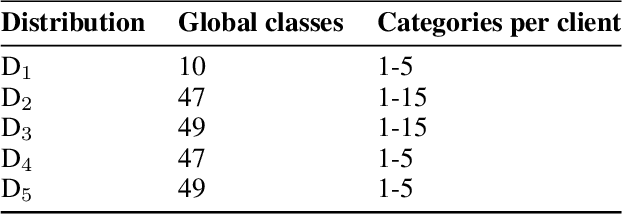
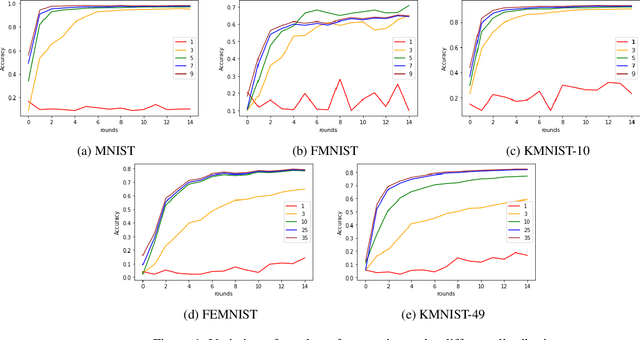

Federated learning has allowed the training of statistical models over remote devices without the transfer of raw client data. In practice, training in heterogeneous and large networks introduce novel challenges in various aspects like network load, quality of client data, security and privacy. Recent works in FL have worked on improving communication efficiency and addressing uneven client data distribution independently, but none have provided a unified solution for both challenges. We introduce a new family of Federated Learning algorithms called CatFedAvg which not only improves the communication efficiency but improves the quality of learning using a category coverage maximization strategy. We use the FedAvg framework and introduce a simple and efficient step every epoch to collect meta-data about the client's training data structure which the central server uses to request a subset of weight updates. We explore two distinct variations which allow us to further explore the tradeoffs between communication efficiency and model accuracy. Our experiments based on a vision classification task have shown that an increase of 10% absolute points in accuracy using the MNIST dataset with 70% absolute points lower network transfer over FedAvg. We also run similar experiments with Fashion MNIST, KMNIST-10, KMNIST-49 and EMNIST-47. Further, under extreme data imbalance experiments for both globally and individual clients, we see the model performing better than FedAvg. The ablation study further explores its behaviour under varying data and client parameter conditions showcasing the robustness of the proposed approach.