 Add to Chrome
 Add to Firefox
 Add to Edge
Eliminating Registration Bias in Synthetic CT Generation: A Physics-Based Simulation Framework
Feb 02, 2026
Supervised synthetic CT generation from CBCT requires registered training pairs, yet perfect registration between separately acquired scans remains unattainable. This registration bias propagates into trained models and corrupts standard evaluation metrics. This may suggest that superior benchmark performance indicates better reproduction of registration artifacts rather than anatomical fidelity. We propose physics-based CBCT simulation to provide geometrically aligned training pairs by construction, combined with evaluation using geometric alignment metrics against input CBCT rather than biased ground truth. On two independent pelvic datasets, models trained on synthetic data achieved superior geometric alignment (Normalized Mutual Information: 0.31 vs 0.22) despite lower conventional intensity scores. Intensity metrics showed inverted correlations with clinical assessment for deformably registered data, while Normalized Mutual Information consistently predicted observer preference across registration methodologies (rho = 0.31, p < 0.001). Clinical observers preferred synthetic-trained outputs in 87% of cases, demonstrating that geometric fidelity, not intensity agreement with biased ground truth, aligns with clinical requirements.

Realistic 3D printed imaging tumor phantoms for validation of image processing algorithms
Nov 27, 2022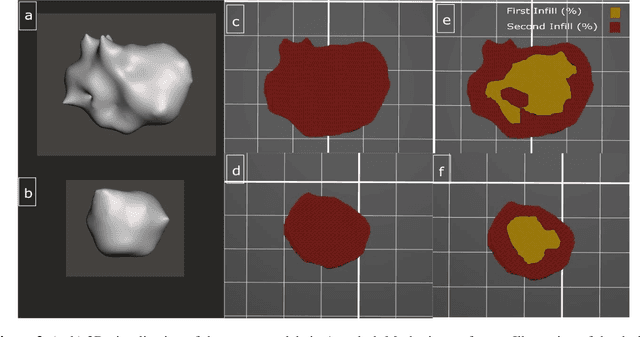

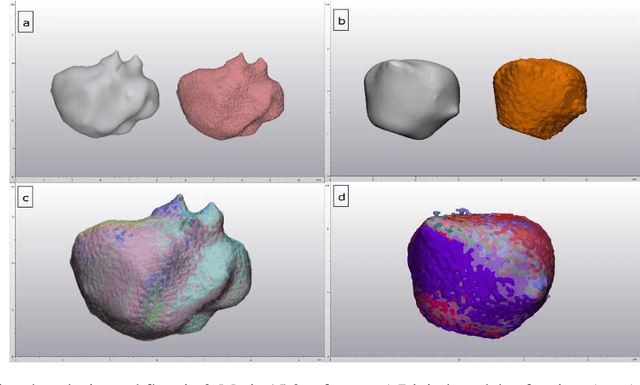

Medical imaging phantoms are widely used for validation and verification of imaging systems and algorithms in surgical guidance and radiation oncology procedures. Especially, for the performance evaluation of new algorithms in the field of medical imaging, manufactured phantoms need to replicate specific properties of the human body, e.g., tissue morphology and radiological properties. Additive manufacturing (AM) technology provides an inexpensive opportunity for accurate anatomical replication with customization capabilities. In this study, we proposed a simple and cheap protocol to manufacture realistic tumor phantoms based on the filament 3D printing technology. Tumor phantoms with both homogenous and heterogenous radiodensity were fabricated. The radiodensity similarity between the printed tumor models and real tumor data from CT images of lung cancer patients was evaluated. Additionally, it was investigated whether a heterogeneity in the 3D printed tumor phantoms as observed in the tumor patient data had an influence on the validation of image registration algorithms. A density range between -217 to 226 HUs was achieved for 3D printed phantoms; this range of radiation attenuation is also observed in the human lung tumor tissue. The resulted HU range could serve as a lookup-table for researchers and phantom manufactures to create realistic CT tumor phantoms with the desired range of radiodensities. The 3D printed tumor phantoms also precisely replicated real lung tumor patient data regarding morphology and could also include life-like heterogeneity of the radiodensity inside the tumor models. An influence of the heterogeneity on accuracy and robustness of the image registration algorithms was not found.