 Add to Chrome
 Add to Firefox
 Add to Edge
MolmoWeb: Open Visual Web Agent and Open Data for the Open Web
Apr 09, 2026
Web agents--autonomous systems that navigate and execute tasks on the web on behalf of users--have the potential to transform how people interact with the digital world. However, the most capable web agents today rely on proprietary models with undisclosed training data and recipes, limiting scientific understanding, reproducibility, and community-driven progress. We believe agents for the open web should be built in the open. To this end, we introduce (1) MolmoWebMix, a large and diverse mixture of browser task demonstrations and web-GUI perception data and (2) MolmoWeb, a family of fully open multimodal web agents. Specifically, MolmoWebMix combines over 100K synthetic task trajectories from multiple complementary generation pipelines with 30K+ human demonstrations, atomic web-skill trajectories, and GUI perception data, including referring expression grounding and screenshot question answering. MolmoWeb agents operate as instruction-conditioned visual-language action policies: given a task instruction and a webpage screenshot, they predict the next browser action, requiring no access to HTML, accessibility trees, or specialized APIs. Available in 4B and 8B size, on browser-use benchmarks like WebVoyager, Online-Mind2Web, and DeepShop, MolmoWeb agents achieve state-of-the-art results outperforming similar scale open-weight-only models such as Fara-7B, UI-Tars-1.5-7B, and Holo1-7B. MolmoWeb-8B also surpasses set-of-marks (SoM) agents built on much larger closed frontier models like GPT-4o. We further demonstrate consistent gains through test-time scaling via parallel rollouts with best-of-N selection, achieving 94.7% and 60.5% pass@4 (compared to 78.2% and 35.3% pass@1) on WebVoyager and Online-Mind2Web respectively. We will release model checkpoints, training data, code, and a unified evaluation harness to enable reproducibility and accelerate open research on web agents.

STARS: Sensor-agnostic Transformer Architecture for Remote Sensing
Nov 08, 2024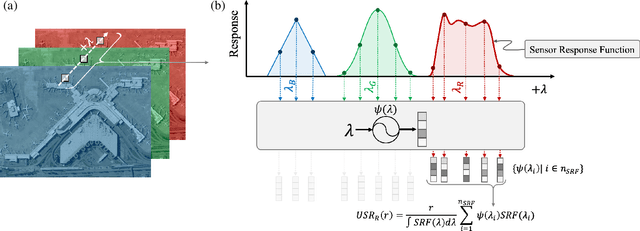

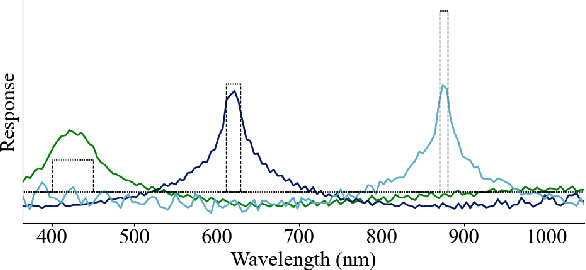
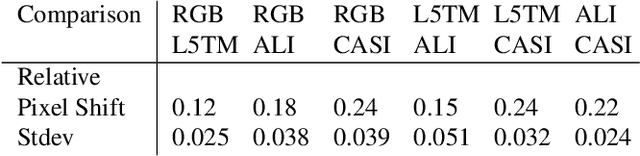
We present a sensor-agnostic spectral transformer as the basis for spectral foundation models. To that end, we introduce a Universal Spectral Representation (USR) that leverages sensor meta-data, such as sensing kernel specifications and sensing wavelengths, to encode spectra obtained from any spectral instrument into a common representation, such that a single model can ingest data from any sensor. Furthermore, we develop a methodology for pre-training such models in a self-supervised manner using a novel random sensor-augmentation and reconstruction pipeline to learn spectral features independent of the sensing paradigm. We demonstrate that our architecture can learn sensor independent spectral features that generalize effectively to sensors not seen during training. This work sets the stage for training foundation models that can both leverage and be effective for the growing diversity of spectral data.