 Add to Chrome
 Add to Firefox
 Add to Edge
On the Influence of the Feature Computation Budget on Per-Instance Algorithm Selection for Black-Box Optimization
May 06, 2026
Per-instance algorithm selection (PIAS) takes advantage of complementarity between a set of algorithms by deciding which algorithm to run on a given instance. This decision is based on features of the instances, which, in the context of black-box optimization (BBO), require a part of the optimization budget to be computed. This raises two questions: (a) from which fraction of the budget spent on feature computation does PIAS become worth it for BBO, and (b) which fraction of the budget optimizes the tradeoff between feature accuracy and PIAS performance. To this end, we perform a broad study where PIAS with varying sampling budgets for feature computation is compared to the single best algorithm on a broad range of algorithm selection scenarios. These scenarios consist of two portfolio sizes, three problem sets, 4 dimensionalities, and 10 target budgets. We find that PIAS is viable for the majority of tested scenarios, even when as much as a quarter of the total budget is spent on feature computation. The tradeoff for the fraction of the budget spent on feature computation to maximize the benefit of PIAS is highly dependent on the specific AS scenario. Further, on average 20 percent of PIAS loss to the virtual best solver is explained by the budget spent on feature computation, highlighting the importance of properly accounting for the feature budget.

Similarity-based Portfolio Construction for Black-box Optimization
Apr 20, 2026In black-box optimization, a central question is which algorithm to use to solve a given, previously unseen, problem. Selecting a single algorithm, however, entails inherent risks: inaccuracies in the selector may lead to poor choices, and even well-performing algorithms with high variance can yield unsatisfactory results in a single run. A natural remedy is to split the evaluation budget across multiple runs of potentially different algorithms. Such sequential algorithm portfolios benefit from variance reduction and complementarities between algorithms, often outperforming approaches that allocate the entire budget to a single solver. While effective portfolios can be constructed post-hoc, transferring this idea to the algorithm selection setting is non-trivial. We show that a naive portfolio constructed over the full training set already outperforms the strongest traditional baseline, the virtual best solver. We then propose a simple yet effective k-nearest-neighbor-based finetuning approach to construct portfolios tailored to unseen instances, yielding further improvements and highlighting the effectiveness of portfolio selection in fixed-budget black-box optimization.
How Sequential Algorithm Portfolios can benefit Black Box Optimization
Jan 23, 2026In typical black-box optimization applications, the available computational budget is often allocated to a single algorithm, typically chosen based on user preference with limited knowledge about the problem at hand or according to some expert knowledge. However, we show that splitting the budget across several algorithms yield significantly better results. This approach benefits from both algorithm complementarity across diverse problems and variance reduction within individual functions, and shows that algorithm portfolios do NOT require parallel evaluation capabilities. To demonstrate the advantage of sequential algorithm portfolios, we apply it to the COCO data archive, using over 200 algorithms evaluated on the BBOB test suite. The proposed sequential portfolios consistently outperform single-algorithm baselines, achieving relative performance gains of over 14%, and offering new insights into restart mechanisms and potential for warm-started execution strategies.
Benchmarking that Matters: Rethinking Benchmarking for Practical Impact
Nov 15, 2025Benchmarking has driven scientific progress in Evolutionary Computation, yet current practices fall short of real-world needs. Widely used synthetic suites such as BBOB and CEC isolate algorithmic phenomena but poorly reflect the structure, constraints, and information limitations of continuous and mixed-integer optimization problems in practice. This disconnect leads to the misuse of benchmarking suites for competitions, automated algorithm selection, and industrial decision-making, despite these suites being designed for different purposes. We identify key gaps in current benchmarking practices and tooling, including limited availability of real-world-inspired problems, missing high-level features, and challenges in multi-objective and noisy settings. We propose a vision centered on curated real-world-inspired benchmarks, practitioner-accessible feature spaces and community-maintained performance databases. Real progress requires coordinated effort: A living benchmarking ecosystem that evolves with real-world insights and supports both scientific understanding and industrial use.
A Standardized Benchmark Set of Clustering Problem Instances for Comparing Black-Box Optimizers
May 14, 2025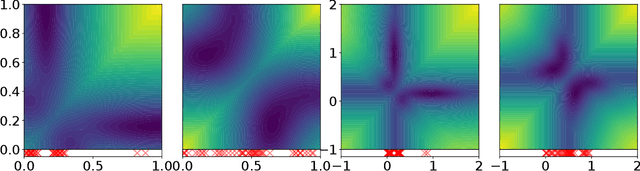
One key challenge in optimization is the selection of a suitable set of benchmark problems. A common goal is to find functions which are representative of a class of real-world optimization problems in order to ensure findings on the benchmarks will translate to relevant problem domains. While some problem characteristics are well-covered by popular benchmarking suites, others are often overlooked. One example of such a problem characteristic is permutation invariance, where the search space consists of a set of symmetrical search regions. This type of problem occurs e.g. when a set of solutions has to be found, but the ordering within this set does not matter. The data clustering problem, often seen in machine learning contexts, is a clear example of such an optimization landscape, and has thus been proposed as a base from which optimization benchmarks can be created. In addition to the symmetry aspect, these clustering problems also contain potential regions of neutrality, which can provide an additional challenge to optimization algorithms. In this paper, we present a standardized benchmark suite for the evaluation of continuous black-box optimization algorithms, based on data clustering problems. To gain insight into the diversity of the benchmark set, both internally and in comparison to existing suites, we perform a benchmarking study of a set of modular CMA-ES configurations, as well as an analysis using exploratory landscape analysis. Our benchmark set is open-source and integrated with the IOHprofiler benchmarking framework to encourage its use in future research.
Abnormal Mutations: Evolution Strategies Don't Require Gaussianity
Feb 05, 2025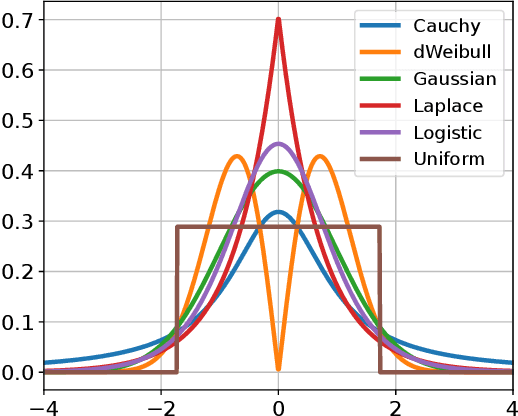

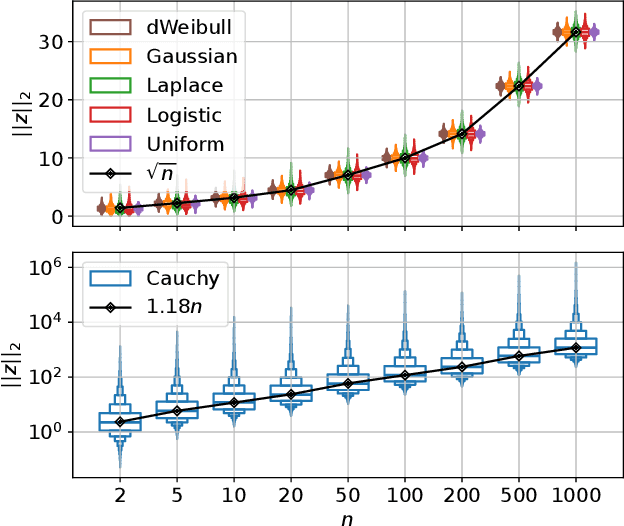

The mutation process in evolution strategies has been interlinked with the normal distribution since its inception. Many lines of reasoning have been given for this strong dependency, ranging from maximum entropy arguments to the need for isotropy. However, some theoretical results suggest that other distributions might lead to similar local convergence properties. This paper empirically shows that a wide range of evolutionary strategies, from the (1+1)-ES to CMA-ES, show comparable optimization performance when using a mutation distribution other than the standard Gaussian. Replacing it with, e.g., uniformly distributed mutations, does not deteriorate the performance of ES, when using the default adaptation mechanism for the strategy parameters. We observe that these results hold not only for the sphere model but also for a wider range of benchmark problems.
Transfer Learning of Surrogate Models: Integrating Domain Warping and Affine Transformations
Jan 30, 2025

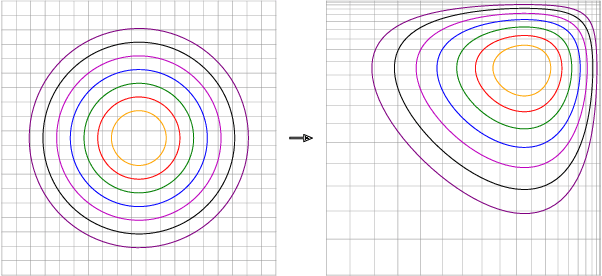
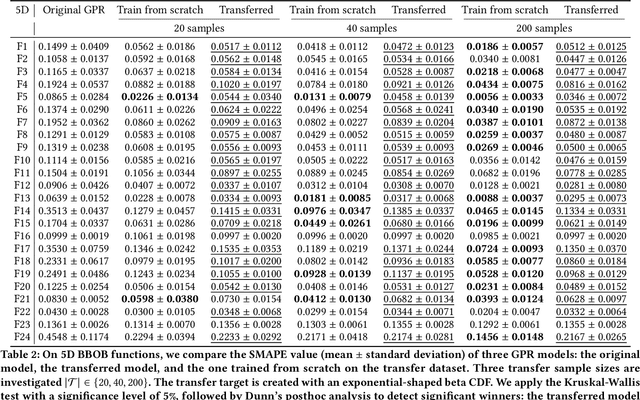
Surrogate models provide efficient alternatives to computationally demanding real-world processes but often require large datasets for effective training. A promising solution to this limitation is the transfer of pre-trained surrogate models to new tasks. Previous studies have investigated the transfer of differentiable and non-differentiable surrogate models, typically assuming an affine transformation between the source and target functions. This paper extends previous research by addressing a broader range of transformations, including linear and nonlinear variations. Specifically, we consider the combination of an unknown input warping, such as one modelled by the beta cumulative distribution function, with an unspecified affine transformation. Our approach achieves transfer learning by employing a limited number of data points from the target task to optimize these transformations, minimizing empirical loss on the transfer dataset. We validate the proposed method on the widely used Black-Box Optimization Benchmark (BBOB) testbed and a real-world transfer learning task from the automobile industry. The results underscore the significant advantages of the approach, revealing that the transferred surrogate significantly outperforms both the original surrogate and the one built from scratch using the transfer dataset, particularly in data-scarce scenarios.
Transfer Learning of Surrogate Models via Domain Affine Transformation Across Synthetic and Real-World Benchmarks
Jan 23, 2025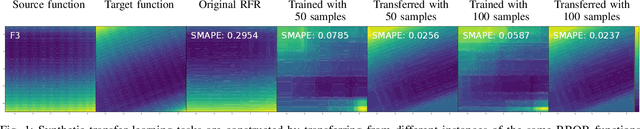


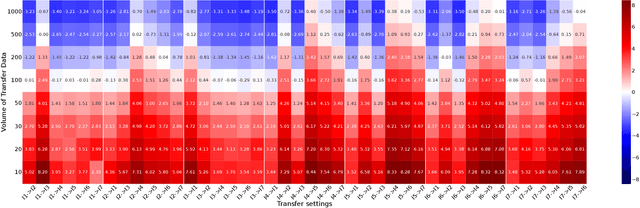
Surrogate models are frequently employed as efficient substitutes for the costly execution of real-world processes. However, constructing a high-quality surrogate model often demands extensive data acquisition. A solution to this issue is to transfer pre-trained surrogate models for new tasks, provided that certain invariances exist between tasks. This study focuses on transferring non-differentiable surrogate models (e.g., random forest) from a source function to a target function, where we assume their domains are related by an unknown affine transformation, using only a limited amount of transfer data points evaluated on the target. Previous research attempts to tackle this challenge for differentiable models, e.g., Gaussian process regression, which minimizes the empirical loss on the transfer data by tuning the affine transformations. In this paper, we extend the previous work to the random forest model and assess its effectiveness on a widely-used artificial problem set - Black-Box Optimization Benchmark (BBOB) testbed, and on four real-world transfer learning problems. The results highlight the significant practical advantages of the proposed method, particularly in reducing both the data requirements and computational costs of training surrogate models for complex real-world scenarios.
Stalling in Space: Attractor Analysis for any Algorithm
Dec 20, 2024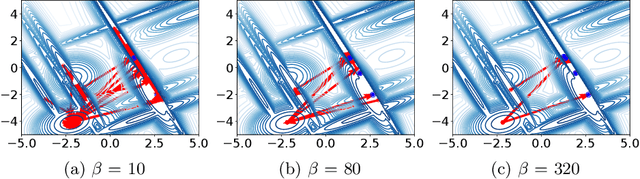
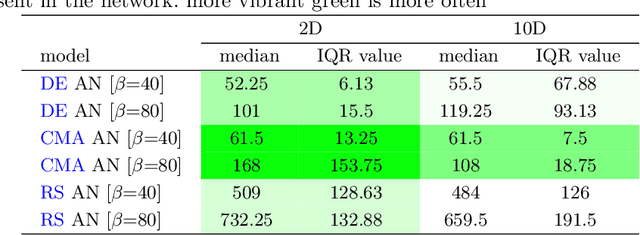
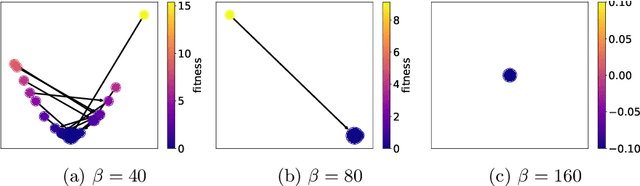
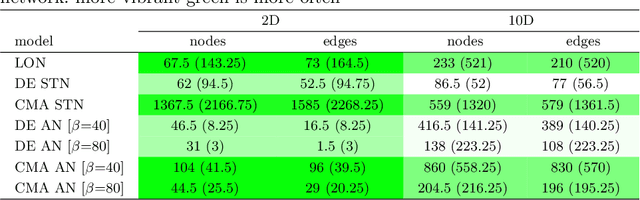
Network-based representations of fitness landscapes have grown in popularity in the past decade; this is probably because of growing interest in explainability for optimisation algorithms. Local optima networks (LONs) have been especially dominant in the literature and capture an approximation of local optima and their connectivity in the landscape. However, thus far, LONs have been constructed according to a strict definition of what a local optimum is: the result of local search. Many evolutionary approaches do not include this, however. Popular algorithms such as CMA-ES have therefore never been subject to LON analysis. Search trajectory networks (STNs) offer a possible alternative: nodes can be any search space location. However, STNs are not typically modelled in such a way that models temporal stalls: that is, a region in the search space where an algorithm fails to find a better solution over a defined period of time. In this work, we approach this by systematically analysing a special case of STN which we name attractor networks. These offer a coarse-grained view of algorithm behaviour with a singular focus on stall locations. We construct attractor networks for CMA-ES, differential evolution, and random search for 24 noiseless black-box optimisation benchmark problems. The properties of attractor networks are systematically explored. They are also visualised and compared to traditional LONs and STN models. We find that attractor networks facilitate insights into algorithm behaviour which other models cannot, and we advocate for the consideration of attractor analysis even for algorithms which do not include local search.
MO-IOHinspector: Anytime Benchmarking of Multi-Objective Algorithms using IOHprofiler
Dec 10, 2024
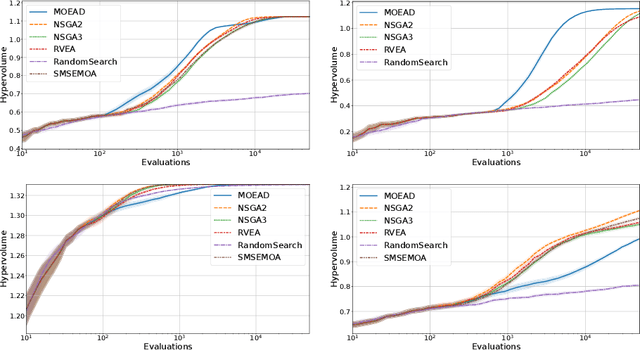


Benchmarking is one of the key ways in which we can gain insight into the strengths and weaknesses of optimization algorithms. In sampling-based optimization, considering the anytime behavior of an algorithm can provide valuable insights for further developments. In the context of multi-objective optimization, this anytime perspective is not as widely adopted as in the single-objective context. In this paper, we propose a new software tool which uses principles from unbounded archiving as a logging structure. This leads to a clearer separation between experimental design and subsequent analysis decisions. We integrate this approach as a new Python module into the IOHprofiler framework and demonstrate the benefits of this approach by showcasing the ability to change indicators, aggregations, and ranking procedures during the analysis pipeline.