 Add to Chrome
 Add to Firefox
 Add to Edge
SlopCodeBench: Benchmarking How Coding Agents Degrade Over Long-Horizon Iterative Tasks
Mar 25, 2026
Software development is iterative, yet agentic coding benchmarks overwhelmingly evaluate single-shot solutions against complete specifications. Code can pass the test suite but become progressively harder to extend. Recent iterative benchmarks attempt to close this gap, but constrain the agent's design decisions too tightly to faithfully measure how code quality shapes future extensions. We introduce SlopCodeBench, a language-agnostic benchmark comprising 20 problems and 93 checkpoints, in which agents repeatedly extend their own prior solutions under evolving specifications that force architectural decisions without prescribing internal structure. We track two trajectory-level quality signals: verbosity, the fraction of redundant or duplicated code, and structural erosion, the share of complexity mass concentrated in high-complexity functions. No agent solves any problem end-to-end across 11 models; the highest checkpoint solve rate is 17.2%. Quality degrades steadily: erosion rises in 80% of trajectories and verbosity in 89.8%. Against 48 open-source Python repositories, agent code is 2.2x more verbose and markedly more eroded. Tracking 20 of those repositories over time shows that human code stays flat, while agent code deteriorates with each iteration. A prompt-intervention study shows that initial quality can be improved, but it does not halt degradation. These results demonstrate that pass-rate benchmarks systematically undermeasure extension robustness, and that current agents lack the design discipline iterative software development demands.

Exploring LLM-based Agents for Root Cause Analysis
Mar 07, 2024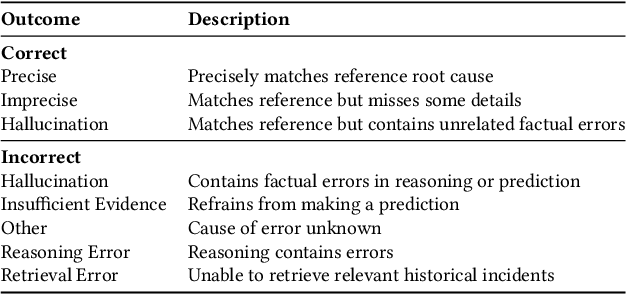

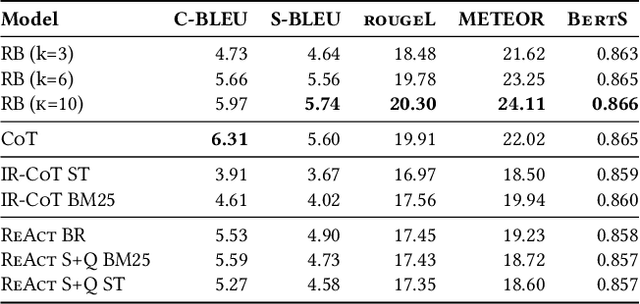
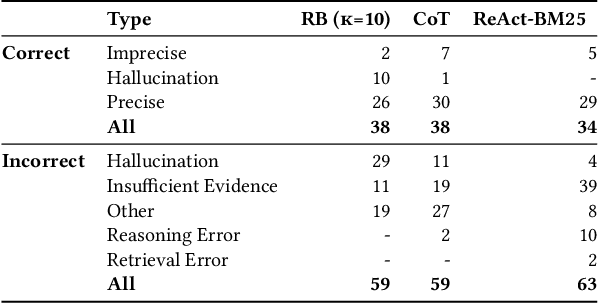
The growing complexity of cloud based software systems has resulted in incident management becoming an integral part of the software development lifecycle. Root cause analysis (RCA), a critical part of the incident management process, is a demanding task for on-call engineers, requiring deep domain knowledge and extensive experience with a team's specific services. Automation of RCA can result in significant savings of time, and ease the burden of incident management on on-call engineers. Recently, researchers have utilized Large Language Models (LLMs) to perform RCA, and have demonstrated promising results. However, these approaches are not able to dynamically collect additional diagnostic information such as incident related logs, metrics or databases, severely restricting their ability to diagnose root causes. In this work, we explore the use of LLM based agents for RCA to address this limitation. We present a thorough empirical evaluation of a ReAct agent equipped with retrieval tools, on an out-of-distribution dataset of production incidents collected at Microsoft. Results show that ReAct performs competitively with strong retrieval and reasoning baselines, but with highly increased factual accuracy. We then extend this evaluation by incorporating discussions associated with incident reports as additional inputs for the models, which surprisingly does not yield significant performance improvements. Lastly, we conduct a case study with a team at Microsoft to equip the ReAct agent with tools that give it access to external diagnostic services that are used by the team for manual RCA. Our results show how agents can overcome the limitations of prior work, and practical considerations for implementing such a system in practice.