 Add to Chrome
 Add to Firefox
 Add to Edge
Belief-Space Control for Personalized Cancer Treatment via Active Inference
Jun 09, 2026
Cancer treatment is at the core a sequential decision-making problem with partial observability, latent patient heterogeneity, and explicit constraints on the budget for medical measurements. Unlike standard Reinforcement Learning (RL) approaches that control state trajectories, cancer treatments permanently modify patients' transition dynamics, changing how states evolve over time. We model cancer treatment as a belief-space planning problem using active inference, deriving an expected free-energy objective that unifies goal-directed control and information acquisition under measurement budgets without. We implement this framework using real clinical cancer data from the AACR Project GENIE Biopharma Collaborative dataset. Results on clinical data demonstrate a simultaneous patient categorization and high treatment efficacy, under real measurement and treatment constraints.

Quickest Detection over Sensor Networks with Unknown Post-Change Distribution
Dec 23, 2020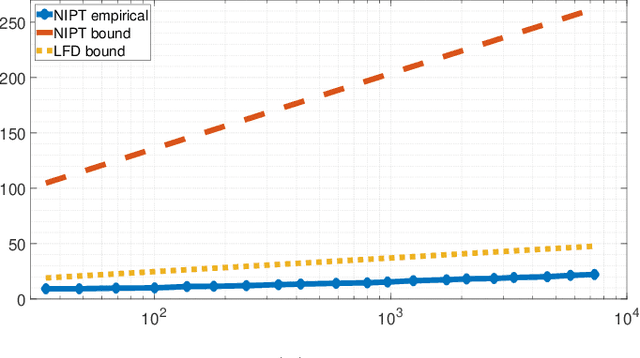
We propose a quickest change detection problem over sensor networks where both the subset of sensors undergoing a change and the local post-change distributions are unknown. Each sensor in the network observes a local discrete time random process over a finite alphabet. Initially, the observations are independent and identically distributed (i.i.d.) with known pre-change distributions independent from other sensors. At a fixed but unknown change point, a fixed but unknown subset of the sensors undergo a change and start observing samples from an unknown distribution. We assume the change can be quantified using concave (or convex) local statistics over the space of distributions. We propose an asymptotically optimal and computationally tractable stopping time for Lorden's criterion. Under this scenario, our proposed method uses a concave global cumulative sum (CUSUM) statistic at the fusion center and suppresses the most likely false alarms using information projection. Finally, we show some numerical results of the simulation of our algorithm for the problem described.