 Add to Chrome
 Add to Firefox
 Add to Edge
Contrast-invariant deep ptychography neural networks
Aug 03, 2026
Ptychography neural networks suffer from scaling inconsistencies when generalizing out of distribution, limiting their real world viability. We address this scaling mismatch using a factorization strategy which decouples the learned object texture from measurement scaling, enabling a single trained network to produce measurement-consistent reconstructions across varying illumination conditions. This requires predicting the learned object in real and imaginary units instead of the canonical amplitude and phase representation. We additionally introduce a synthetic object sampling strategy that minimizes phase distribution mismatch between synthetic training data and experimental targets. These improvements yield up to a 5x reduction in Fourier error over the previous PtychoPINN-torch baseline across 5 experimental datasets spanning multiple beamlines and facilities.

Conceptual Framework for Autonomous Cognitive Entities
Oct 03, 2023The rapid development and adoption of Generative AI (GAI) technology in the form of chatbots such as ChatGPT and Claude has greatly increased interest in agentic machines. This paper introduces the Autonomous Cognitive Entity (ACE) model, a novel framework for a cognitive architecture, enabling machines and software agents to operate more independently. Drawing inspiration from the OSI model, the ACE framework presents layers of abstraction to conceptualize artificial cognitive architectures. The model is designed to harness the capabilities of the latest generative AI technologies, including large language models (LLMs) and multimodal generative models (MMMs), to build autonomous, agentic systems. The ACE framework comprises six layers: the Aspirational Layer, Global Strategy, Agent Model, Executive Function, Cognitive Control, and Task Prosecution. Each layer plays a distinct role, ranging from setting the moral compass and strategic thinking to task selection and execution. The ACE framework also incorporates mechanisms for handling failures and adapting actions, thereby enhancing the robustness and flexibility of autonomous agents. This paper introduces the conceptual framework and proposes implementation strategies that have been tested and observed in industry. The goal of this paper is to formalize this framework so as to be more accessible.
Bringing Impressionism to Life with Neural Style Transfer in Come Swim
Jan 18, 2017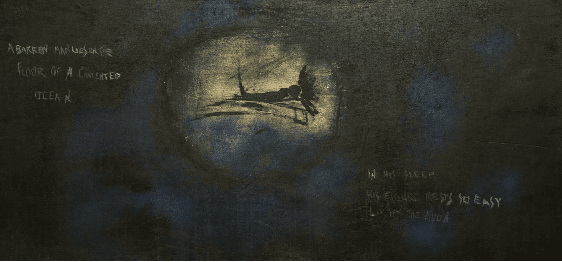
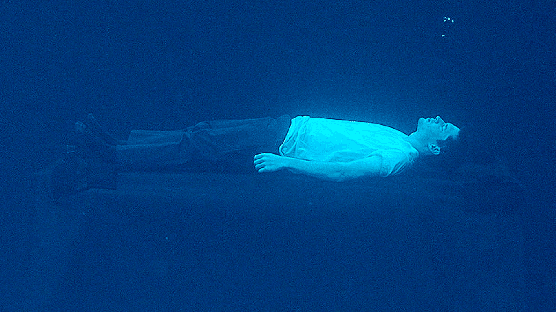
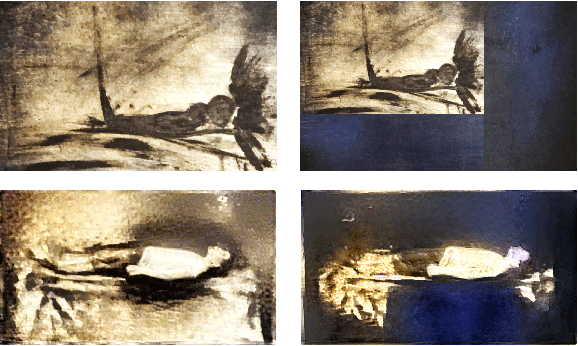
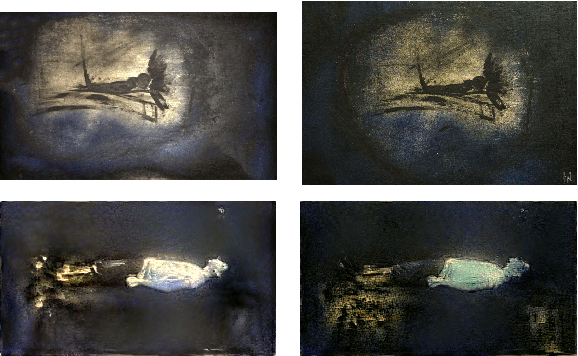
Neural Style Transfer is a striking, recently-developed technique that uses neural networks to artistically redraw an image in the style of a source style image. This paper explores the use of this technique in a production setting, applying Neural Style Transfer to redraw key scenes in 'Come Swim' in the style of the impressionistic painting that inspired the film. We document how the technique can be driven within the framework of an iterative creative process to achieve a desired look, and propose a mapping of the broad parameter space to a key set of creative controls. We hope that this mapping can provide insights into priorities for future research.