 Add to Chrome
 Add to Firefox
 Add to Edge
Competitive and Complementary Tools
Jul 20, 2026
Humans have always externalized thought onto tools, from the tally and the abacus to the map and, now, large language models. I model the agent, the tool, and the task as one dynamical system in which competence (what the user retains) and reliance (what the user outsources) co-evolve, and find that the outcome is bistable. Above a critical tool availability the competent state is destroyed and competence collapses toward a low dependent floor as the user outsources completely. Lowering availability does not reverse the collapse until a far lower threshold, so history of practice rather than the current tool fixes the state. Two users with the same present access can therefore occupy opposite and lasting states, one competent and one dependent, decided only by which they built first. The collapse threshold depends jointly on the competence a user brings to a task and on the tool's transparency, the fraction of its working a user can reconstruct. In the case where an agent faces an uncertain goal, a tool can cause agency itself to transfer to the tool and the human-agent becomes an agentic-instrument, irreversibly, because the tool's model is too large to internalize. The model is tested against several independent data sets, including GPS and map use, arithmetic expertise, and language models. These results reframe how tools should be built, how artificial intelligence is deployed, and what a tool-resistant education might require.

The Rise and Fall of $G$ in AGI
Apr 10, 2026In the psychological literature the term `general intelligence' describes correlations between abilities and not simply the number of abilities. This paper connects Spearman's $g$-factor from psychometrics, measuring a positive manifold, to the implicit ``$G$-factor'' in claims about artificial general intelligence (AGI) performance on temporally structured benchmarks. By treating LLM benchmark batteries as cognitive test batteries and model releases as subjects, principal component analysis is applied to a models $\times$ benchmarks $\times$ time matrix spanning 39 models (2019--2025) and 14 benchmarks. Preliminary results confirm a strong positive manifold in which all 28 pairwise correlations positive across 8 benchmarks. By analyzing the spectrum of the benchmark correlation through time, PC1 explains 90\% of variance on a 5-benchmark core battery ($n=19$)) reducing to 77\% by 2024. On a four benchmark battery, PC1 is found to peak at 92\% of the variance between 2023--2024 and reduce to 64\% with the arrival of reasoning-specialized models in 2024. This is coincident with a rotation in the G-factor as models outsource `reasoning' to tools. The analysis of partial correlation matrices through time provides evidence for the evolution of specialization beneath the positive manifold of general intelligence (AI-hedgehog) encompassing diverse high dimensional problem solving systems (AI-foxes). In strictly psychometric terms, AI models exhibit general intelligence suppressing specialized intelligences. LLMs invert the ideal of substituting complicated models with parsimonious mechanisms, a `Ptolemaic Succession' of theories, with architectures of increasing hierarchical complication and capability.
The Cultural Evolution of National Constitutions
Nov 18, 2017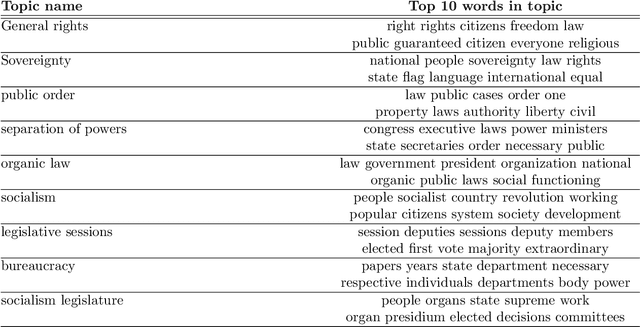
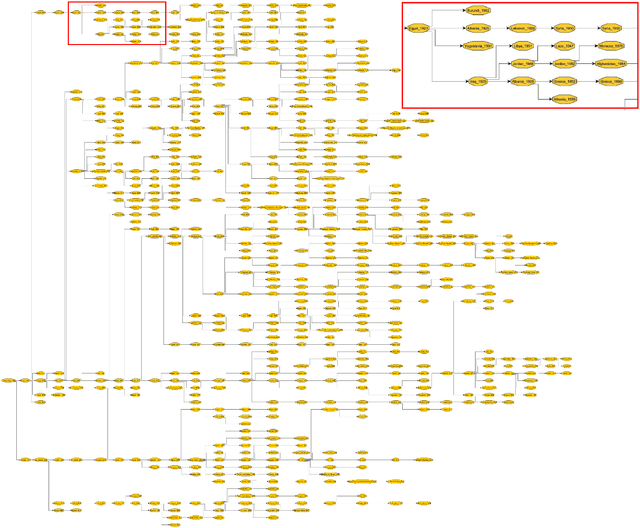
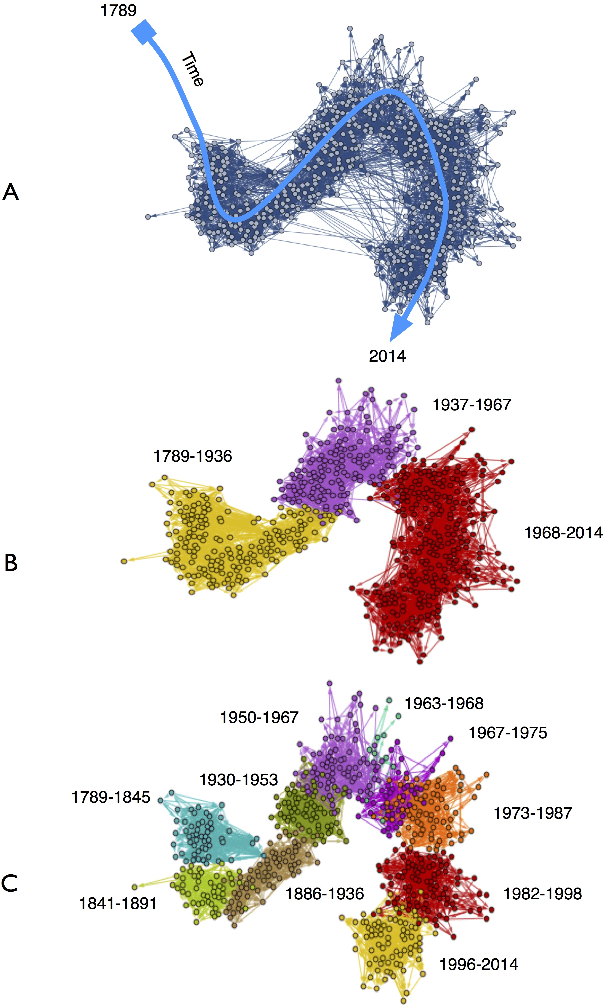
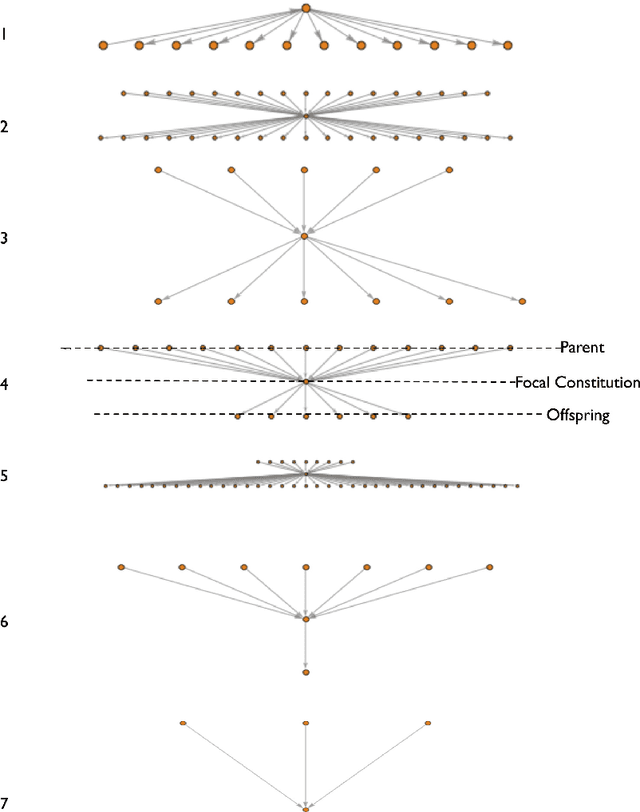
We explore how ideas from infectious disease and genetics can be used to uncover patterns of cultural inheritance and innovation in a corpus of 591 national constitutions spanning 1789 - 2008. Legal "Ideas" are encoded as "topics" - words statistically linked in documents - derived from topic modeling the corpus of constitutions. Using these topics we derive a diffusion network for borrowing from ancestral constitutions back to the US Constitution of 1789 and reveal that constitutions are complex cultural recombinants. We find systematic variation in patterns of borrowing from ancestral texts and "biological"-like behavior in patterns of inheritance with the distribution of "offspring" arising through a bounded preferential-attachment process. This process leads to a small number of highly innovative (influential) constitutions some of which have yet to have been identified as so in the current literature. Our findings thus shed new light on the critical nodes of the constitution-making network. The constitutional network structure reflects periods of intense constitution creation, and systematic patterns of variation in constitutional life-span and temporal influence.