 Add to Chrome
 Add to Firefox
 Add to Edge
AnnotateMissense: a genome-wide annotation and benchmarking framework for missense pathogenicity prediction
May 23, 2026
Missense variant interpretation remains challenging because pathogenicity depends on heterogeneous evidence from population frequency, evolutionary conservation, transcript context, amino acid substitution severity, prior pathogenicity predictors and protein-language-model-derived features. We present AnnotateMissense, a scalable annotation, benchmarking and genome-wide prediction framework for missense variant interpretation. AnnotateMissense integrates hg38 missense variants derived from dbNSFP v5.1 with ANNOVAR annotations, dbNSFP transcript/protein descriptors, AlphaMissense scores, ESM-derived features, conservation metrics, population-frequency variables, established pathogenicity predictors and engineered amino acid/codon-context features. Using 132,714 ClinVar-labelled missense variants, we benchmarked machine-learning and deep-learning models under controlled feature configurations. The full 303-feature benchmark set achieved the strongest performance with XGBoost, reaching mean MCC = 0.9411 and ROC-AUC = 0.9950 across stratified five-fold cross-validation. Restricted naive and location-oriented feature sets achieved lower best MCC values of 0.4989 and 0.5113, respectively. Circularity-controlled ablations showed that removing prior-predictor, population-frequency and clinically overlapping evidence reduced performance, whereas excluding AlphaMissense and ESM-derived features alone had minimal effect. Temporal ClinVar validation on newly observed pathogenic/benign variants achieved MCC = 0.7613, accuracy = 0.8798 and F1-score = 0.8750. The final model was applied to 90,643,830 hg38 missense variants to generate AnnotateMissense pathogenicity scores and binary prediction labels. Code and outputs are available at https://github.com/MuhammadMuneeb007/CAGI7_Annotate_All_Missense and https://doi.org/10.5281/zenodo.19981867.

DPD-Cancer: Explainable Graph-based Deep Learning for Small Molecule Anti-Cancer Activity Prediction
Mar 27, 2026Accurate drug response prediction is a critical bottleneck in computational biochemistry, limited by the challenge of modelling the interplay between molecular structure and cellular context. In cancer research, this is acute due to tumour heterogeneity and genomic variability, which hinder the identification of effective therapies. Conventional approaches often fail to capture non-linear relationships between chemical features and biological outcomes across diverse cell lines. To address this, we introduce DPD-Cancer, a deep learning method based on a Graph Attention Transformer (GAT) framework. It is designed for small molecule anti-cancer activity classification and the quantitative prediction of cell-line specific responses, specifically growth inhibition concentration (pGI50). Benchmarked against state-of-the-art methods (pdCSM-cancer, ACLPred, and MLASM), DPD-Cancer demonstrated superior performance, achieving an Area Under ROC Curve (AUC) of up to 0.87 on strictly partitioned NCI60 data and up to 0.98 on ACLPred/MLASM datasets. For pGI50 prediction across 10 cancer types and 73 cell lines, the model achieved Pearson's correlation coefficients of up to 0.72 on independent test sets. These findings confirm that attention-based mechanisms offer significant advantages in extracting meaningful molecular representations, establishing DPD-Cancer as a competitive tool for prioritising drug candidates. Furthermore, DPD-Cancer provides explainability by leveraging the attention mechanism to identify and visualise specific molecular substructures, offering actionable insights for lead optimisation. DPD-Cancer is freely available as a web server at: https://biosig.lab.uq.edu.au/dpd_cancer/.
G2DR: A Genotype-First Framework for Genetics-Informed Target Prioritization and Drug Repurposing
Mar 20, 2026Human genetics offers a promising route to therapeutic discovery, yet practical frameworks translating genotype-derived signal into ranked target and drug hypotheses remain limited, particularly when matched disease transcriptomics are unavailable. Here we present G2DR, a genotype-first prioritization framework propagating inherited variation through genetically predicted expression, multi-method gene-level testing, pathway enrichment, network context, druggability, and multi-source drug--target evidence integration. In a migraine case study with 733 UK Biobank participants under stratified five-fold cross-validation, we imputed expression across seven transcriptome-weight resources and ranked genes using a reproducibility-aware discovery score from training and validation data, followed by a balanced integrated score for target selection. Discovery-based prioritization generalized to held-out data, achieving gene-level ROC-AUC of 0.775 and PR-AUC of 0.475, while retaining enrichment for curated migraine biology. Mapping prioritized genes to compounds via Open Targets, DGIdb, and ChEMBL yielded drug sets enriched for migraine-linked compounds relative to a global background, though recovery favoured broader mechanism-linked and off-label space over migraine-specific approved therapies. Directionality filtering separated broadly recovered compounds from mechanistically compatible candidates. G2DR is a modular framework for genetics-informed hypothesis generation, not a clinically actionable recommendation system. All outputs require independent experimental, pharmacological, and clinical validation.
Auto-ADMET: An Effective and Interpretable AutoML Method for Chemical ADMET Property Prediction
Feb 22, 2025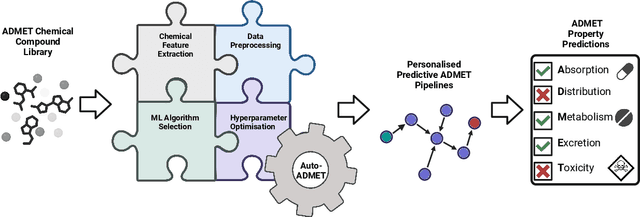
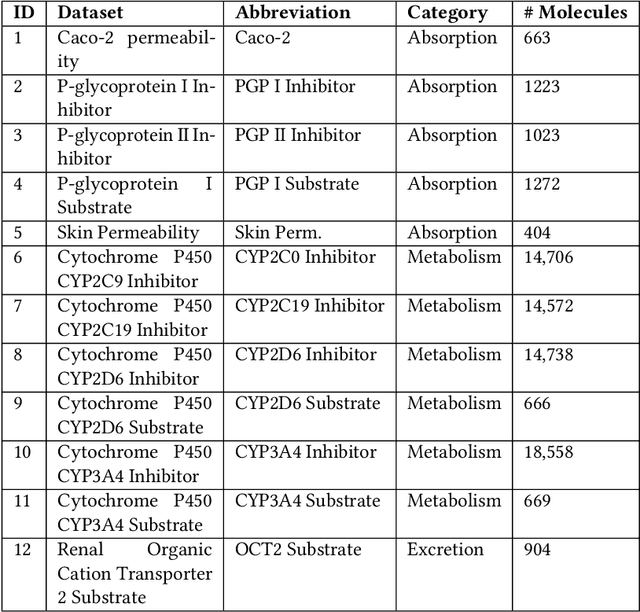
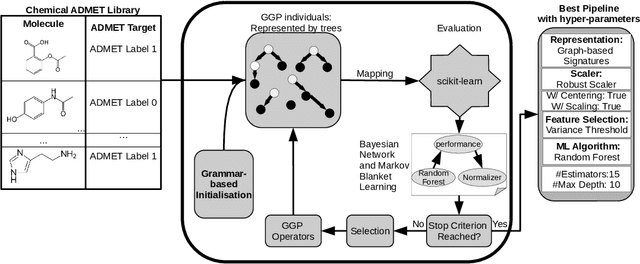
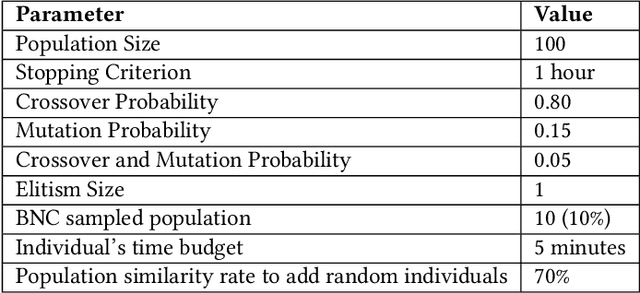
Machine learning (ML) has been playing important roles in drug discovery in the past years by providing (pre-)screening tools for prioritising chemical compounds to pass through wet lab experiments. One of the main ML tasks in drug discovery is to build quantitative structure-activity relationship (QSAR) models, associating the molecular structure of chemical compounds with an activity or property. These properties -- including absorption, distribution, metabolism, excretion and toxicity (ADMET) -- are essential to model compound behaviour, activity and interactions in the organism. Although several methods exist, the majority of them do not provide an appropriate model's personalisation, yielding to bias and lack of generalisation to new data since the chemical space usually shifts from application to application. This fact leads to low predictive performance when completely new data is being tested by the model. The area of Automated Machine Learning (AutoML) emerged aiming to solve this issue, outputting tailored ML algorithms to the data at hand. Although an important task, AutoML has not been practically used to assist cheminformatics and computational chemistry researchers often, with just a few works related to the field. To address these challenges, this work introduces Auto-ADMET, an interpretable evolutionary-based AutoML method for chemical ADMET property prediction. Auto-ADMET employs a Grammar-based Genetic Programming (GGP) method with a Bayesian Network Model to achieve comparable or better predictive performance against three alternative methods -- standard GGP method, pkCSM and XGBOOST model -- on 12 benchmark chemical ADMET property prediction datasets. The use of a Bayesian Network model on Auto-ADMET's evolutionary process assisted in both shaping the search procedure and interpreting the causes of its AutoML performance.
Towards Evolutionary-based Automated Machine Learning for Small Molecule Pharmacokinetic Prediction
Aug 01, 2024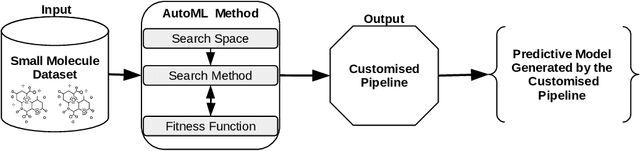
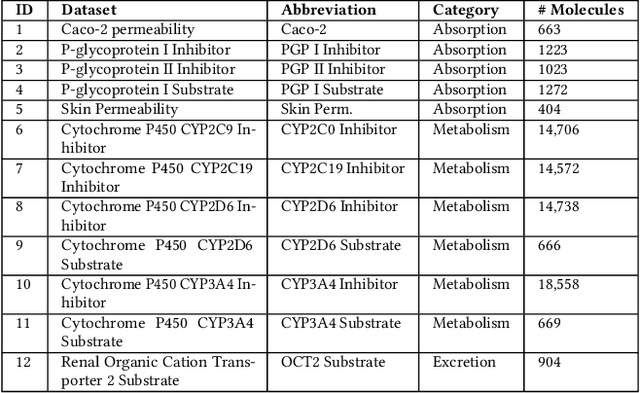
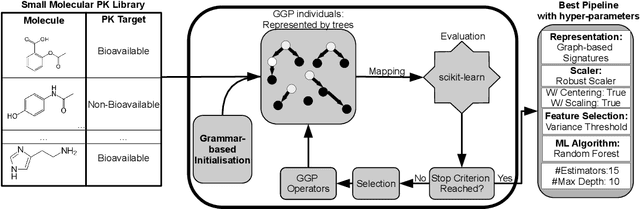
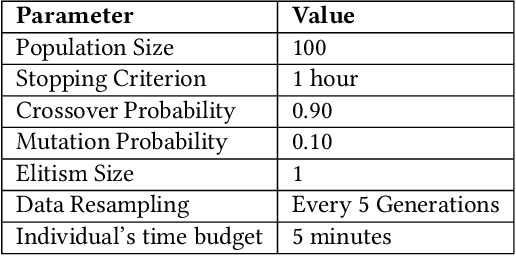
Machine learning (ML) is revolutionising drug discovery by expediting the prediction of small molecule properties essential for developing new drugs. These properties -- including absorption, distribution, metabolism and excretion (ADME)-- are crucial in the early stages of drug development since they provide an understanding of the course of the drug in the organism, i.e., the drug's pharmacokinetics. However, existing methods lack personalisation and rely on manually crafted ML algorithms or pipelines, which can introduce inefficiencies and biases into the process. To address these challenges, we propose a novel evolutionary-based automated ML method (AutoML) specifically designed for predicting small molecule properties, with a particular focus on pharmacokinetics. Leveraging the advantages of grammar-based genetic programming, our AutoML method streamlines the process by automatically selecting algorithms and designing predictive pipelines tailored to the particular characteristics of input molecular data. Results demonstrate AutoML's effectiveness in selecting diverse ML algorithms, resulting in comparable or even improved predictive performances compared to conventional approaches. By offering personalised ML-driven pipelines, our method promises to enhance small molecule research in drug discovery, providing researchers with a valuable tool for accelerating the development of novel therapeutic drugs.
Explainable Machine Learning for ICU Readmission Prediction
Sep 27, 2023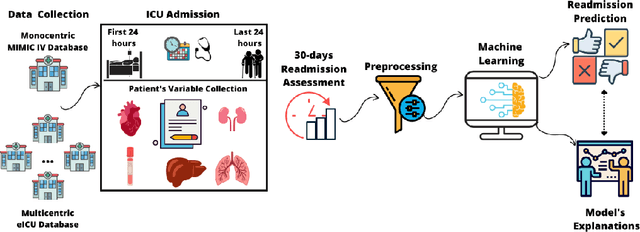
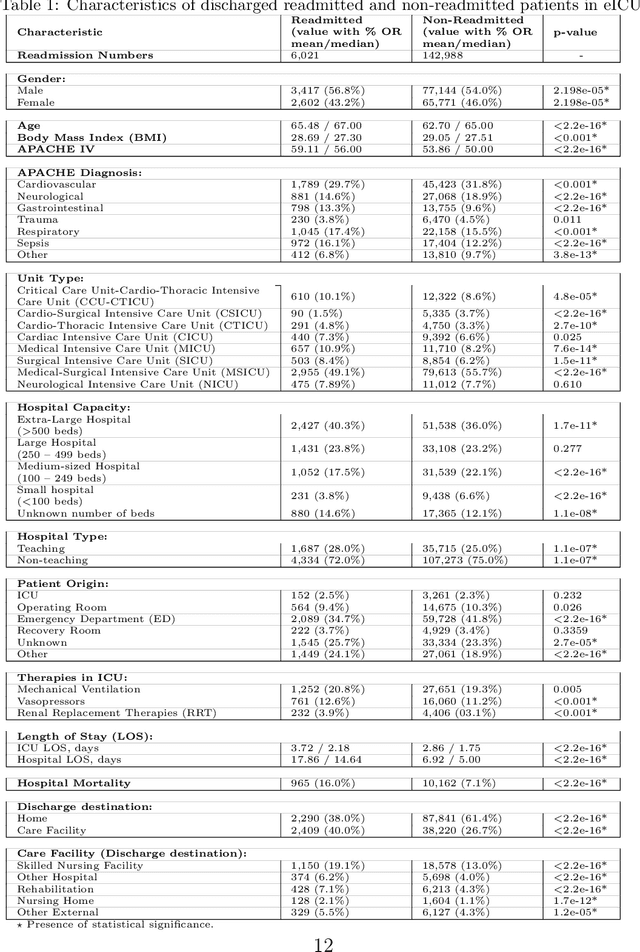
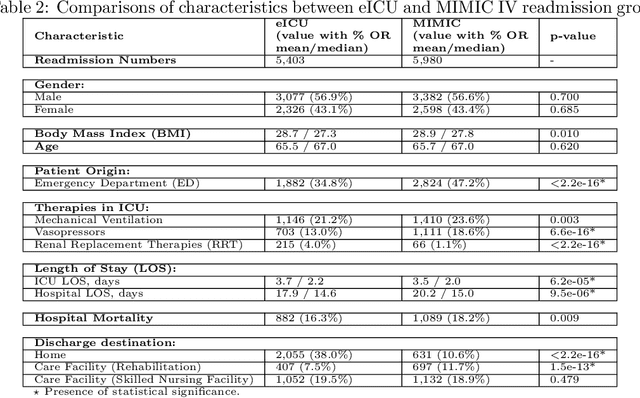
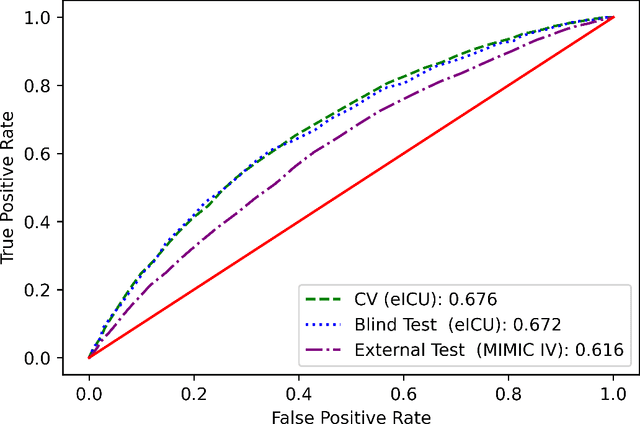
The intensive care unit (ICU) comprises a complex hospital environment, where decisions made by clinicians have a high level of risk for the patients' lives. A comprehensive care pathway must then be followed to reduce p complications. Uncertain, competing and unplanned aspects within this environment increase the difficulty in uniformly implementing the care pathway. Readmission contributes to this pathway's difficulty, occurring when patients are admitted again to the ICU in a short timeframe, resulting in high mortality rates and high resource utilisation. Several works have tried to predict readmission through patients' medical information. Although they have some level of success while predicting readmission, those works do not properly assess, characterise and understand readmission prediction. This work proposes a standardised and explainable machine learning pipeline to model patient readmission on a multicentric database (i.e., the eICU cohort with 166,355 patients, 200,859 admissions and 6,021 readmissions) while validating it on monocentric (i.e., the MIMIC IV cohort with 382,278 patients, 523,740 admissions and 5,984 readmissions) and multicentric settings. Our machine learning pipeline achieved predictive performance in terms of the area of the receiver operating characteristic curve (AUC) up to 0.7 with a Random Forest classification model, yielding an overall good calibration and consistency on validation sets. From explanations provided by the constructed models, we could also derive a set of insightful conclusions, primarily on variables related to vital signs and blood tests (e.g., albumin, blood urea nitrogen and hemoglobin levels), demographics (e.g., age, and admission height and weight), and ICU-associated variables (e.g., unit type). These insights provide an invaluable source of information during clinicians' decision-making while discharging ICU patients.
AI driven B-cell Immunotherapy Design
Sep 03, 2023Antibodies, a prominent class of approved biologics, play a crucial role in detecting foreign antigens. The effectiveness of antigen neutralisation and elimination hinges upon the strength, sensitivity, and specificity of the paratope-epitope interaction, which demands resource-intensive experimental techniques for characterisation. In recent years, artificial intelligence and machine learning methods have made significant strides, revolutionising the prediction of protein structures and their complexes. The past decade has also witnessed the evolution of computational approaches aiming to support immunotherapy design. This review focuses on the progress of machine learning-based tools and their frameworks in the domain of B-cell immunotherapy design, encompassing linear and conformational epitope prediction, paratope prediction, and antibody design. We mapped the most commonly used data sources, evaluation metrics, and method availability and thoroughly assessed their significance and limitations, discussing the main challenges ahead.