 Add to Chrome
 Add to Firefox
 Add to Edge
A Causal Framework for Evaluating ICU Discharge Strategies
Mar 26, 2026
In this applied paper, we address the difficult open problem of when to discharge patients from the Intensive Care Unit. This can be conceived as an optimal stopping scenario with three added challenges: 1) the evaluation of a stopping strategy from observational data is itself a complex causal inference problem, 2) the composite objective is to minimize the length of intervention and maximize the outcome, but the two cannot be collapsed to a single dimension, and 3) the recording of variables stops when the intervention is discontinued. Our contributions are two-fold. First, we generalize the implementation of the g-formula Python package, providing a framework to evaluate stopping strategies for problems with the aforementioned structure, including positivity and coverage checks. Second, with a fully open-source pipeline, we apply this approach to MIMIC-IV, a public ICU dataset, demonstrating the potential for strategies that improve upon current care.

Causal prediction models for medication safety monitoring: The diagnosis of vancomycin-induced acute kidney injury
Nov 15, 2023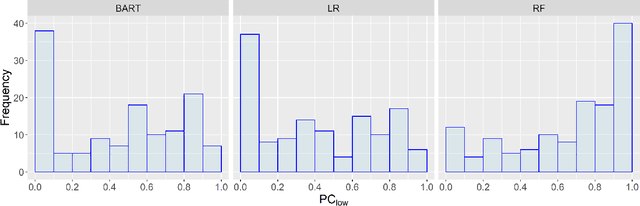

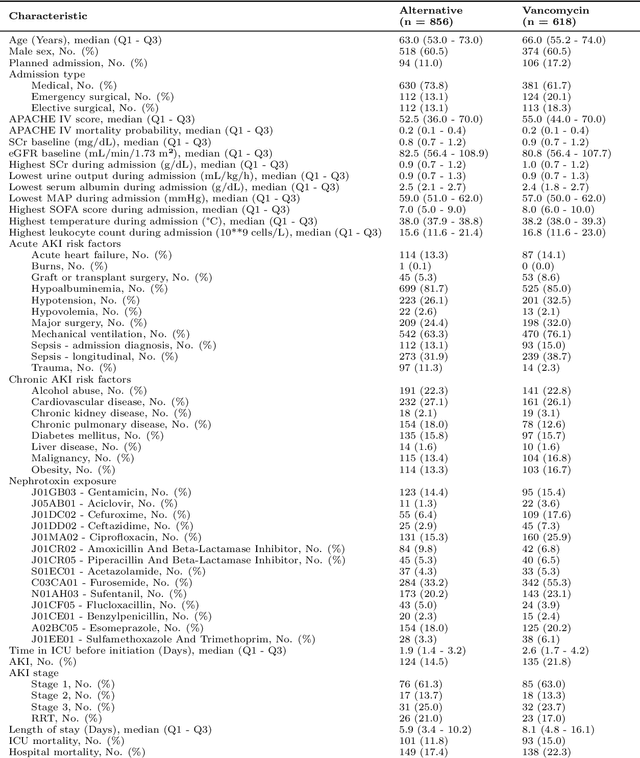
The current best practice approach for the retrospective diagnosis of adverse drug events (ADEs) in hospitalized patients relies on a full patient chart review and a formal causality assessment by multiple medical experts. This evaluation serves to qualitatively estimate the probability of causation (PC); the probability that a drug was a necessary cause of an adverse event. This practice is manual, resource intensive and prone to human biases, and may thus benefit from data-driven decision support. Here, we pioneer a causal modeling approach using observational data to estimate a lower bound of the PC (PC$_{low}$). This method includes two key causal inference components: (1) the target trial emulation framework and (2) estimation of individualized treatment effects using machine learning. We apply our method to the clinically relevant use-case of vancomycin-induced acute kidney injury in intensive care patients, and compare our causal model-based PC$_{low}$ estimates to qualitative estimates of the PC provided by a medical expert. Important limitations and potential improvements are discussed, and we conclude that future improved causal models could provide essential data-driven support for medication safety monitoring in hospitalized patients.