 Add to Chrome
 Add to Firefox
 Add to Edge
PatientAgentBench: A Benchmark Framework for Evaluating Patient-Facing Health AI Agents
Jul 28, 2026
Health AI is evolving from answering questions to agentic systems that converse with patients, reason about health records, and act on their behalf. Primary care guards against diagnostic errors and unsafe care; agents assisting in this domain warrant evaluation against the same risks. Current benchmarks focus on medical knowledge, assessed through isolated question-answering or clinician-facing tasks. PatientAgentBench benchmarks patient-facing agentic healthcare; it evaluates a foundation model, wrapped in an agent with a sandbox of healthcare tools, conversing with a simulated patient. Each conversation is scored by an LLM-as-a-Jury across six dimensions via over a hundred conversation-agnostic, clinician-grounded criteria. To validate alignment, licensed clinicians annotated shared conversations, yielding 79-93% adjacent agreement between jury and expert raters, on par with or exceeding clinician inter-rater agreement. We benchmarked 10 models across four families on the same 1,200 scenarios and found clinical gaps. Triage quality is the most discriminating dimension: pass rates rise from 32% for the weakest models to 88% for the strongest, with agents often acting on administrative requests without clinical screening. Clinical safety and workflow accuracy follow the same pattern: the weakest models fail often, fabricating unexecuted actions, while frontier models fail on only 1-3% of cases, from unverified tool outputs and omitted crisis resources in an emergency. More capable models narrow these gaps but do not close them; the strongest scores only 4.25 of 5 overall. These failures surface only in sustained, tool-using conversations against realistic patient records, confirming that static benchmarks are insufficient as healthcare agentic systems gain autonomy. We release the framework as a reproducible, clinician-validated evaluation standard to help the field close this gap.

Guardrails for avoiding harmful medical product recommendations and off-label promotion in generative AI models
Jun 24, 2024Generative AI (GenAI) models have demonstrated remarkable capabilities in a wide variety of medical tasks. However, as these models are trained using generalist datasets with very limited human oversight, they can learn uses of medical products that have not been adequately evaluated for safety and efficacy, nor approved by regulatory agencies. Given the scale at which GenAI may reach users, unvetted recommendations pose a public health risk. In this work, we propose an approach to identify potentially harmful product recommendations, and demonstrate it using a recent multimodal large language model.
Instability in clinical risk stratification models using deep learning
Nov 20, 2022
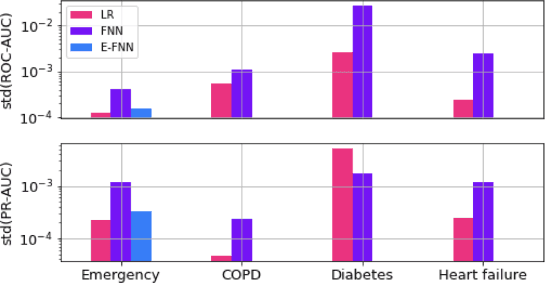
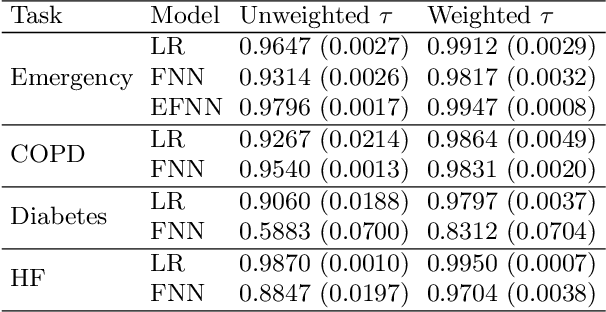
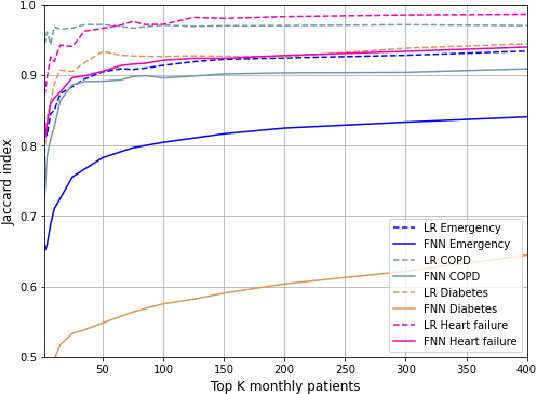
While it has been well known in the ML community that deep learning models suffer from instability, the consequences for healthcare deployments are under characterised. We study the stability of different model architectures trained on electronic health records, using a set of outpatient prediction tasks as a case study. We show that repeated training runs of the same deep learning model on the same training data can result in significantly different outcomes at a patient level even though global performance metrics remain stable. We propose two stability metrics for measuring the effect of randomness of model training, as well as mitigation strategies for improving model stability.
Machine learning for dynamically predicting the onset of renal replacement therapy in chronic kidney disease patients using claims data
Sep 03, 2022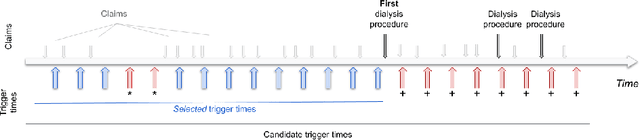
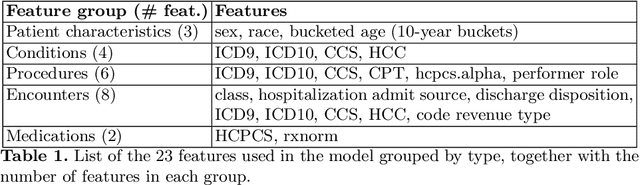
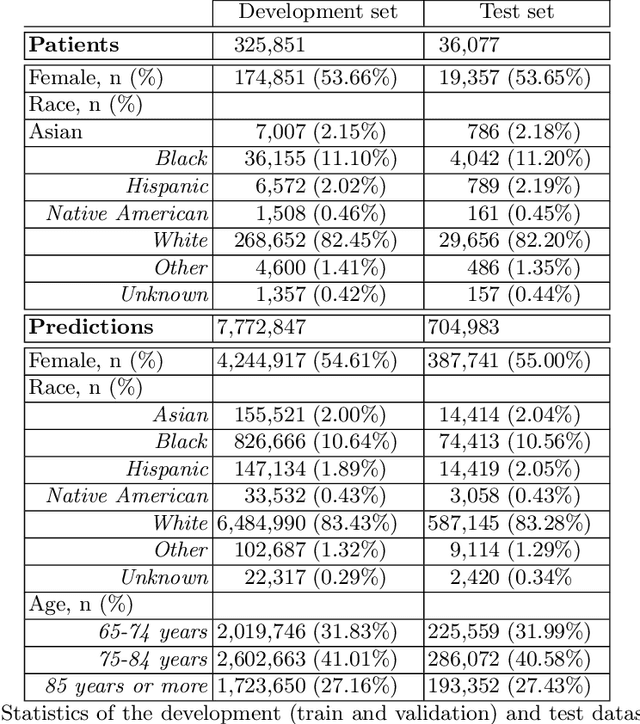
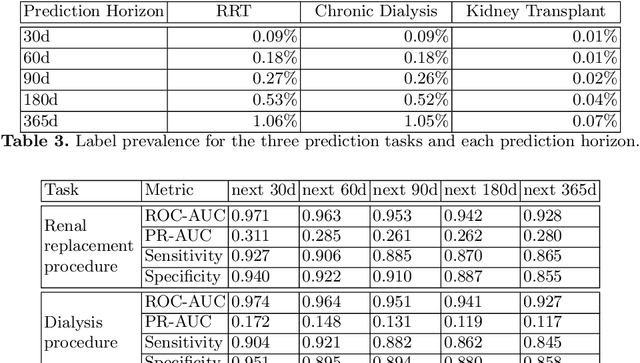
Chronic kidney disease (CKD) represents a slowly progressive disorder that can eventually require renal replacement therapy (RRT) including dialysis or renal transplantation. Early identification of patients who will require RRT (as much as 1 year in advance) improves patient outcomes, for example by allowing higher-quality vascular access for dialysis. Therefore, early recognition of the need for RRT by care teams is key to successfully managing the disease. Unfortunately, there is currently no commonly used predictive tool for RRT initiation. In this work, we present a machine learning model that dynamically identifies CKD patients at risk of requiring RRT up to one year in advance using only claims data. To evaluate the model, we studied approximately 3 million Medicare beneficiaries for which we made over 8 million predictions. We showed that the model can identify at risk patients with over 90% sensitivity and specificity. Although additional work is required before this approach is ready for clinical use, this study provides a basis for a screening tool to identify patients at risk within a time window that enables early proactive interventions intended to improve RRT outcomes.
Pain Detection with fNIRS-Measured Brain Signals: A Personalized Machine Learning Approach Using the Wavelet Transform and Bayesian Hierarchical Modeling with Dirichlet Process Priors
Jul 30, 2019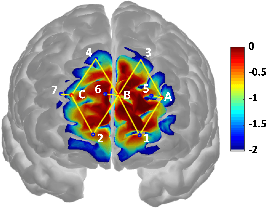
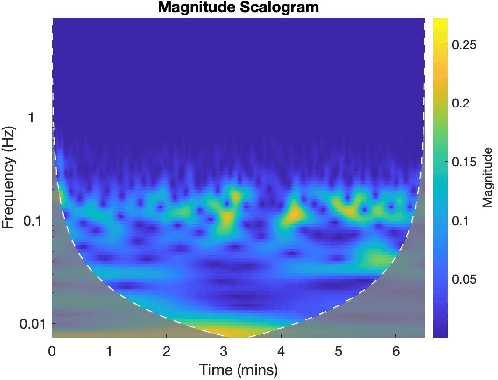
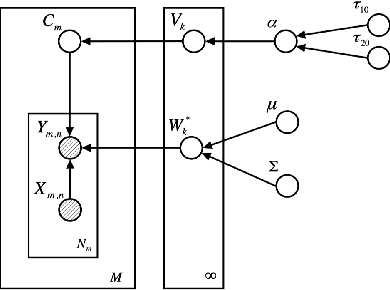

Currently self-report pain ratings are the gold standard in clinical pain assessment. However, the development of objective automatic measures of pain could substantially aid pain diagnosis and therapy. Recent neuroimaging studies have shown the potential of functional near-infrared spectroscopy (fNIRS) for pain detection. This is a brain-imaging technique that provides non-invasive, long-term measurements of cortical hemoglobin concentration changes. In this study, we focused on fNIRS signals acquired exclusively from the prefrontal cortex, which can be accessed unobtrusively, and derived an algorithm for the detection of the presence of pain using Bayesian hierarchical modelling with wavelet features. This approach allows personalization of the inference process by accounting for inter-participant variability in pain responses. Our work highlights the importance of adopting a personalized approach and supports the use of fNIRS for pain assessment.
Detection of Real-world Driving-induced Affective State Using Physiological Signals and Multi-view Multi-task Machine Learning
Jul 19, 2019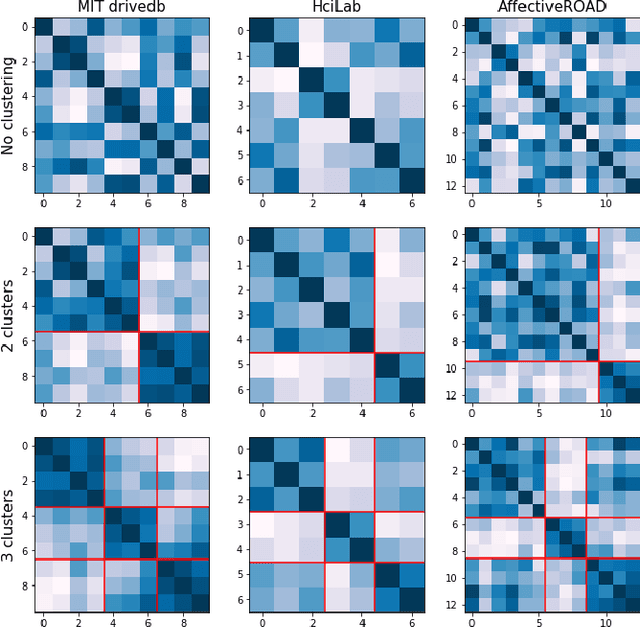
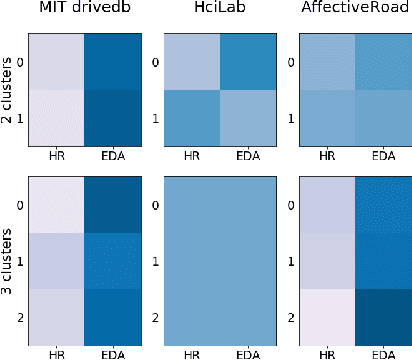
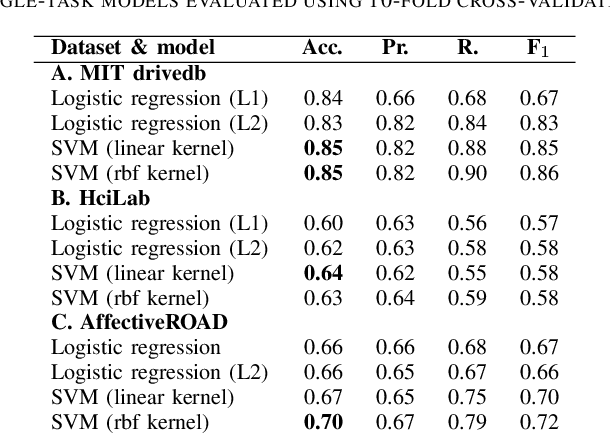
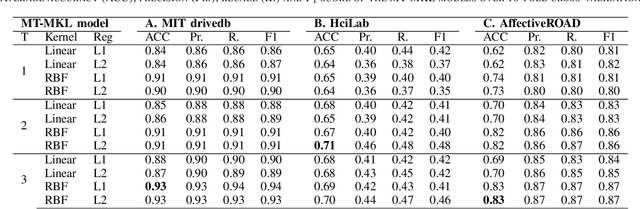
Affective states have a critical role in driving performance and safety. They can degrade driver situation awareness and negatively impact cognitive processes, severely diminishing road safety. Therefore, detecting and assessing drivers' affective states is crucial in order to help improve the driving experience, and increase safety, comfort and well-being. Recent advances in affective computing have enabled the detection of such states. This may lead to empathic automotive user interfaces that account for the driver's emotional state and influence the driver in order to improve safety. In this work, we propose a multiview multi-task machine learning method for the detection of driver's affective states using physiological signals. The proposed approach is able to account for inter-drive variability in physiological responses while enabling interpretability of the learned models, a factor that is especially important in systems deployed in the real world. We evaluate the models on three different datasets containing real-world driving experiences. Our results indicate that accounting for drive-specific differences significantly improves model performance.
Deep Reinforcement Learning for Optimal Critical Care Pain Management with Morphine using Dueling Double-Deep Q Networks
Apr 25, 2019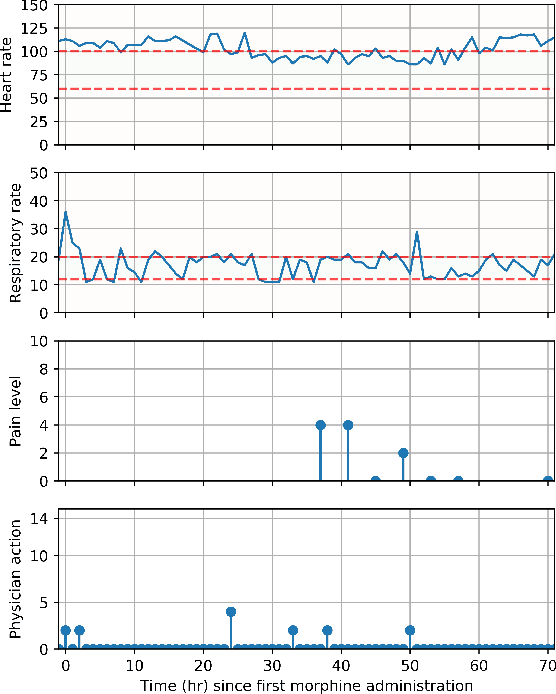
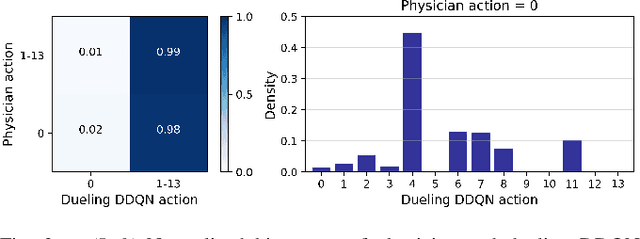
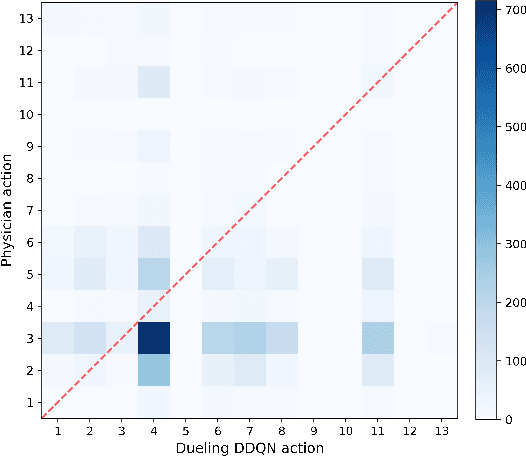
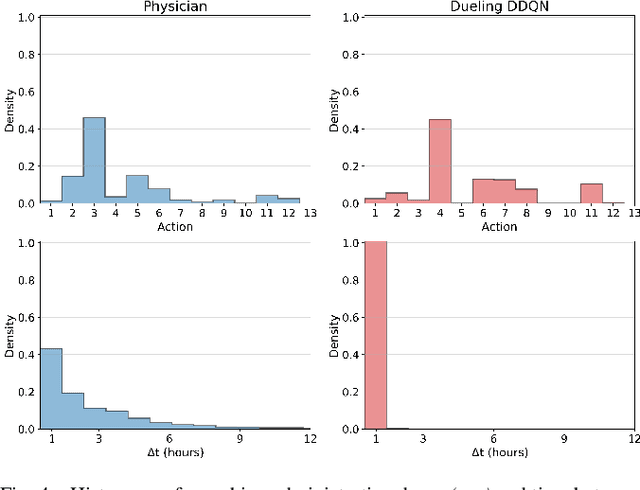
Opioids are the preferred medications for the treatment of pain in the intensive care unit. While undertreatment leads to unrelieved pain and poor clinical outcomes, excessive use of opioids puts patients at risk of experiencing multiple adverse effects. In this work, we present a sequential decision making framework for opioid dosing based on deep reinforcement learning. It provides real-time clinically interpretable dosing recommendations, personalized according to each patient's evolving pain and physiological condition. We focus on morphine, one of the most commonly prescribed opioids. To train and evaluate the model, we used retrospective data from the publicly available MIMIC-3 database. Our results demonstrate that reinforcement learning may be used to aid decision making in the intensive care setting by providing personalized pain management interventions.
Multi-task multiple kernel machines for personalized pain recognition from functional near-infrared spectroscopy brain signals
Aug 21, 2018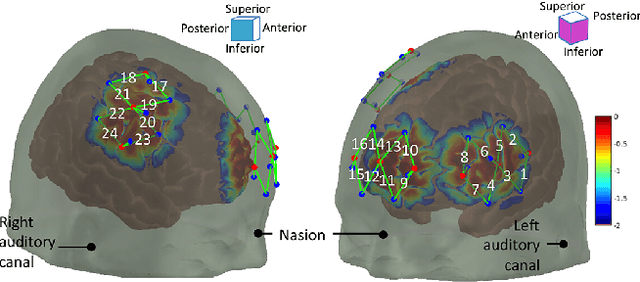
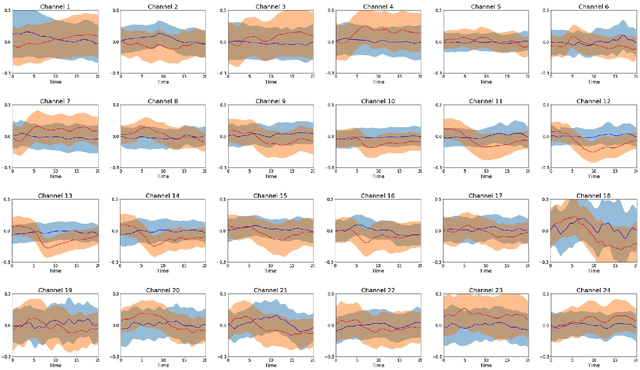
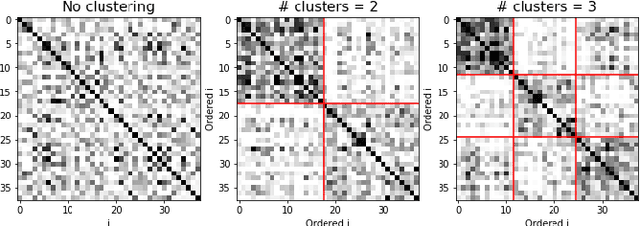
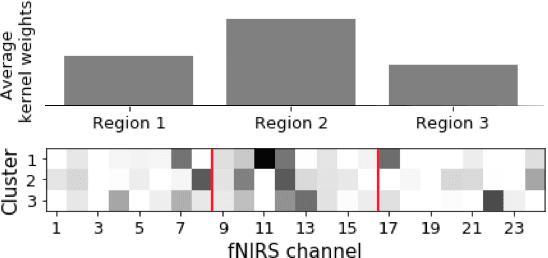
Currently there is no validated objective measure of pain. Recent neuroimaging studies have explored the feasibility of using functional near-infrared spectroscopy (fNIRS) to measure alterations in brain function in evoked and ongoing pain. In this study, we applied multi-task machine learning methods to derive a practical algorithm for pain detection derived from fNIRS signals in healthy volunteers exposed to a painful stimulus. Especially, we employed multi-task multiple kernel learning to account for the inter-subject variability in pain response. Our results support the use of fNIRS and machine learning techniques in developing objective pain detection, and also highlight the importance of adopting personalized analysis in the process.
Physiological and behavioral profiling for nociceptive pain estimation using personalized multitask learning
Nov 10, 2017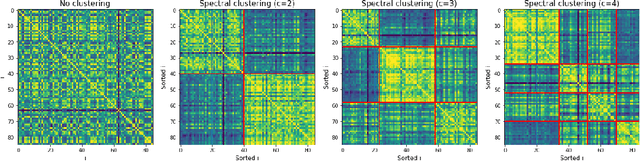
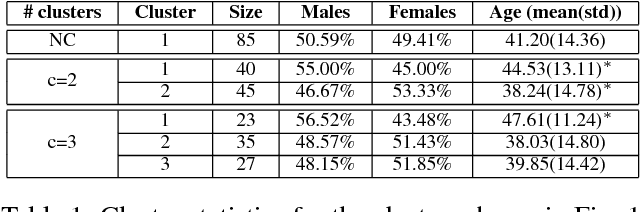
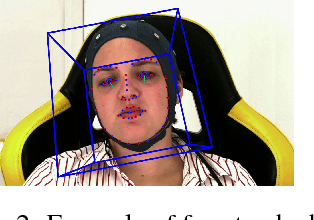
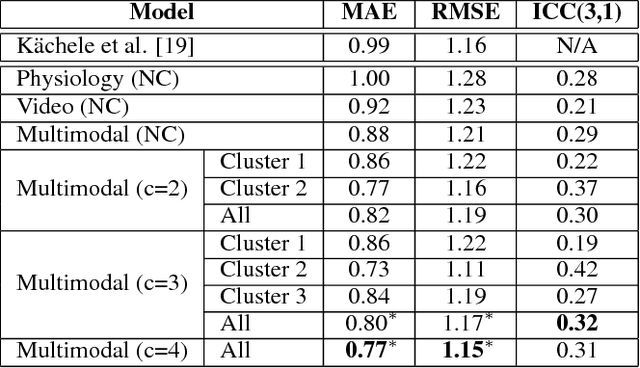
Pain is a subjective experience commonly measured through patient's self report. While there exist numerous situations in which automatic pain estimation methods may be preferred, inter-subject variability in physiological and behavioral pain responses has hindered the development of such methods. In this work, we address this problem by introducing a novel personalized multitask machine learning method for pain estimation based on individual physiological and behavioral pain response profiles, and show its advantages in a dataset containing multimodal responses to nociceptive heat pain.
Regularization approaches for support vector machines with applications to biomedical data
Oct 29, 2017
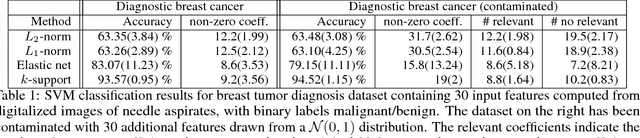
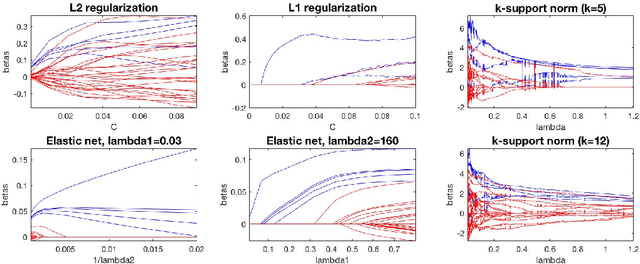
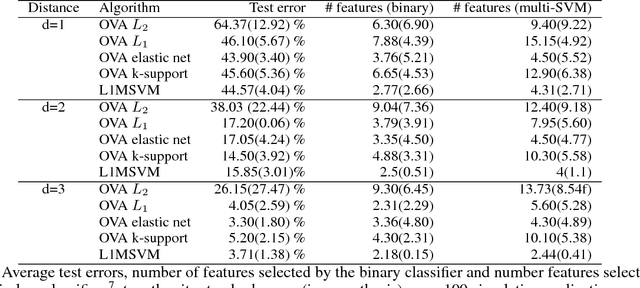
The support vector machine (SVM) is a widely used machine learning tool for classification based on statistical learning theory. Given a set of training data, the SVM finds a hyperplane that separates two different classes of data points by the largest distance. While the standard form of SVM uses L2-norm regularization, other regularization approaches are particularly attractive for biomedical datasets where, for example, sparsity and interpretability of the classifier's coefficient values are highly desired features. Therefore, in this paper we consider different types of regularization approaches for SVMs, and explore them in both synthetic and real biomedical datasets.