 Add to Chrome
 Add to Firefox
 Add to Edge
Latent Knowledge as a Predictor of Fact Acquisition in Fine-Tuned Large Language Models
Jan 26, 2026
Large language models store biomedical facts with uneven strength after pretraining: some facts are present in the weights but are not reliably accessible under deterministic decoding (latent knowledge), while others are scarcely represented. We fine tuned Llama 3.1 8B Instruct to learn ontology term identifier mappings from the Human Phenotype Ontology (800 pairs) and the Gene Ontology (400 training pairs), withholding 400 GO pairs to test generalization. Treating learning as a time to event process across 20 epochs, we used stochastic decoding to detect latent knowledge at baseline and Cox proportional hazards models to identify predictors of acquisition, generalization, and degradation. Baseline deterministic recall for HPO was 2.8%, rising to 71.9% after fine-tuning. Latent knowledge was the strongest predictor of faster fact acquisition (HR 2.6) and was associated with earlier, higher peak learning rates and faster convergence; identifier frequency and curated annotation counts had smaller effects. Generalization to withheld GO facts was uncommon (5.8%) but more likely when latent knowledge was present. Previously correct GO mappings degraded more often for withheld (unseen) terms than for trained (seen) terms, suggesting a protective effect of reinforcement during training. These results show that latent knowledge predicts both the speed of factual learning during fine-tuning and the limited generalization of unseen ontology facts, while resistance to degradation depends on whether facts are reinforced.

From Memorization to Generalization: Fine-Tuning Large Language Models for Biomedical Term-to-Identifier Normalization
Oct 21, 2025Effective biomedical data integration depends on automated term normalization, the mapping of natural language biomedical terms to standardized identifiers. This linking of terms to identifiers is essential for semantic interoperability. Large language models (LLMs) show promise for this task but perform unevenly across terminologies. We evaluated both memorization (training-term performance) and generalization (validation-term performance) across multiple biomedical ontologies. Fine-tuning Llama 3.1 8B revealed marked differences by terminology. GO mappings showed strong memorization gains (up to 77% improvement in term-to-identifier accuracy), whereas HPO showed minimal improvement. Generalization occurred only for protein-gene (GENE) mappings (13.9% gain), while fine-tuning for HPO and GO yielded negligible transfer. Baseline accuracy varied by model scale, with GPT-4o outperforming both Llama variants for all terminologies. Embedding analyses showed tight semantic alignment between gene symbols and protein names but weak alignment between terms and identifiers for GO or HPO, consistent with limited lexicalization. Fine-tuning success depended on two interacting factors: identifier popularity and lexicalization. Popular identifiers were more likely encountered during pretraining, enhancing memorization. Lexicalized identifiers, such as gene symbols, enabled semantic generalization. By contrast, arbitrary identifiers in GO and HPO constrained models to rote learning. These findings provide a predictive framework for when fine-tuning enhances factual recall versus when it fails due to sparse or non-lexicalized identifiers.
Efficient Standardization of Clinical Notes using Large Language Models
Dec 31, 2024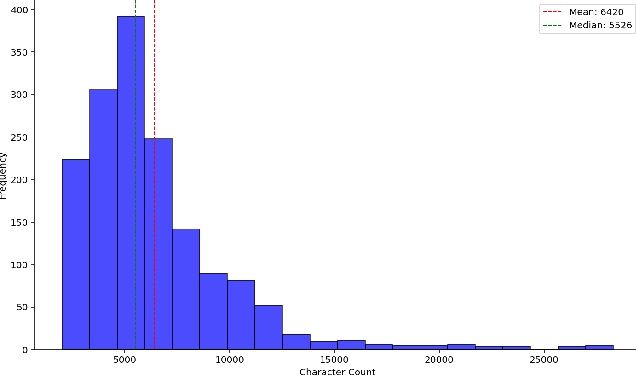
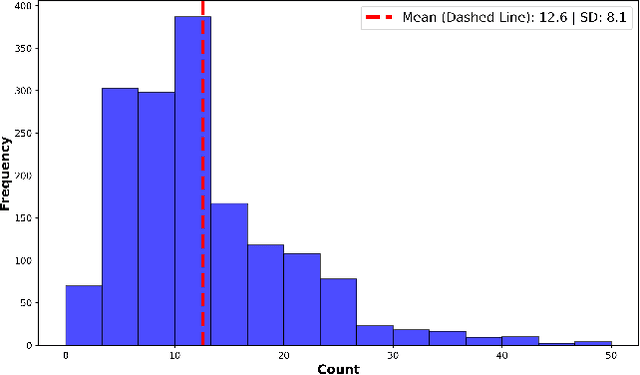
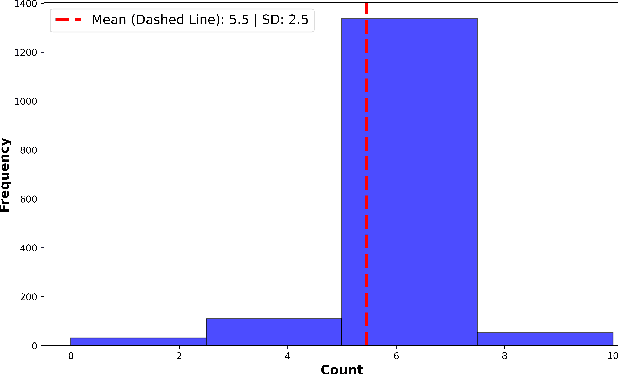
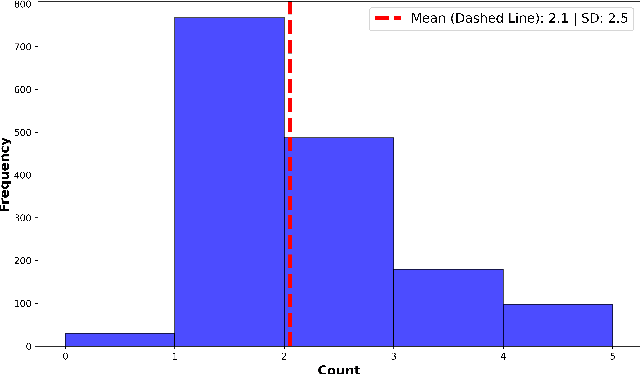
Clinician notes are a rich source of patient information but often contain inconsistencies due to varied writing styles, colloquialisms, abbreviations, medical jargon, grammatical errors, and non-standard formatting. These inconsistencies hinder the extraction of meaningful data from electronic health records (EHRs), posing challenges for quality improvement, population health, precision medicine, decision support, and research. We present a large language model approach to standardizing a corpus of 1,618 clinical notes. Standardization corrected an average of $4.9 +/- 1.8$ grammatical errors, $3.3 +/- 5.2$ spelling errors, converted $3.1 +/- 3.0$ non-standard terms to standard terminology, and expanded $15.8 +/- 9.1$ abbreviations and acronyms per note. Additionally, notes were re-organized into canonical sections with standardized headings. This process prepared notes for key concept extraction, mapping to medical ontologies, and conversion to interoperable data formats such as FHIR. Expert review of randomly sampled notes found no significant data loss after standardization. This proof-of-concept study demonstrates that standardization of clinical notes can improve their readability, consistency, and usability, while also facilitating their conversion into interoperable data formats.
High-Throughput Phenotyping of Clinical Text Using Large Language Models
Aug 02, 2024High-throughput phenotyping automates the mapping of patient signs to standardized ontology concepts and is essential for precision medicine. This study evaluates the automation of phenotyping of clinical summaries from the Online Mendelian Inheritance in Man (OMIM) database using large language models. Due to their rich phenotype data, these summaries can be surrogates for physician notes. We conduct a performance comparison of GPT-4 and GPT-3.5-Turbo. Our results indicate that GPT-4 surpasses GPT-3.5-Turbo in identifying, categorizing, and normalizing signs, achieving concordance with manual annotators comparable to inter-rater agreement. Despite some limitations in sign normalization, the extensive pre-training of GPT-4 results in high performance and generalizability across several phenotyping tasks while obviating the need for manually annotated training data. Large language models are expected to be the dominant method for automating high-throughput phenotyping of clinical text.
A Large Language Model Outperforms Other Computational Approaches to the High-Throughput Phenotyping of Physician Notes
Jun 20, 2024High-throughput phenotyping, the automated mapping of patient signs and symptoms to standardized ontology concepts, is essential to gaining value from electronic health records (EHR) in the support of precision medicine. Despite technological advances, high-throughput phenotyping remains a challenge. This study compares three computational approaches to high-throughput phenotyping: a Large Language Model (LLM) incorporating generative AI, a Natural Language Processing (NLP) approach utilizing deep learning for span categorization, and a hybrid approach combining word vectors with machine learning. The approach that implemented GPT-4 (a Large Language Model) demonstrated superior performance, suggesting that Large Language Models are poised to be the preferred method for high-throughput phenotyping of physician notes.
Enhancing Dimension-Reduced Scatter Plots with Class and Feature Centroids
Mar 29, 2024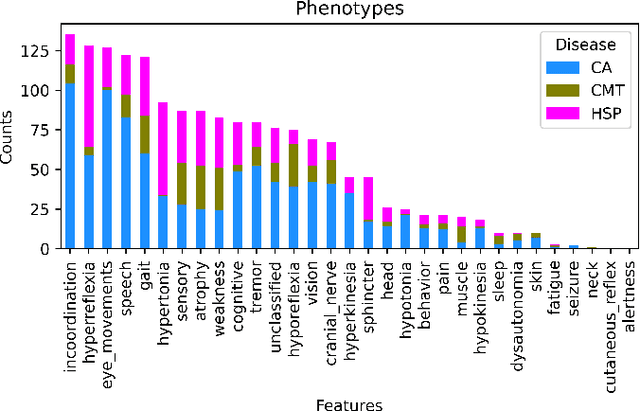
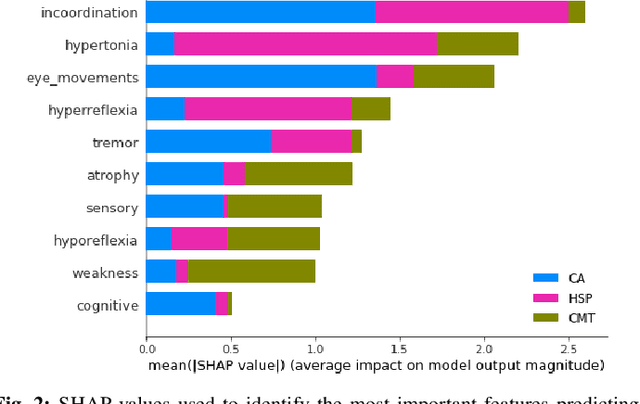
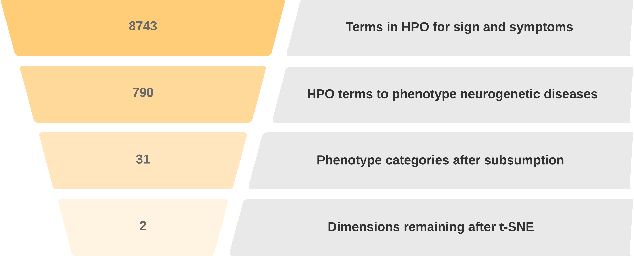
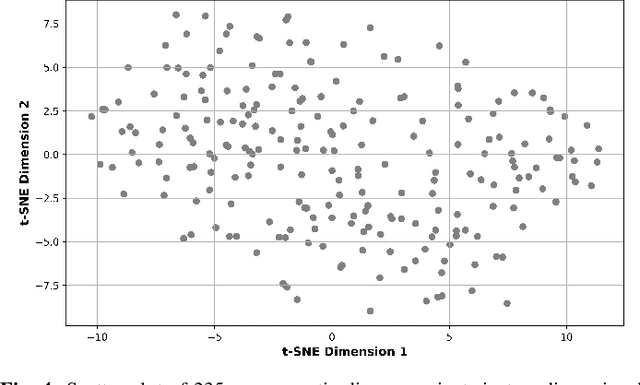
Dimension reduction is increasingly applied to high-dimensional biomedical data to improve its interpretability. When datasets are reduced to two dimensions, each observation is assigned an x and y coordinates and is represented as a point on a scatter plot. A significant challenge lies in interpreting the meaning of the x and y axes due to the complexities inherent in dimension reduction. This study addresses this challenge by using the x and y coordinates derived from dimension reduction to calculate class and feature centroids, which can be overlaid onto the scatter plots. This method connects the low-dimension space to the original high-dimensional space. We illustrate the utility of this approach with data derived from the phenotypes of three neurogenetic diseases and demonstrate how the addition of class and feature centroids increases the interpretability of scatter plots.
High Throughput Phenotyping of Physician Notes with Large Language and Hybrid NLP Models
Mar 09, 2024Deep phenotyping is the detailed description of patient signs and symptoms using concepts from an ontology. The deep phenotyping of the numerous physician notes in electronic health records requires high throughput methods. Over the past thirty years, progress toward making high throughput phenotyping feasible. In this study, we demonstrate that a large language model and a hybrid NLP model (combining word vectors with a machine learning classifier) can perform high throughput phenotyping on physician notes with high accuracy. Large language models will likely emerge as the preferred method for high throughput deep phenotyping of physician notes.