 Add to Chrome
 Add to Firefox
 Add to Edge
CoLoRSMamba: Conditional LoRA-Steered Mamba for Supervised Multimodal Violence Detection
Apr 02, 2026
Violence detection benefits from audio, but real-world soundscapes can be noisy or weakly related to the visible scene. We present CoLoRSMamba, a directional Video to Audio multimodal architecture that couples VideoMamba and AudioMamba through CLS-guided conditional LoRA. At each layer, the VideoMamba CLS token produces a channel-wise modulation vector and a stabilization gate that adapt the AudioMamba projections responsible for the selective state-space parameters (Delta, B, C), including the step-size pathway, yielding scene-aware audio dynamics without token-level cross-attention. Training combines binary classification with a symmetric AV-InfoNCE objective that aligns clip-level audio and video embeddings. To support fair multimodal evaluation, we curate audio-filtered clip level subsets of the NTU-CCTV and DVD datasets from temporal annotations, retaining only clips with available audio. On these subsets, CoLoRSMamba outperforms representative audio-only, video-only, and multimodal baselines, achieving 88.63% accuracy / 86.24% F1-V on NTU-CCTV and 75.77% accuracy / 72.94% F1-V on DVD. It further offers a favorable accuracy-efficiency tradeoff, surpassing several larger models with fewer parameters and FLOPs.

CUE-Net: Violence Detection Video Analytics with Spatial Cropping, Enhanced UniformerV2 and Modified Efficient Additive Attention
Apr 27, 2024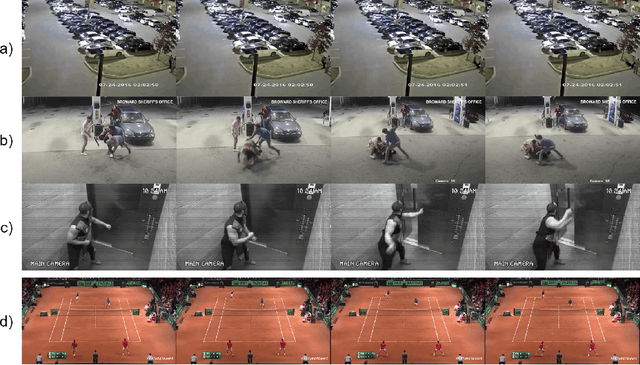
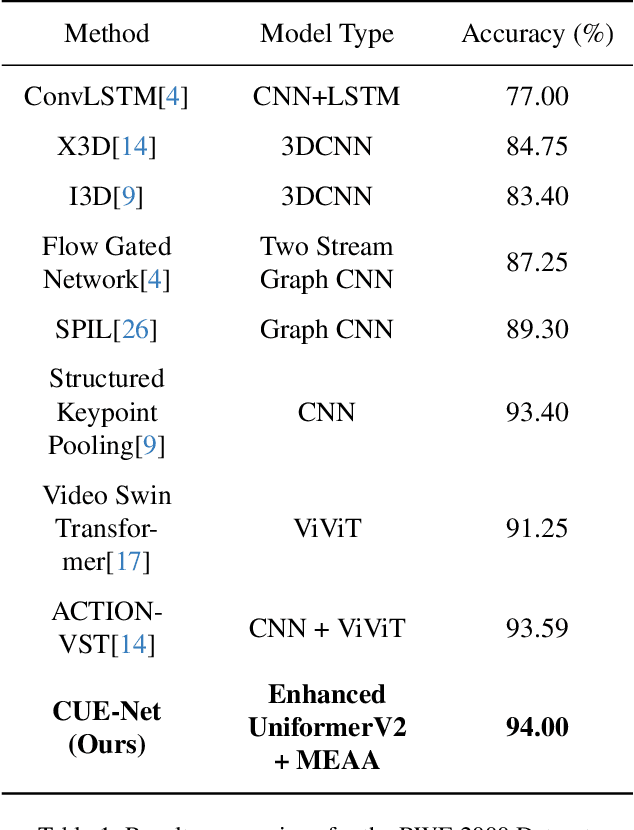
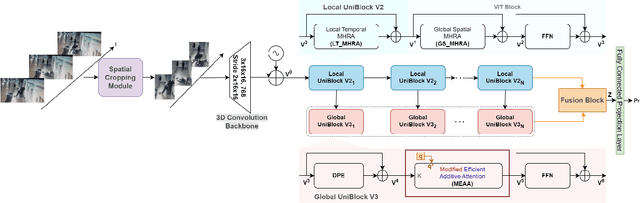
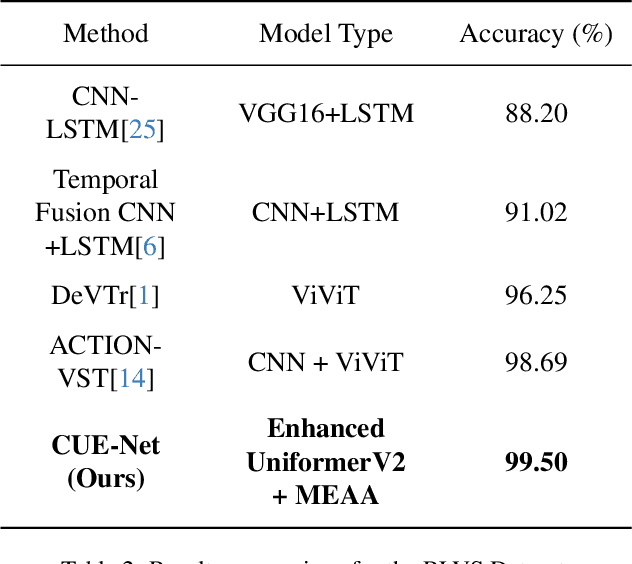
In this paper we introduce CUE-Net, a novel architecture designed for automated violence detection in video surveillance. As surveillance systems become more prevalent due to technological advances and decreasing costs, the challenge of efficiently monitoring vast amounts of video data has intensified. CUE-Net addresses this challenge by combining spatial Cropping with an enhanced version of the UniformerV2 architecture, integrating convolutional and self-attention mechanisms alongside a novel Modified Efficient Additive Attention mechanism (which reduces the quadratic time complexity of self-attention) to effectively and efficiently identify violent activities. This approach aims to overcome traditional challenges such as capturing distant or partially obscured subjects within video frames. By focusing on both local and global spatiotemporal features, CUE-Net achieves state-of-the-art performance on the RWF-2000 and RLVS datasets, surpassing existing methods.
Controlled Text Generation using T5 based Encoder-Decoder Soft Prompt Tuning and Analysis of the Utility of Generated Text in AI
Dec 06, 2022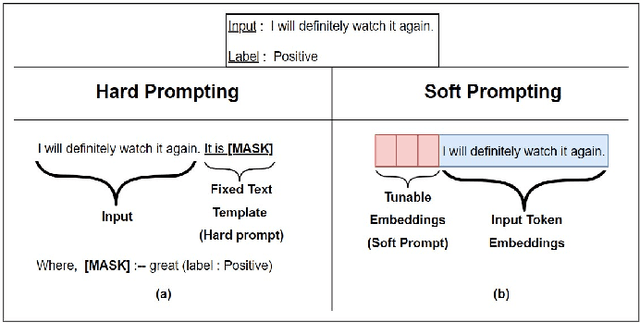
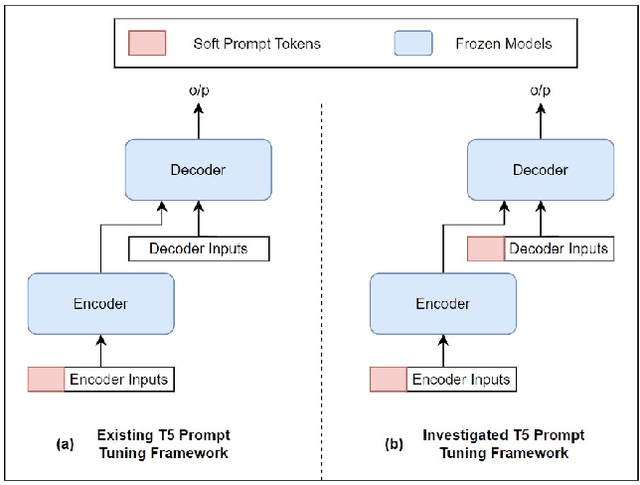
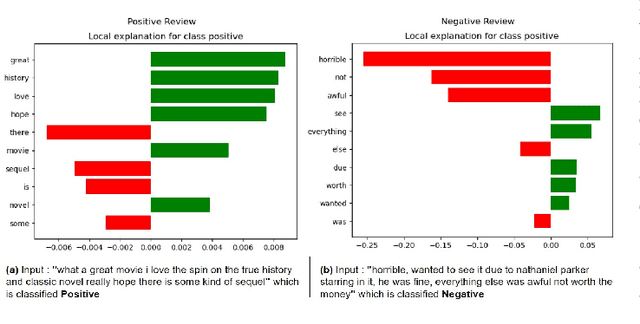
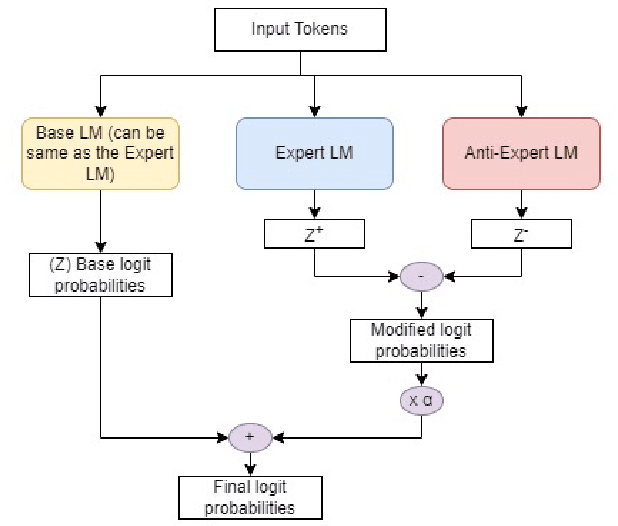
Controlled text generation is a very important task in the arena of natural language processing due to its promising applications. In order to achieve this task we mainly introduce the novel soft prompt tuning method of using soft prompts at both encoder and decoder levels together in a T5 model and investigate the performance as the behaviour of an additional soft prompt related to the decoder of a T5 model in controlled text generation remained unexplored. Then we also investigate the feasibility of steering the output of this extended soft prompted T5 model at decoder level and finally analyse the utility of generated text to be used in AI related tasks such as training AI models with an interpretability analysis of the classifier trained with synthetic text, as there is a lack of proper analysis of methodologies in generating properly labelled data to be utilized in AI tasks. Through the performed in-depth intrinsic and extrinsic evaluations of this generation model along with the artificially generated data, we found that this model produced better results compared to the T5 model with a single soft prompt at encoder level and the sentiment classifier trained using this artificially generated data can produce comparable classification results to the results of a classifier trained with real labelled data and also the classifier decision is interpretable with respect to the input text content.