 Add to Chrome
 Add to Firefox
 Add to Edge
Autonomous Obstacle Removal for Excavators through Policy Learning with Particle Simulation
Jun 08, 2026
Autonomous obstacle removal from the ground is an important earthwork task, but this is difficult to automate because an excavator must adapt its excavation trajectories over repeated cycles as soil-obstacle conditions change. Learning such state-dependent behavior requires a training environment that reproduces accumulated soil-obstacle interactions, including contact states, terrain deformation, and obstacle visibility. Accordingly, particle-based simulation is suitable for the relevant policy learning. However, particle simulation is computationally expensive, and repeated excavation cycles further increase the learning cost. We observe that the burial condition of an obstacle governs both task difficulty and simulation cost: deeper burial makes obstacle removal harder while also requiring more particles for accurate simulation. This observation motivates a burial-conditioned curriculum learning strategy. We propose a time-efficient sim-to-real policy learning framework in which the policy observes terrain and obstacle information from RGB-D measurements and then outputs a parameterized excavation trajectory; in this process, the simulator reproduces in a real-world excavator the same observation-action interface it uses under controllable burial conditions. The curriculum begins with shallow burial conditions and progressively increases burial depth while adjusting particle count, thus simultaneously controlling task difficulty and simulation cost. Experiments show that the proposed framework successfully learns an effective obstacle-removal policy, whereas baseline methods fail even after a full week of training. The proposed curriculum achieves effective performance within three days and achieves successful transfer to a real 12-ton excavator operating on open ground with various steel obstacles, thus demonstrating robust obstacle removal.

Bridged SBI: Correcting Biased Low-Fidelity Posteriors for Cost-Efficient High-Fidelity Inference
Jun 08, 2026Accurate calibration of particle-based simulators is crucial for robotic earthwork simulation, but analytical calibration is challenging due to this task's highly nonlinear particle dynamics and the black-box nature of conventional simulators. Although simulation-based inference (SBI) can estimate posterior distributions over simulation parameters solely from forward simulations, applying SBI directly to high-fidelity (HF) particle simulators is often computationally prohibitive. Low-fidelity (LF) simulators with coarser particles can reduce this cost, but changes in particle size and particle count shift the parameter values needed to reproduce the same observation, producing biased LF posteriors. We propose Bridged SBI, which leverages a biased but informative LF posterior to guide HF inference. This method first uses inexpensive LF simulations to identify a coarse high-density parameter region, and then it learns a local residual bridge to transport LF posterior samples toward HF-consistent regions by correcting the LF--HF discrepancy. We analyze how sequential multi-fidelity SBI (Naive-MF) can suffer from LF-induced posterior miscoverage when it directly relies on the LF posterior without discrepancy correction. We then show that Bridged SBI is designed to alleviate this issue by explicitly modeling the LF--HF discrepancy through residual correction. Experiments on both sim-to-sim particle-parameter calibration and real-to-sim calibration with real soil observation show that Bridged SBI produces more accurate and reliable HF posteriors than HF-only SBI or the Naive-MF baseline, especially under limited HF simulation costs.
LLM-Based Behavior Tree Generation for Construction Machinery
Feb 01, 2026Earthwork operations are facing an increasing demand, while workforce aging and skill loss create a pressing need for automation. ROS2-TMS for Construction, a Cyber-Physical System framework designed to coordinate construction machinery, has been proposed for autonomous operation; however, its reliance on manually designed Behavior Trees (BTs) limits scalability, particularly in scenarios involving heterogeneous machine cooperation. Recent advances in large language models (LLMs) offer new opportunities for task planning and BT generation. However, most existing approaches remain confined to simulations or simple manipulators, with relatively few applications demonstrated in real-world contexts, such as complex construction sites involving multiple machines. This paper proposes an LLM-based workflow for BT generation, introducing synchronization flags to enable safe and cooperative operation. The workflow consists of two steps: high-level planning, where the LLM generates synchronization flags, and BT generation using structured templates. Safety is ensured by planning with parameters stored in the system database. The proposed method is validated in simulation and further demonstrated through real-world experiments, highlighting its potential to advance automation in civil engineering.
Development of CPS Platform for Autonomous Construction
Nov 29, 2024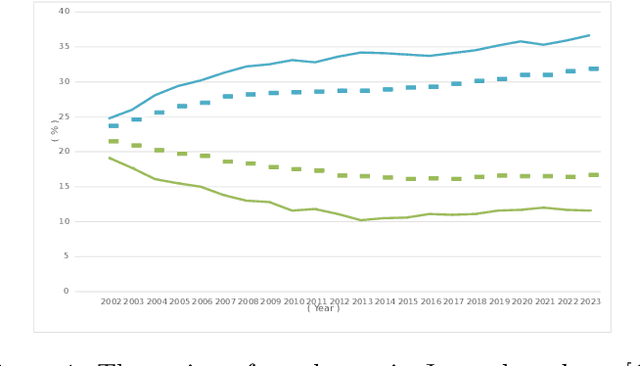
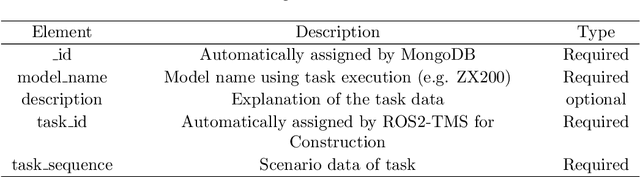
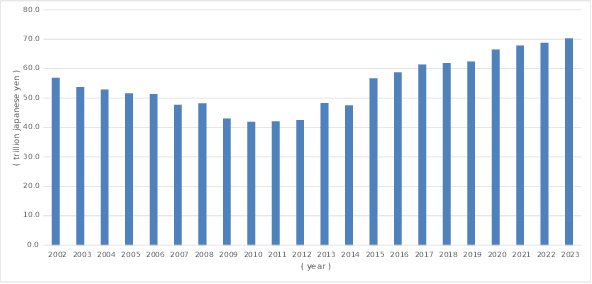
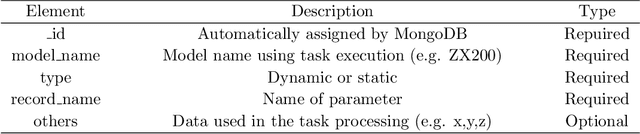
In recent years, labor shortages due to the declining birthrate and aging population have become significant challenges at construction sites in developed countries, including Japan. To address these challenges, we are developing an open platform called ROS2-TMS for Construction, a Cyber-Physical System (CPS) for construction sites, to achieve both efficiency and safety in earthwork operations. In ROS2-TMS for Construction, the system comprehensively collects and stores environmental information from sensors placed throughout the construction site. Based on these data, a real-time virtual construction site is created in cyberspace. Then, based on the state of construction machinery and environmental conditions in cyberspace, the optimal next actions for actual construction machinery are determined, and the construction machinery is operated accordingly. In this project, we decided to use the Open Platform for Earthwork with Robotics and Autonomy (OPERA), developed by the Public Works Research Institute (PWRI) in Japan, to control construction machinery from ROS2-TMS for Construction with an originally extended behavior tree. In this study, we present an overview of OPERA, focusing on the newly developed navigation package for operating the crawler dump, as well as the overall structure of ROS2-TMS for Construction as a Cyber-Physical System (CPS). Additionally, we conducted experiments using a crawler dump and a backhoe to verify the aforementioned functionalities.