 Add to Chrome
 Add to Firefox
 Add to Edge
Timing-Aware Satellite Association for Multi-LEO Direct-to-Handset Communications
Mar 04, 2026
The rapid deployment of large-scale low Earth orbit (LEO) satellite constellations has positioned direct-to-handset (D2H) communications as a key enabler of future non-terrestrial networks. However, the limited link budget of handheld devices makes broadband service delivery challenging, and multi-satellite cooperative transmission is often required to provide sufficient power gain. In practice, such cooperation is severely hindered by asynchronous reception across satellites. This paper analyzes the received-signal model under the 3rd Generation Partnership Project (3GPP) transmitter structure and shows that satellite-dependent propagation delays prevent simultaneous timing alignment for multiple user terminals (UTs). This timing mismatch induces severe inter-carrier interference (ICI) and inter-symbol interference (ISI), even from the intended signals, which fundamentally constrains the achievable cooperative gain. To address this issue, we propose a timing-aware satellite association strategy that enables cooperation only with satellites expected to satisfy a UT-side timing tolerance, thereby avoiding dominant asynchronous interference by design. Simulation results demonstrate that the proposed strategy improves throughput performance compared to single-satellite transmission and fully connected multi-satellite baselines.

Can TDD Be Employed in LEO SatCom Systems? Challenges and Potential Approaches
Feb 12, 2025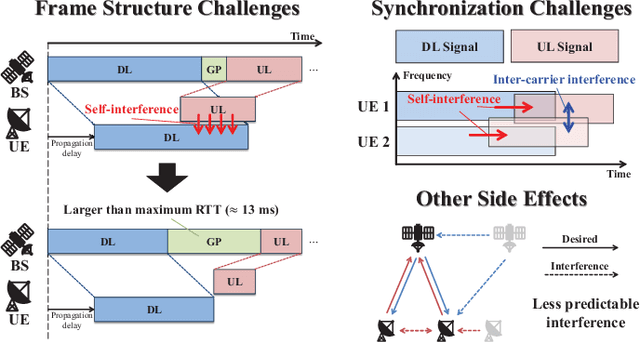
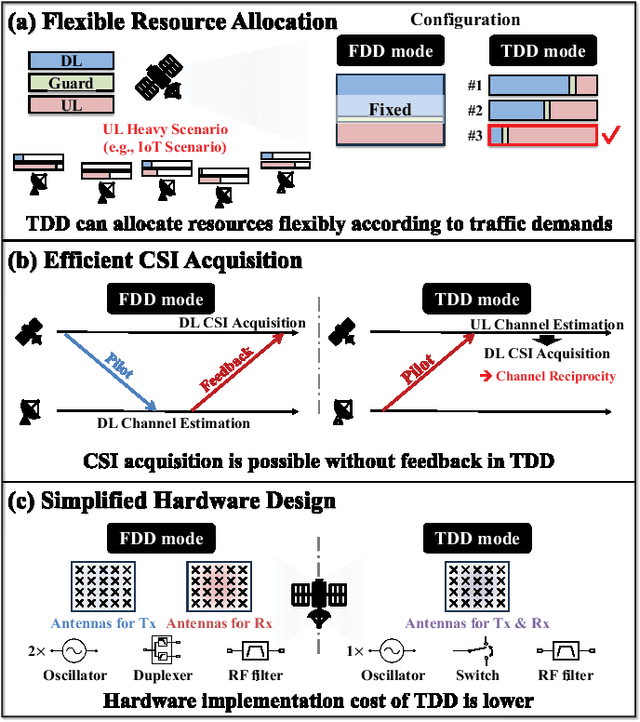
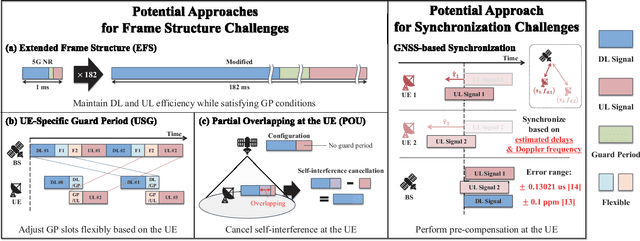
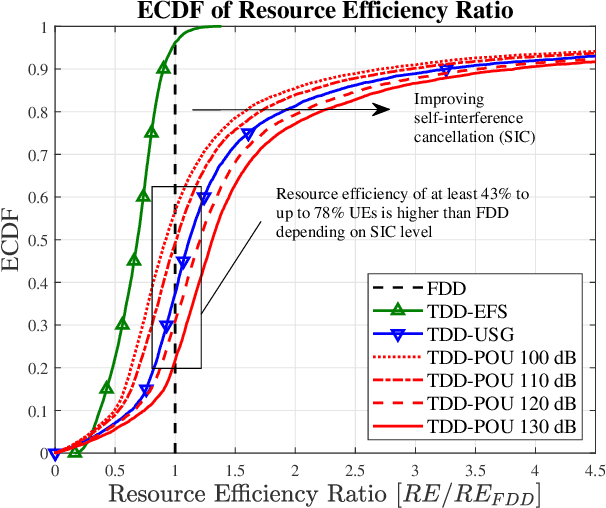
Frequency-division duplexing (FDD) remains the de facto standard in modern low Earth orbit (LEO) satellite communication (SatCom) systems, such as SpaceX's Starlink, OneWeb, and Amazon's Project Kuiper. While time-division duplexing (TDD) is often regarded as superior in today's terrestrial networks, its viability in future LEO SatCom systems remains unclear. This article details how the long propagation delays and high orbital velocities exhibited by LEO SatCom systems impedes the adoption of TDD, due to challenges involving the frame structure and synchronization. We then present potential approaches to overcome these challenges, which vary in terms of resource efficiency and operational/device complexity and thus would likely be application-specific. We conclude by assessing the performance of these proposed approaches, putting into perspective the tradeoff between complexity and performance gains over FDD. Overall, this article aims to motivate future investigation into the prospects of TDD in LEO SatCom systems and solutions to enable such, with the goal of enhancing future systems and unifying them with terrestrial networks.
Beam Tracking for Full-Duplex User Terminals in Low Earth Orbit Satellite Communication Systems
Nov 06, 2024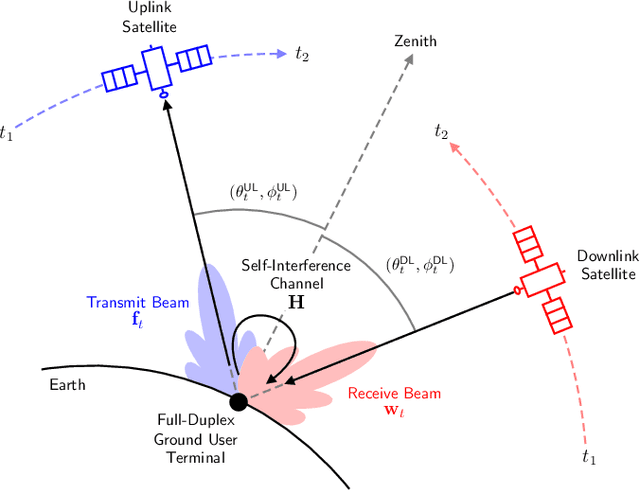
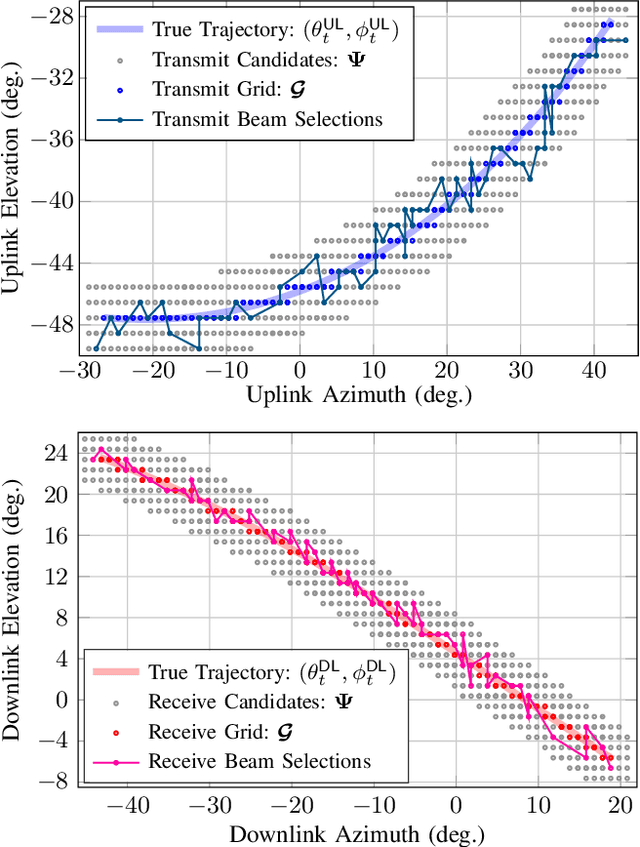
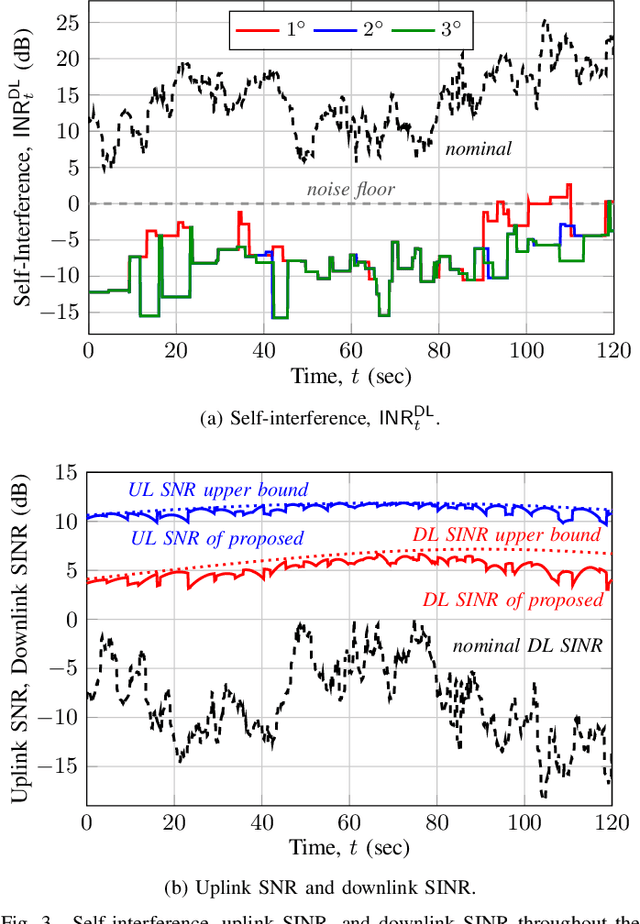
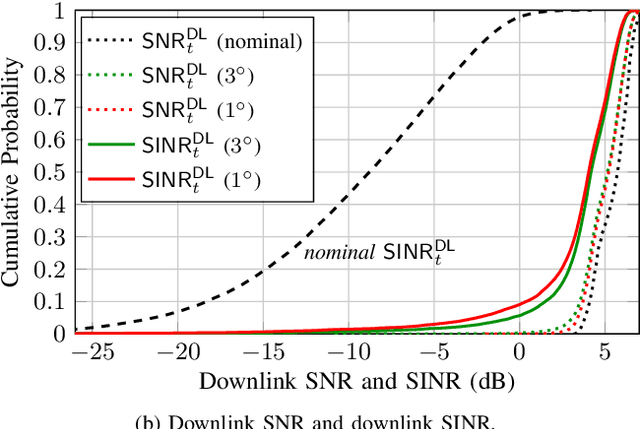
This paper introduces a novel beam tracking scheme for full-duplex ground user terminals aiming to transmit uplink and receive downlink from two low Earth orbit (LEO) satellites at the same time and same frequency. Our proposed technique leverages observed phenomena from a recent measurement campaign to strategically select transmit and receive beams which couple low self-interference across the satellites' trajectories, thereby enabling in-band full-duplex operation. Our scheme takes a measurement-driven approach, meaning it does not rely on explicit knowledge of the self-interference channel and can inherently account for hardware impairments or other nonidealities. We show that our proposed scheme reliably selects beams which spatially cancel self-interference to below the noise floor, circumventing the need for digital/analog cancellation. Simulation results using satellite and orbital parameters published in 3GPP and FCC filings show that this substantial reduction in self-interference does not prohibitively compromise beamforming gain, allowing the user terminal to attain near-maximal SINRs, thus unlocking full-duplex operation.