 Add to Chrome
 Add to Firefox
 Add to Edge
Assessing Localization Technologies for Pedestrian Collision Avoidance
May 18, 2026
Robust pedestrian safety is crucial to the next-generation of intelligent transportation systems. Such systems rely on active pedestrian localization and predictive collision alerts. Pedestrian localization can be supported by Ultra-Wideband technology and Bluetooth 6.0, which offer high-precision ranging and low-latency communication, making them promising candidates for vehicular collision warning systems. This paper assesses the localization accuracy of these technologies for pedestrian alerting and benchmarks their performance against Global Navigation Satellite Systems. Experimental evaluations performed in this paper focused on key performance metrics, including localization accuracy and robustness to environmental conditions. Preliminary results suggest that Ultra-Wideband and Bluetooth 6.0 can serve as viable alternatives or complements to Global Navigation Satellite Systems in certain scenarios, improving situational awareness and enabling timely pedestrian alerts.

Optimising CSRNet with parameter-free attention mechanisms for crowd counting in public transport
May 18, 2026Occupancy estimation and crowd counting are critical tasks in designing smart and efficient public transport vehicles. Given that public transport loading can vary from sparse to crowded, classical models for occupancy estimation must be adapted to suit this purpose. Attention mechanisms have shown remarkable capability in enhancing the representational power of deep neural networks for crowd counting in congested scenes with occlusion, complex backgrounds, and perspective distortion. However, conventional approaches, often implemented as parameterized sub-networks within convolutional layers, inevitably increase model size and computational cost, limiting deployment on resource-constrained edge devices. This paper investigates the effectiveness of state-of-the-art parameter-free attention mechanisms for crowd counting and density map estimation in highly congested scenes. We evaluate channel-wise (PFCA), spatial-wise (SA), and 3-D (SimAM) modules and compare their performance with parameterized attention modules constrained to introduce no more than 1% additional parameters. Furthermore, we present a novel combination of attention mechanisms that combines the strengths of PFCA and SA (PFCASA) customized for analyzing video streams onboard public transport systems. Using CSRNet as the backbone, experiments on the ShanghaiTech dataset demonstrate that parameter-free attention mechanisms achieve comparable or superior accuracy without introducing additional model parameters. A detailed performance analysis further reveals that PFCASA outperforms other attention modules in scenes with fewer than 40 individuals, while PFCA shows greater effectiveness as crowd density increases, underscoring their potential applicability for integration into smart public transport modalities.
On Improving Multimodal Pedestrian Trajectory Prediction with CVAE: A Study on Benchmark and Robot Data
May 18, 2026Accurate pedestrian trajectory prediction is crucial for autonomous systems operating in complex environments, such as modular buses and delivery robots in suburban or semi-structured areas. Social Spatio-Temporal Graph Convolutional Neural Networks (Social-STGCNN) have shown strong performance by modeling social interactions; however, producing diverse and well-calibrated future trajectories remains challenging. In this work, we build on a Social-STGCNN backbone and introduce a Conditional Variational Autoencoder (CVAE)-based probabilistic formulation to explicitly model multimodal future trajectories. We evaluate the method on the ETH and UCY pedestrian trajectory datasets as well as on a real-world pedestrian dataset collected by a mobile robot. Results show moderate gains on public benchmarks, but more consistent endpoint accuracy and improved trajectory diversity across different crowd configurations. Evaluation on robot-collected data further demonstrates the approach's effectiveness beyond curated benchmarks and supports its applicability in practical deployments.
A Cost-Effective and Climate-Resilient Air Pressure System for Rain Effect Reduction on Automated Vehicle Cameras
Feb 19, 2026Recent advances in automated vehicles have focused on improving perception performance under adverse weather conditions; however, research on physical hardware solutions remains limited, despite their importance for perception critical applications such as vehicle platooning. Existing approaches, such as hydrophilic or hydrophobic lenses and sprays, provide only partial mitigation, while industrial protection systems imply high cost and they do not enable scalability for automotive deployment. To address these limitations, this paper presents a cost-effective hardware solution for rainy conditions, designed to be compatible with multiple cameras simultaneously. Beyond its technical contribution, the proposed solution supports sustainability goals in transportation systems. By enabling compatibility with existing camera-based sensing platforms, the system extends the operational reliability of automated vehicles without requiring additional high-cost sensors or hardware replacements. This approach reduces resource consumption, supports modular upgrades, and promotes more cost-efficient deployment of automated vehicle technologies, particularly in challenging weather conditions where system failures would otherwise lead to inefficiencies and increased emissions. The proposed system was able to increase pedestrian detection accuracy of a Deep Learning model from 8.3% to 41.6%.
ClearLines - Camera Calibration from Straight Lines
May 01, 2025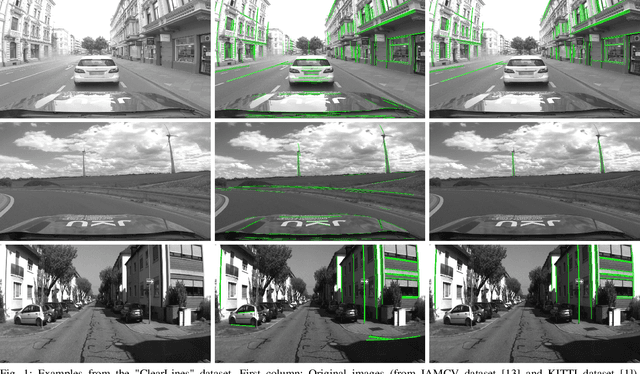
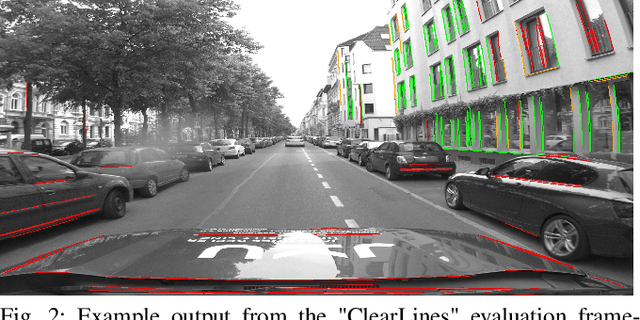

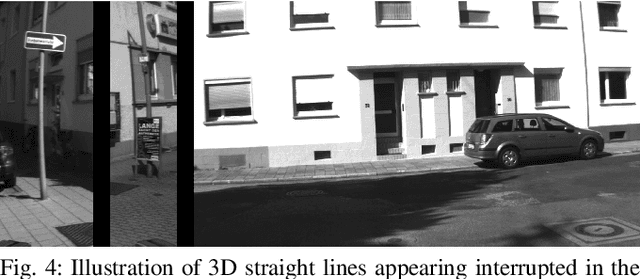
The problem of calibration from straight lines is fundamental in geometric computer vision, with well-established theoretical foundations. However, its practical applicability remains limited, particularly in real-world outdoor scenarios. These environments pose significant challenges due to diverse and cluttered scenes, interrupted reprojections of straight 3D lines, and varying lighting conditions, making the task notoriously difficult. Furthermore, the field lacks a dedicated dataset encouraging the development of respective detection algorithms. In this study, we present a small dataset named "ClearLines", and by detailing its creation process, provide practical insights that can serve as a guide for developing and refining straight 3D line detection algorithms.
Evaluating Pedestrian Risks in Shared Spaces Through Autonomous Vehicle Experiments on a Fixed Track
Apr 11, 2025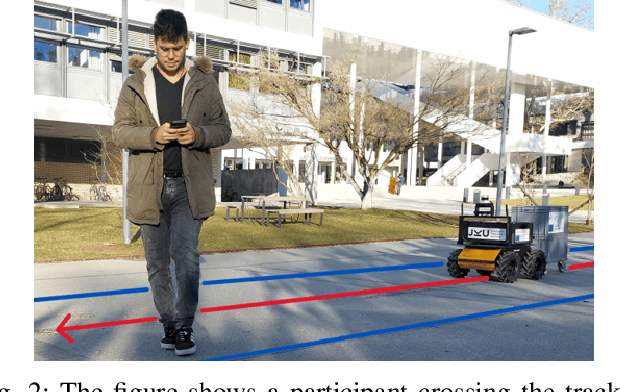
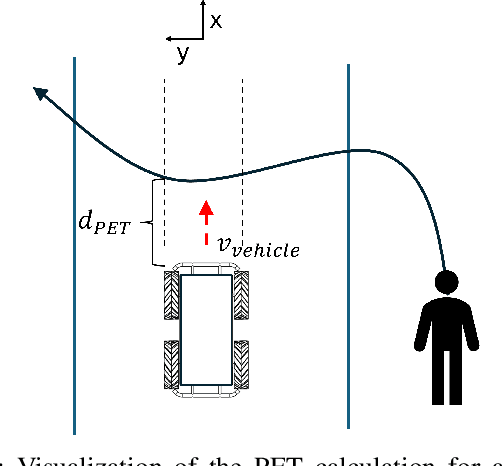
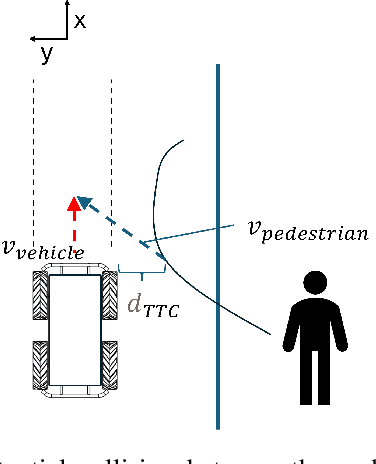
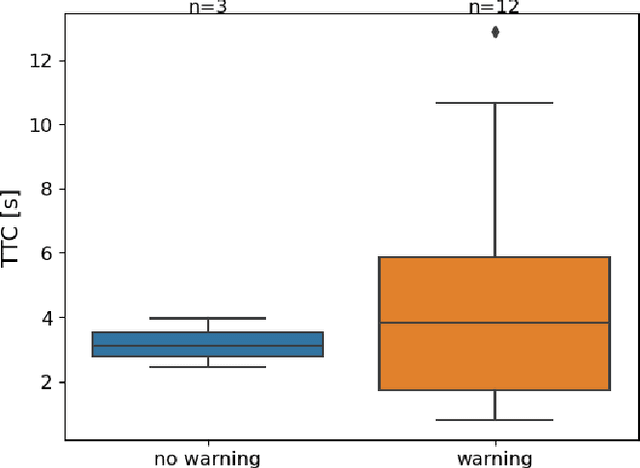
The majority of research on safety in autonomous vehicles has been conducted in structured and controlled environments. However, there is a scarcity of research on safety in unregulated pedestrian areas, especially when interacting with public transport vehicles like trams. This study investigates pedestrian responses to an alert system in this context by replicating this real-world scenario in an environment using an autonomous vehicle. The results show that safety measures from other contexts can be adapted to shared spaces with trams, where fixed tracks heighten risks in unregulated crossings.
Shadow Erosion and Nighttime Adaptability for Camera-Based Automated Driving Applications
Apr 11, 2025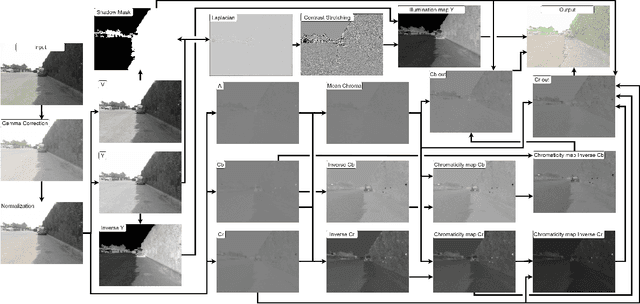
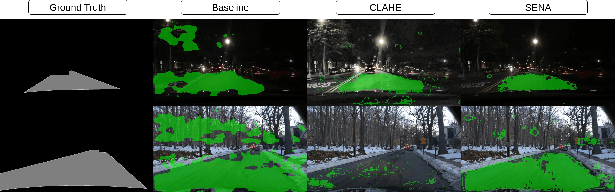
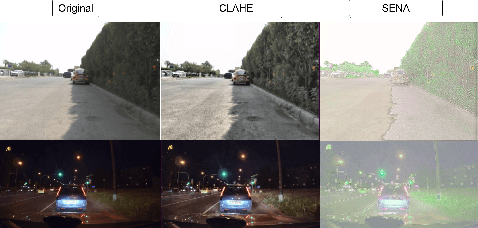
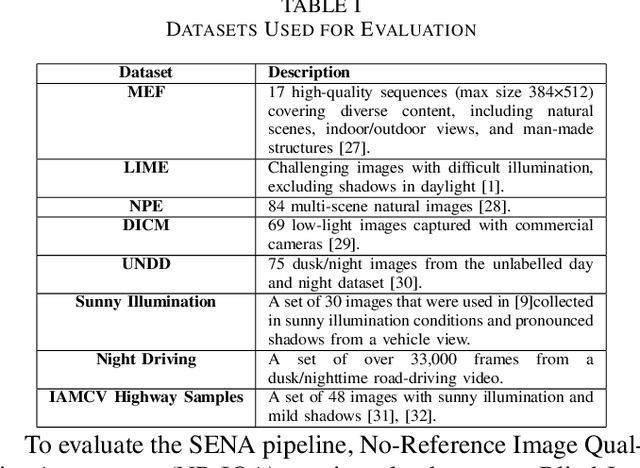
Enhancement of images from RGB cameras is of particular interest due to its wide range of ever-increasing applications such as medical imaging, satellite imaging, automated driving, etc. In autonomous driving, various techniques are used to enhance image quality under challenging lighting conditions. These include artificial augmentation to improve visibility in poor nighttime conditions, illumination-invariant imaging to reduce the impact of lighting variations, and shadow mitigation to ensure consistent image clarity in bright daylight. This paper proposes a pipeline for Shadow Erosion and Nighttime Adaptability in images for automated driving applications while preserving color and texture details. The Shadow Erosion and Nighttime Adaptability pipeline is compared to the widely used CLAHE technique and evaluated based on illumination uniformity and visual perception quality metrics. The results also demonstrate a significant improvement over CLAHE, enhancing a YOLO-based drivable area segmentation algorithm.
Inadequate contrast ratio of road markings as an indicator for ADAS failure
Oct 17, 2024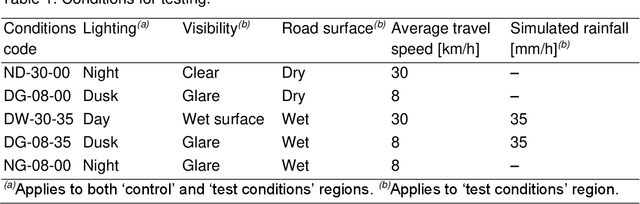
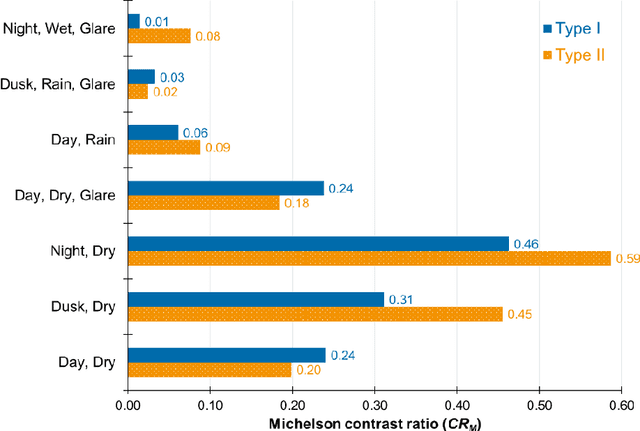
Road markings were reported as critical road safety features, equally needed for both human drivers and for machine vision technologies utilised by advanced driver assistance systems (ADAS) and in driving automation. Visibility of road markings is achieved because of their colour contrasting with the roadway surface. During recent testing of an open-source camera-based ADAS under several visibility conditions (day, night, rain, glare), significant failures in trajectory planning were recorded and quantified. Consistently, better ADAS reliability under poor visibility conditions was achieved with Type II road markings (i.e. structured markings, facilitating moisture drainage) as compared to Type I road marking (i.e. flat lines). To further understand these failures, analysis of contrast ratio of road markings, which the tested ADAS was detecting for traffic lane recognition, was performed. The highest contrast ratio (greater than 0.5, calculated per Michelson equation) was measured at night in the absence of confounding factors, with statistically significant difference of 0.1 in favour of Type II road markings over Type I. Under daylight conditions, contrast ratio was reduced, with slightly higher values measured with Type I. The presence of rain or wet roads caused the deterioration of the contrast ratio, with Type II road markings exhibiting significantly higher contrast ratio than Type I, even though the values were low (less than 0.1). These findings matched the output of the ADAS related to traffic lane detection and underlined the importance of road marking visibility. Inadequate lane recognition by ADAS was associated with very low contrast ratio of road markings indeed. Importantly, specific minimum contrast ratio value could not be found, which was due to the complexity of ADAS algorithms...
Want a Ride? Attitudes Towards Autonomous Driving and Behavior in Autonomous Vehicles
Sep 04, 2024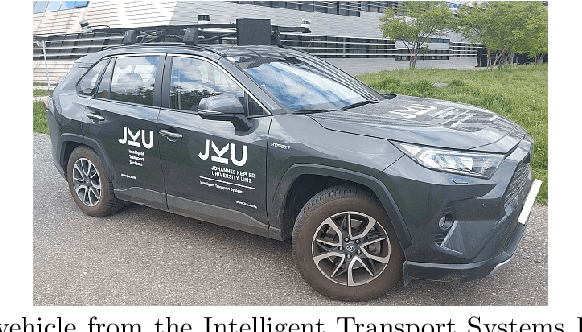
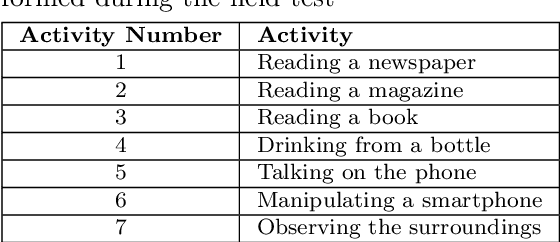
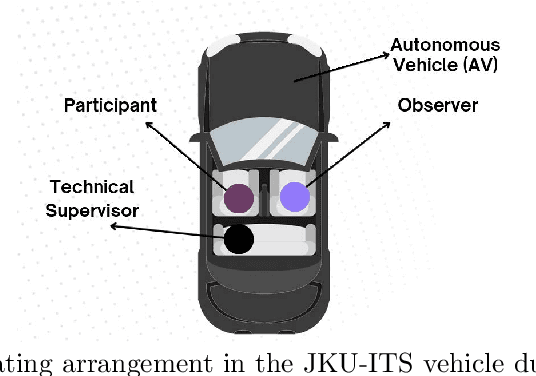

Research conducted previously has focused on either attitudes toward or behaviors associated with autonomous driving. In this paper, we bridge these two dimensions by exploring how attitudes towards autonomous driving influence behavior in an autonomous car. We conducted a field experiment with twelve participants engaged in non-driving related tasks. Our findings indicate that attitudes towards autonomous driving do not affect participants' driving interventions in vehicle control and eye glance behavior. Therefore, studies on autonomous driving technology lacking field tests might be unreliable for assessing the potential behaviors, attitudes, and acceptance of autonomous vehicles.
Integrating Naturalistic Insights in Objective Multi-Vehicle Safety Framework
Aug 19, 2024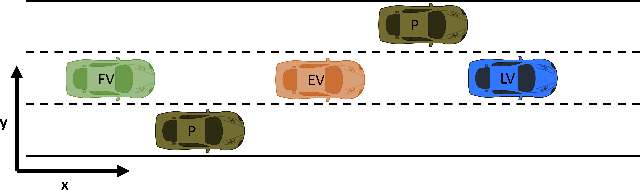
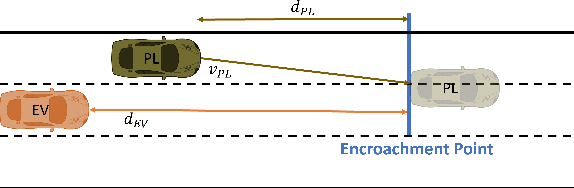
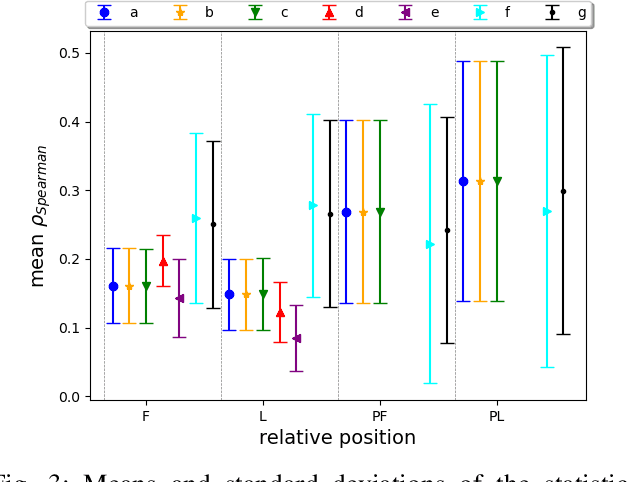
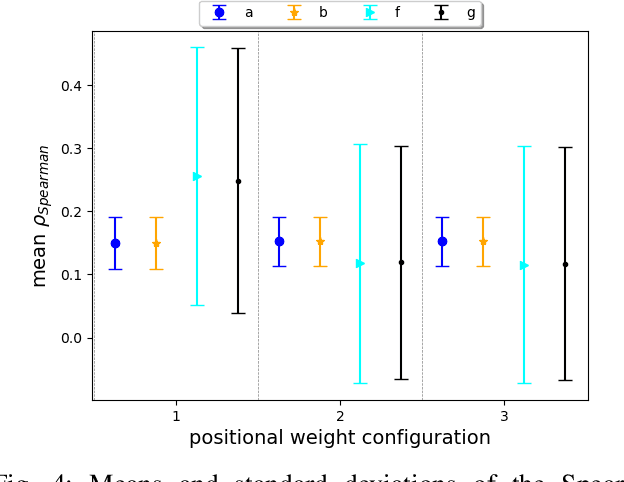
As autonomous vehicle technology advances, the precise assessment of safety in complex traffic scenarios becomes crucial, especially in mixed-vehicle environments where human perception of safety must be taken into account. This paper presents a framework designed for assessing traffic safety in multi-vehicle situations, facilitating the simultaneous utilization of diverse objective safety metrics. Additionally, it allows the integration of subjective perception of safety by adjusting model parameters. The framework was applied to evaluate various model configurations in car-following scenarios on a highway, utilizing naturalistic driving datasets. The evaluation of the model showed an outstanding performance, particularly when integrating multiple objective safety measures. Furthermore, the performance was significantly enhanced when considering all surrounding vehicles.