 Add to Chrome
 Add to Firefox
 Add to Edge
Large language models improve physician accuracy but lead to false reliance
Aug 01, 2026
Retrieval-augmented large language models (LLMs) promise source-linked clinical support, but their value depends on whether displayed evidence guides rather than distorts physician reliance. We developed CORA, an agentic retrieval-augmented LLM, to investigate how source-linked assistance affects physician decision-making. CORA maintained benchmark performance and achieved larger gains on cases published after the models' training-data cutoffs. In a study of 46 physicians, accuracy increased from 70.8% unaided to 82.6% with CORA. Supporting citations predicted correct answers (87.7% vs 65.5%), but citations created an important asymmetry: perceived support increased adoption of correct advice from 34% to 76.9% but when an incorrect LLM answer appeared citation-supported, physician resistance to it fell from 92% to 34.8%. These findings show that source-linked LLM assistance can improve physician accuracy while introducing a grounding-dependent safety risk.

A Weighted Prognostic Covariate Adjustment Method for Efficient and Powerful Treatment Effect Inferences in Randomized Controlled Trials
Sep 25, 2023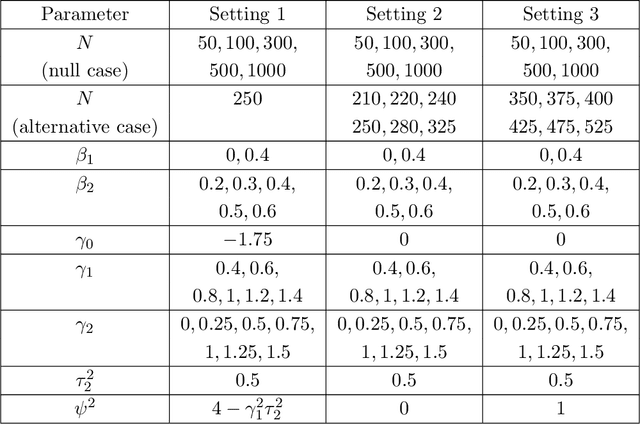
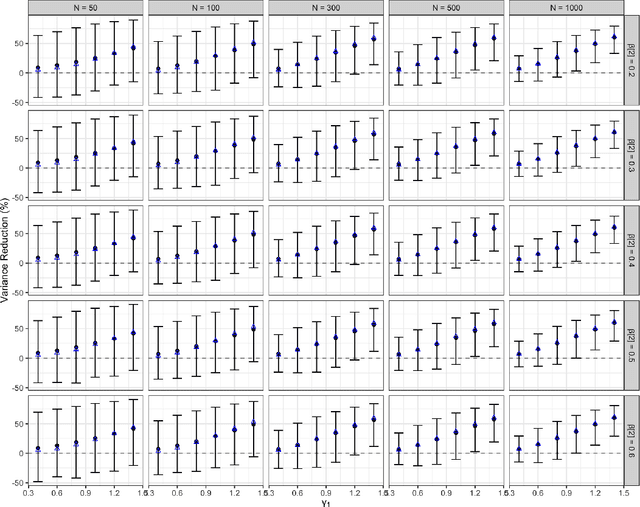
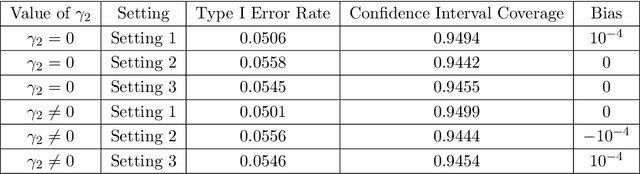
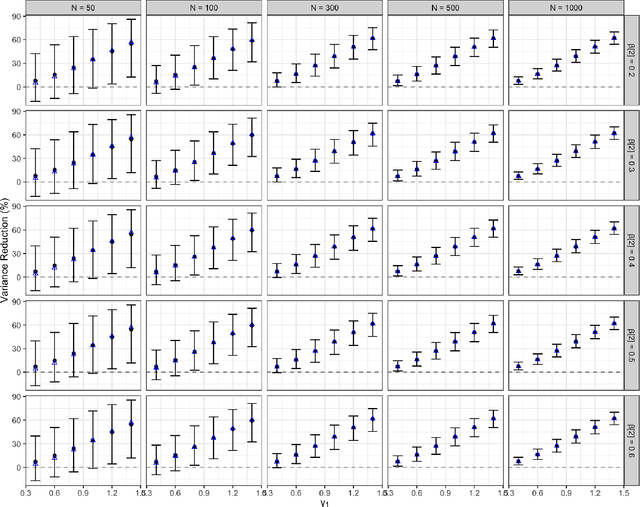
A crucial task for a randomized controlled trial (RCT) is to specify a statistical method that can yield an efficient estimator and powerful test for the treatment effect. A novel and effective strategy to obtain efficient and powerful treatment effect inferences is to incorporate predictions from generative artificial intelligence (AI) algorithms into covariate adjustment for the regression analysis of a RCT. Training a generative AI algorithm on historical control data enables one to construct a digital twin generator (DTG) for RCT participants, which utilizes a participant's baseline covariates to generate a probability distribution for their potential control outcome. Summaries of the probability distribution from the DTG are highly predictive of the trial outcome, and adjusting for these features via regression can thus improve the quality of treatment effect inferences, while satisfying regulatory guidelines on statistical analyses, for a RCT. However, a critical assumption in this strategy is homoskedasticity, or constant variance of the outcome conditional on the covariates. In the case of heteroskedasticity, existing covariate adjustment methods yield inefficient estimators and underpowered tests. We propose to address heteroskedasticity via a weighted prognostic covariate adjustment methodology (Weighted PROCOVA) that adjusts for both the mean and variance of the regression model using information obtained from the DTG. We prove that our method yields unbiased treatment effect estimators, and demonstrate via comprehensive simulation studies and case studies from Alzheimer's disease that it can reduce the variance of the treatment effect estimator, maintain the Type I error rate, and increase the power of the test for the treatment effect from 80% to 85%~90% when the variances from the DTG can explain 5%~10% of the variation in the RCT participants' outcomes.