Get our free extension to see links to code for papers anywhere online!Free add-on: code for papers everywhere!Free add-on: See code for papers anywhere!
 Add to Chrome
 Add to Firefox
 Add to Edge
Node-Level Financial Optimization in Demand Forecasting Through Dynamic Cost Asymmetry and Feedback Mechanism
Dec 16, 2025
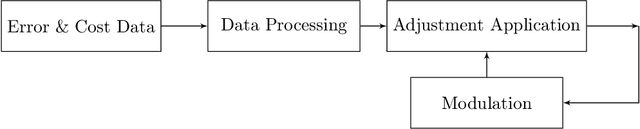
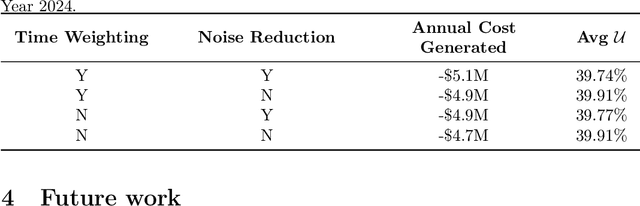

This work introduces a methodology to adjust forecasts based on node-specific cost function asymmetry. The proposed model generates savings by dynamically incorporating the cost asymmetry into the forecasting error probability distribution to favor the least expensive scenario. Savings are calculated and a self-regulation mechanism modulates the adjustments magnitude based on the observed savings, enabling the model to adapt to station-specific conditions and unmodeled factors such as calibration errors or shifting macroeconomic dynamics. Finally, empirical results demonstrate the model's ability to achieve \$5.1M annual savings.
* Accepted to Amazon internal conference (AFSS). Now sharing with general public. This is submission is replacing a previous submission with the same title: the main paper is now submitted, while previously we submitted a summary
Via