 Add to Chrome
 Add to Firefox
 Add to Edge
Beyond Symmetric Alignment: Spectral Diagnostics of Modality Imbalance in Vision-Language Models in the Medical Domain
Jun 03, 2026
Vision-Language Models (VLMs) struggle when applied to medical image-text data, yet the tools available to diagnose this failure remain limited. Existing representation alignment metrics are symmetric, collapsing both modalities into a single score and hiding which modality drives cross-modal degradation. We introduce the Spectral Alignment Score (SAS), an asymmetric metric that projects both modalities onto the principal eigenbasis of an anchor modality and computes eigenvalue-weighted per-eigenmode correlations, resulting in directional scores whose difference quantifies modality information imbalance. We embed SAS within a benchmarking framework evaluating 15 VLMs across natural and medical image-text datasets alongside 6 alignment metrics and bidirectional retrieval. Our experiments show that medical images retain richer structural information than their paired clinical reports, a directional asymmetry invisible to all competing metrics, and that SAS achieves the strongest zero-label correlation with retrieval performance in the medical domain, positioning it as a practical diagnostic tool for clinical deployment. Code is available at this URL: https://github.com/iamalegambetti/medical-vlms-assessment.

A Systematic Evaluation of Retrieval-Augmented Generation and Language Models for Space Operations
May 23, 2026The rapid expansion of space activities has led to an unprecedented accumulation of technical documentation, operational guidelines, and scientific literature, creating challenges for timely decision-making in space operations. Effective management in space operations requires tools capable of efficiently processing vast and heterogeneous information sources. This paper systematically evaluates the performance of Retrieval Augmented Generation (RAG) pipelines, combining Large Language Models (LLMs) with information retrieval techniques for extracting and synthesizing actionable knowledge from domain-specific documents. We compare various retrieval strategies, embedding models, and LLM answers to assess their impact on information accuracy, relevance, and reliability. Our results demonstrate that RAG pipelines can significantly enhance knowledge access, reduce uncertainty, and support decision-making in complex space operations.
Online Learning for Dynamic Constellation Topologies
Mar 26, 2026The use of satellite networks has increased significantly in recent years due to their advantages over purely terrestrial systems, such as higher availability and coverage. However, to effectively provide these services, satellite networks must cope with the continuous orbital movement and maneuvering of their nodes and the impact on the network's topology. In this work, we address the problem of (dynamic) network topology configuration under the online learning framework. As a byproduct, our approach does not assume structure about the network, such as known orbital planes (that could be violated by maneuvering satellites). We empirically demonstrate that our problem formulation matches the performance of state-of-the-art offline methods. Importantly, we demonstrate that our approach is amenable to constrained online learning, exhibiting a trade-off between computational complexity per iteration and convergence to a final strategy.
A Decomposable Forward Process in Diffusion Models for Time-Series Forecasting
Jan 29, 2026We introduce a model-agnostic forward diffusion process for time-series forecasting that decomposes signals into spectral components, preserving structured temporal patterns such as seasonality more effectively than standard diffusion. Unlike prior work that modifies the network architecture or diffuses directly in the frequency domain, our proposed method alters only the diffusion process itself, making it compatible with existing diffusion backbones (e.g., DiffWave, TimeGrad, CSDI). By staging noise injection according to component energy, it maintains high signal-to-noise ratios for dominant frequencies throughout the diffusion trajectory, thereby improving the recoverability of long-term patterns. This strategy enables the model to maintain the signal structure for a longer period in the forward process, leading to improved forecast quality. Across standard forecasting benchmarks, we show that applying spectral decomposition strategies, such as the Fourier or Wavelet transform, consistently improves upon diffusion models using the baseline forward process, with negligible computational overhead. The code for this paper is available at https://anonymous.4open.science/r/D-FDP-4A29.
CLASP: An online learning algorithm for Convex Losses And Squared Penalties
Jan 24, 2026We study Constrained Online Convex Optimization (COCO), where a learner chooses actions iteratively, observes both unanticipated convex loss and convex constraint, and accumulates loss while incurring penalties for constraint violations. We introduce CLASP (Convex Losses And Squared Penalties), an algorithm that minimizes cumulative loss together with squared constraint violations. Our analysis departs from prior work by fully leveraging the firm non-expansiveness of convex projectors, a proof strategy not previously applied in this setting. For convex losses, CLASP achieves regret $O\left(T^{\max\{β,1-β\}}\right)$ and cumulative squared penalty $O\left(T^{1-β}\right)$ for any $β\in (0,1)$. Most importantly, for strongly convex problems, CLASP provides the first logarithmic guarantees on both regret and cumulative squared penalty. In the strongly convex case, the regret is upper bounded by $O( \log T )$ and the cumulative squared penalty is also upper bounded by $O( \log T )$.
C-PATH: Conversational Patient Assistance and Triage in Healthcare System
Jun 07, 2025Navigating healthcare systems can be complex and overwhelming, creating barriers for patients seeking timely and appropriate medical attention. In this paper, we introduce C-PATH (Conversational Patient Assistance and Triage in Healthcare), a novel conversational AI system powered by large language models (LLMs) designed to assist patients in recognizing symptoms and recommending appropriate medical departments through natural, multi-turn dialogues. C-PATH is fine-tuned on medical knowledge, dialogue data, and clinical summaries using a multi-stage pipeline built on the LLaMA3 architecture. A core contribution of this work is a GPT-based data augmentation framework that transforms structured clinical knowledge from DDXPlus into lay-person-friendly conversations, allowing alignment with patient communication norms. We also implement a scalable conversation history management strategy to ensure long-range coherence. Evaluation with GPTScore demonstrates strong performance across dimensions such as clarity, informativeness, and recommendation accuracy. Quantitative benchmarks show that C-PATH achieves superior performance in GPT-rewritten conversational datasets, significantly outperforming domain-specific baselines. C-PATH represents a step forward in the development of user-centric, accessible, and accurate AI tools for digital health assistance and triage.
Modular Federated Learning: A Meta-Framework Perspective
May 13, 2025Federated Learning (FL) enables distributed machine learning training while preserving privacy, representing a paradigm shift for data-sensitive and decentralized environments. Despite its rapid advancements, FL remains a complex and multifaceted field, requiring a structured understanding of its methodologies, challenges, and applications. In this survey, we introduce a meta-framework perspective, conceptualising FL as a composition of modular components that systematically address core aspects such as communication, optimisation, security, and privacy. We provide a historical contextualisation of FL, tracing its evolution from distributed optimisation to modern distributed learning paradigms. Additionally, we propose a novel taxonomy distinguishing Aggregation from Alignment, introducing the concept of alignment as a fundamental operator alongside aggregation. To bridge theory with practice, we explore available FL frameworks in Python, facilitating real-world implementation. Finally, we systematise key challenges across FL sub-fields, providing insights into open research questions throughout the meta-framework modules. By structuring FL within a meta-framework of modular components and emphasising the dual role of Aggregation and Alignment, this survey provides a holistic and adaptable foundation for understanding and advancing FL research and deployment.
OrbitZoo: Multi-Agent Reinforcement Learning Environment for Orbital Dynamics
Apr 05, 2025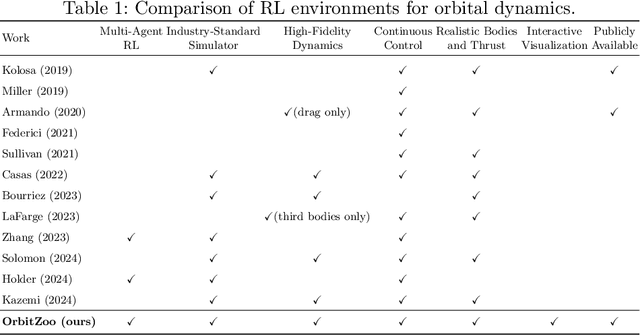
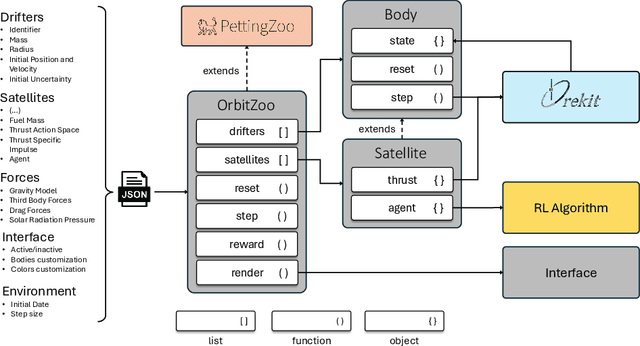
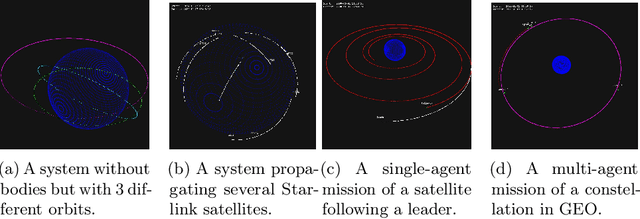
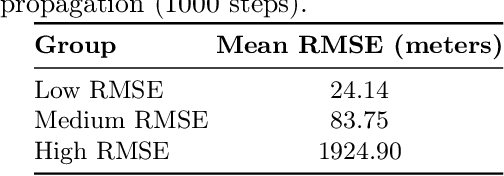
The increasing number of satellites and orbital debris has made space congestion a critical issue, threatening satellite safety and sustainability. Challenges such as collision avoidance, station-keeping, and orbital maneuvering require advanced techniques to handle dynamic uncertainties and multi-agent interactions. Reinforcement learning (RL) has shown promise in this domain, enabling adaptive, autonomous policies for space operations; however, many existing RL frameworks rely on custom-built environments developed from scratch, which often use simplified models and require significant time to implement and validate the orbital dynamics, limiting their ability to fully capture real-world complexities. To address this, we introduce OrbitZoo, a versatile multi-agent RL environment built on a high-fidelity industry standard library, that enables realistic data generation, supports scenarios like collision avoidance and cooperative maneuvers, and ensures robust and accurate orbital dynamics. The environment is validated against a real satellite constellation, Starlink, achieving a Mean Absolute Percentage Error (MAPE) of 0.16% compared to real-world data. This validation ensures reliability for generating high-fidelity simulations and enabling autonomous and independent satellite operations.
Follow-the-Regularized-Leader with Adversarial Constraints
Mar 17, 2025Constrained Online Convex Optimization (COCO) can be seen as a generalization of the standard Online Convex Optimization (OCO) framework. At each round, a cost function and constraint function are revealed after a learner chooses an action. The goal is to minimize both the regret and cumulative constraint violation (CCV) against an adaptive adversary. We show for the first time that is possible to obtain the optimal $O(\sqrt{T})$ bound on both regret and CCV, improving the best known bounds of $O \left( \sqrt{T} \right)$ and $\~{O} \left( \sqrt{T} \right)$ for the regret and CCV, respectively.
Advancing Solutions for the Three-Body Problem Through Physics-Informed Neural Networks
Mar 06, 2025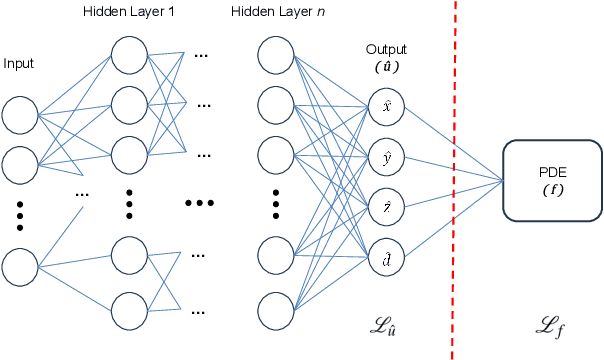
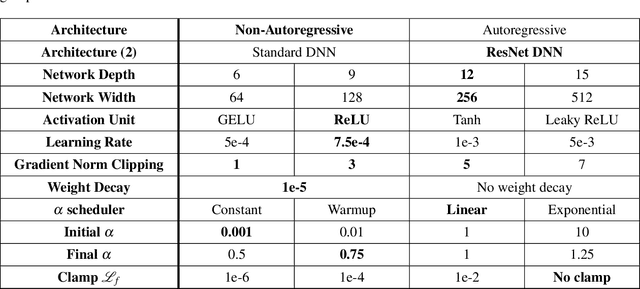
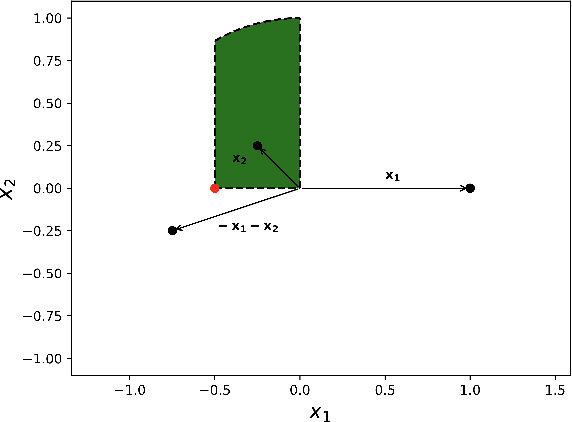

First formulated by Sir Isaac Newton in his work "Philosophiae Naturalis Principia Mathematica", the concept of the Three-Body Problem was put forth as a study of the motion of the three celestial bodies within the Earth-Sun-Moon system. In a generalized definition, it seeks to predict the motion for an isolated system composed of three point masses freely interacting under Newton's law of universal attraction. This proves to be analogous to a multitude of interactions between celestial bodies, and thus, the problem finds applicability within the studies of celestial mechanics. Despite numerous attempts by renowned physicists to solve it throughout the last three centuries, no general closed-form solutions have been reached due to its inherently chaotic nature for most initial conditions. Current state-of-the-art solutions are based on two approaches, either numerical high-precision integration or machine learning-based. Notwithstanding the breakthroughs of neural networks, these present a significant limitation, which is their ignorance of any prior knowledge of the chaotic systems presented. Thus, in this work, we propose a novel method that utilizes Physics-Informed Neural Networks (PINNs). These deep neural networks are able to incorporate any prior system knowledge expressible as an Ordinary Differential Equation (ODE) into their learning processes as a regularizing agent. Our findings showcase that PINNs surpass current state-of-the-art machine learning methods with comparable prediction quality. Despite a better prediction quality, the usability of numerical integrators suffers due to their prohibitively high computational cost. These findings confirm that PINNs are both effective and time-efficient open-form solvers of the Three-Body Problem that capitalize on the extensive knowledge we hold of classical mechanics.
* 14 pages, 25 figures, 3 tables. 75th International Astronautical Congress (IAC), Milan, Italy, 14-18 October