 Add to Chrome
 Add to Firefox
 Add to Edge
How communicatively optimal are exact numeral systems? Once more on lexicon size and morphosyntactic complexity
Feb 23, 2026
Recent research argues that exact recursive numeral systems optimize communicative efficiency by balancing a tradeoff between the size of the numeral lexicon and the average morphosyntactic complexity (roughly length in morphemes) of numeral terms. We argue that previous studies have not characterized the data in a fashion that accounts for the degree of complexity languages display. Using data from 52 genetically diverse languages and an annotation scheme distinguishing between predictable and unpredictable allomorphy (formal variation), we show that many of the world's languages are decisively less efficient than one would expect. We discuss the implications of our findings for the study of numeral systems and linguistic evolution more generally.

Semantics drives analogical change in Germanic strong verb paradigms: a phylogenetic study
Feb 24, 2025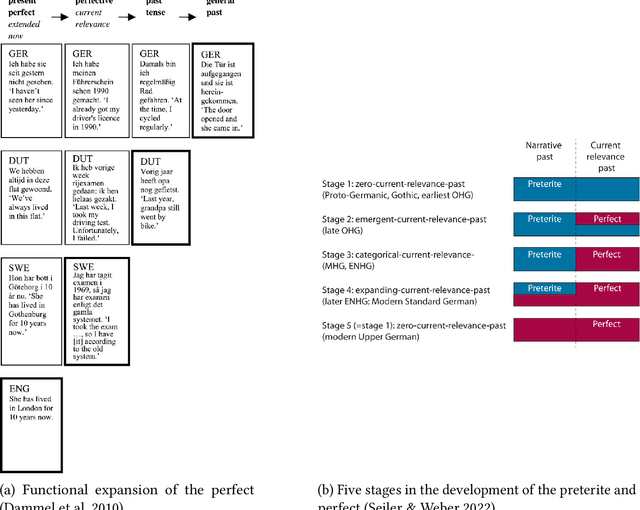

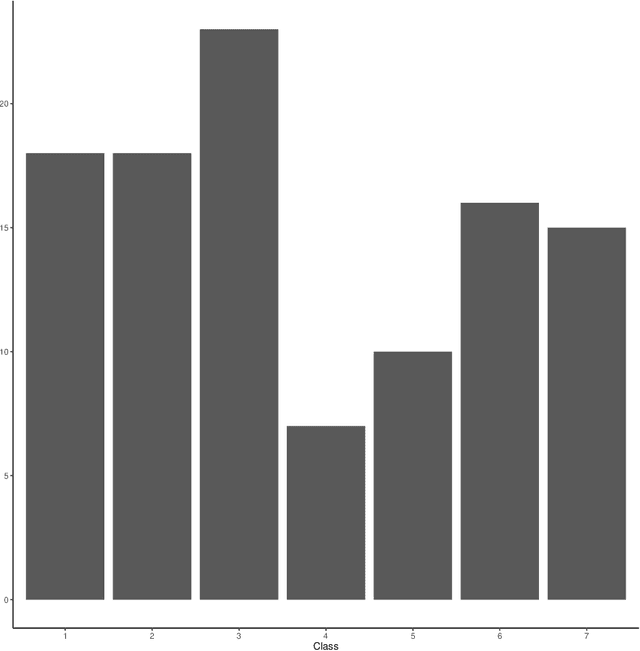
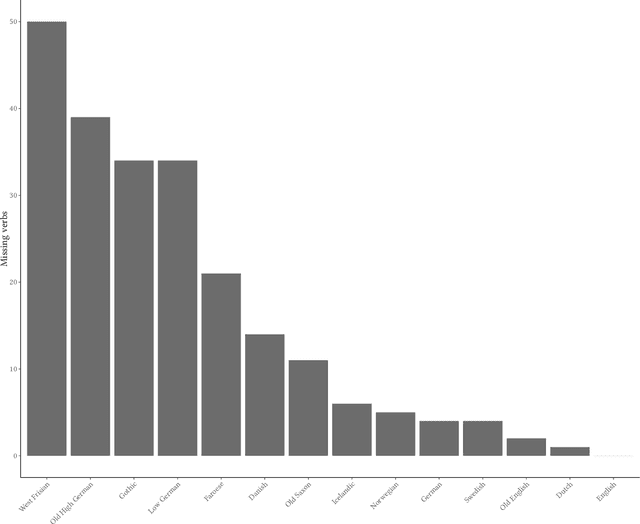
A large body of research on morphological paradigms makes the prediction that irregular morphological patterns of allomorphy are more likely to emerge and persist when they serve to mark important functional distinctions. More specifically, it has been observed that in some Germanic languages in which narrative past tense is expressed by the past participle, there is a greater affinity for stem allomorphy shared by preterite forms and past participles to the exclusion of present forms (the so-called ABB pattern), as it serves to enhance marking of the binary semantic opposition between present and past. Using data from 107 cognate verbs attested across 14 archaic and contemporary Germanic languages and a novel hierarchical phylogenetic model, we show that there is a greater long-term preference for this alternation pattern in situations where narrative past tense has been extended to the past participle, confirming this hypothesis. We further elucidate the mechanisms underlying this association, demonstrating that this association holds because verbs with the ABB pattern are more likely to preserve it in situations where it marks an important binary semantic opposition; however, there is less evidence that the ABB pattern is extended to verbs with different patterns under the same circumstances. These results bear on debate as to whether the distribution of irregularity we observe cross-linguistically is due primarily to (1) the preservation of irregular patterns or (2) an active drive toward irregularization in certain contexts, and are more in line with the first hypothesis.