 Add to Chrome
 Add to Firefox
 Add to Edge
Scalable Agentic Reasoning for Designing Biologics Targeting Intrinsically Disordered Proteins
Dec 17, 2025
Intrinsically disordered proteins (IDPs) represent crucial therapeutic targets due to their significant role in disease -- approximately 80\% of cancer-related proteins contain long disordered regions -- but their lack of stable secondary/tertiary structures makes them "undruggable". While recent computational advances, such as diffusion models, can design high-affinity IDP binders, translating these to practical drug discovery requires autonomous systems capable of reasoning across complex conformational ensembles and orchestrating diverse computational tools at scale.To address this challenge, we designed and implemented StructBioReasoner, a scalable multi-agent system for designing biologics that can be used to target IDPs. StructBioReasoner employs a novel tournament-based reasoning framework where specialized agents compete to generate and refine therapeutic hypotheses, naturally distributing computational load for efficient exploration of the vast design space. Agents integrate domain knowledge with access to literature synthesis, AI-structure prediction, molecular simulations, and stability analysis, coordinating their execution on HPC infrastructure via an extensible federated agentic middleware, Academy. We benchmark StructBioReasoner across Der f 21 and NMNAT-2 and demonstrate that over 50\% of 787 designed and validated candidates for Der f 21 outperformed the human-designed reference binders from literature, in terms of improved binding free energy. For the more challenging NMNAT-2 protein, we identified three binding modes from 97,066 binders, including the well-studied NMNAT2:p53 interface. Thus, StructBioReasoner lays the groundwork for agentic reasoning systems for IDP therapeutic discovery on Exascale platforms.

High-resolution semantically-consistent image-to-image translation
Sep 13, 2022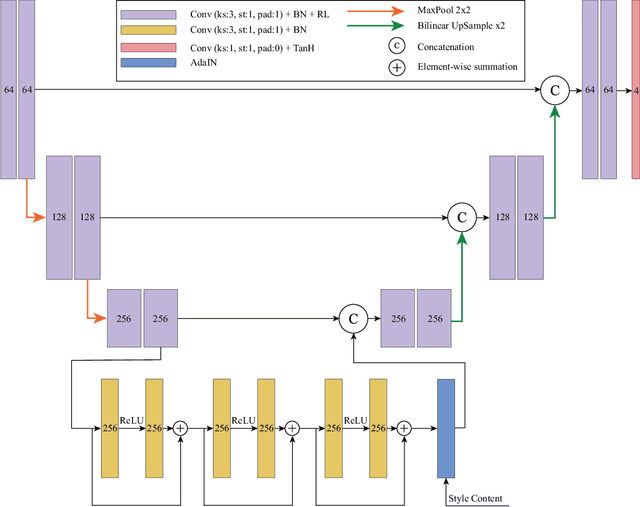
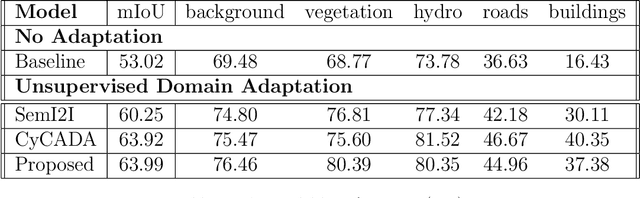
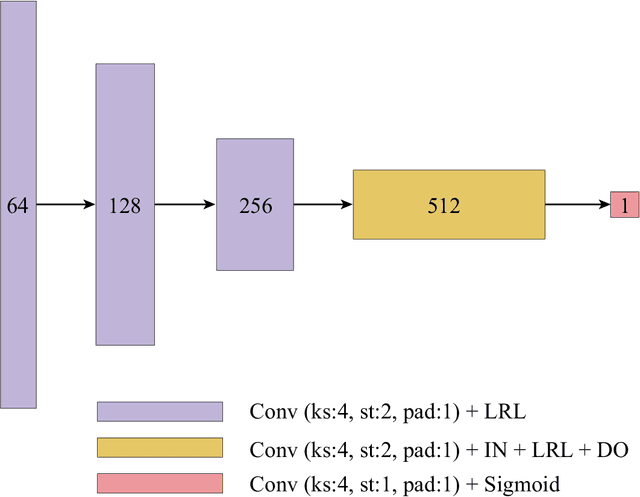
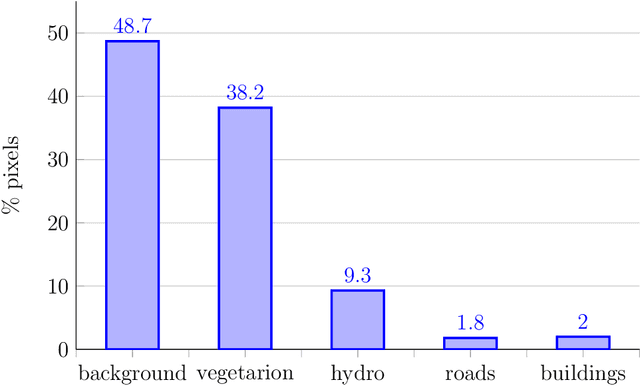
Deep learning has become one of remote sensing scientists' most efficient computer vision tools in recent years. However, the lack of training labels for the remote sensing datasets means that scientists need to solve the domain adaptation problem to narrow the discrepancy between satellite image datasets. As a result, image segmentation models that are then trained, could better generalize and use an existing set of labels instead of requiring new ones. This work proposes an unsupervised domain adaptation model that preserves semantic consistency and per-pixel quality for the images during the style-transferring phase. This paper's major contribution is proposing the improved architecture of the SemI2I model, which significantly boosts the proposed model's performance and makes it competitive with the state-of-the-art CyCADA model. A second contribution is testing the CyCADA model on the remote sensing multi-band datasets such as WorldView-2 and SPOT-6. The proposed model preserves semantic consistency and per-pixel quality for the images during the style-transferring phase. Thus, the semantic segmentation model, trained on the adapted images, shows substantial performance gain compared to the SemI2I model and reaches similar results as the state-of-the-art CyCADA model. The future development of the proposed method could include ecological domain transfer, {\em a priori} evaluation of dataset quality in terms of data distribution, or exploration of the inner architecture of the domain adaptation model.