 Add to Chrome
 Add to Firefox
 Add to Edge
Physics-Informed Machine Learning in Prognostics and Health Management: A Systematic Literature Review
Aug 10, 2026
In modern industry, keeping complex systems reliable, safe, and efficient hinges on Prognostics and Health Management (PHM). Machine Learning (ML) has largely driven advancements in diagnostics and prognostics, yet purely data-driven models face inherent limitations, such as poor generalization, an inability to infer causal relationships, and a lack of interpretability. Physics-Informed Machine Learning (PIML) helps mitigate these limitations by incorporating prior physical knowledge directly into the ML pipeline, thereby fostering growing interest in its application to PHM. This work investigates how PIML is being leveraged in the context of PHM through a systematic literature review of 212 studies. The review introduces a four-class classification scheme, consisting of observational bias, inductive bias, learning bias, and hybrid approaches, and further categorizes studies by PHM task. Across all four classes, the reviewed studies consistently demonstrate improved predictive performance over conventional baselines across a broad range of assets, although the literature is heavily skewed toward lithium-ion batteries and bearings, and dominated by problem-specific solutions. Overall, the review indicates that physics-informed approaches already provide tangible benefits, whereas claims of improvements concerning some of the aforementioned limitations lack sufficient supporting evidence. Future research should prioritize transferable design patterns, benchmarks comparing integration strategies, and uncertainty-aware models that are lightweight and robust enough for online deployment in real-world settings.

Overview of Publicly Available Degradation Data Sets for Tasks within Prognostics and Health Management
Mar 20, 2024Central to the efficacy of prognostics and health management methods is the acquisition and analysis of degradation data, which encapsulates the evolving health condition of engineering systems over time. Degradation data serves as a rich source of information, offering invaluable insights into the underlying degradation processes, failure modes, and performance trends of engineering systems. This paper provides an overview of publicly available degradation data sets.
RoboGrind: Intuitive and Interactive Surface Treatment with Industrial Robots
Feb 27, 2024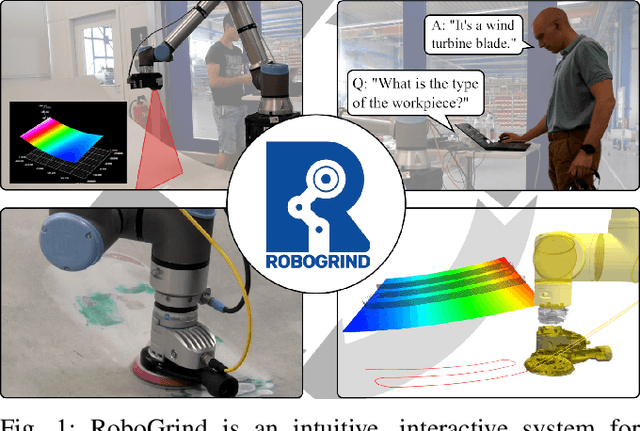
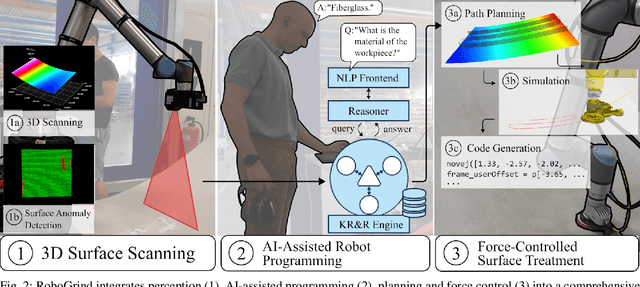
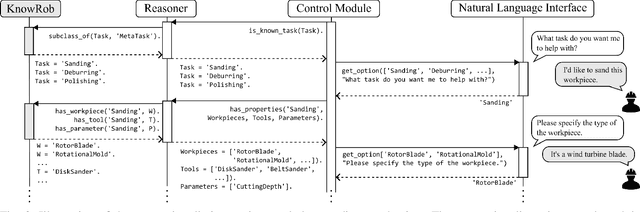
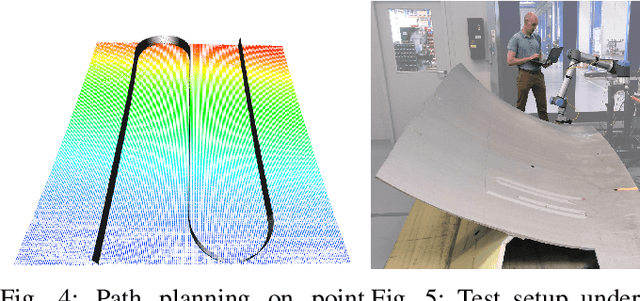
Surface treatment tasks such as grinding, sanding or polishing are a vital step of the value chain in many industries, but are notoriously challenging to automate. We present RoboGrind, an integrated system for the intuitive, interactive automation of surface treatment tasks with industrial robots. It combines a sophisticated 3D perception pipeline for surface scanning and automatic defect identification, an interactive voice-controlled wizard system for the AI-assisted bootstrapping and parameterization of robot programs, and an automatic planning and execution pipeline for force-controlled robotic surface treatment. RoboGrind is evaluated both under laboratory and real-world conditions in the context of refabricating fiberglass wind turbine blades.