 Add to Chrome
 Add to Firefox
 Add to Edge
Topological Effects in Neural Network Field Theory
Apr 02, 2026
Neural network field theory formulates field theory as a statistical ensemble of fields defined by a network architecture and a density on its parameters. We extend the construction to topological settings via the inclusion of discrete parameters that label the topological quantum number. We recover the Berezinskii--Kosterlitz--Thouless transition, including the spin-wave critical line and the proliferation of vortices at high temperatures. We also verify the T-duality of the bosonic string, showing invariance under the exchange of momentum and winding on $S^1$, the transformation of the sigma model couplings according to the Buscher rules on constant toroidal backgrounds, the enhancement of the current algebra at self-dual radius, and non-geometric T-fold transition functions.

Quantum Mechanics and Neural Networks
Apr 07, 2025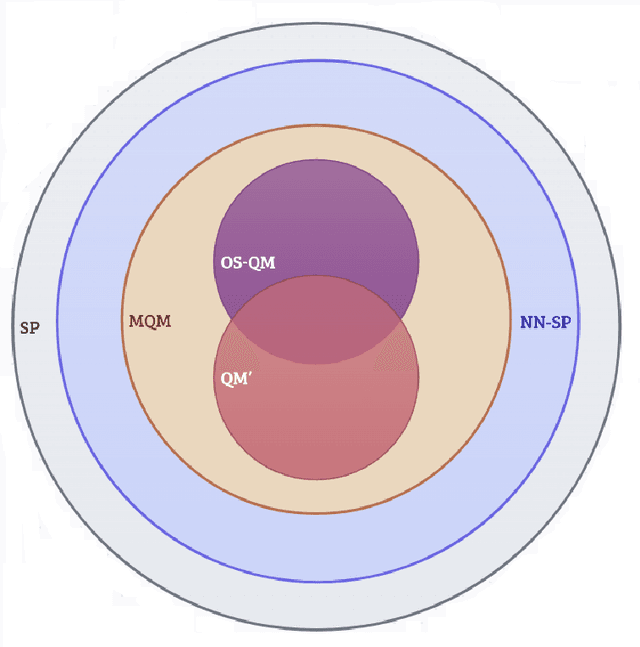
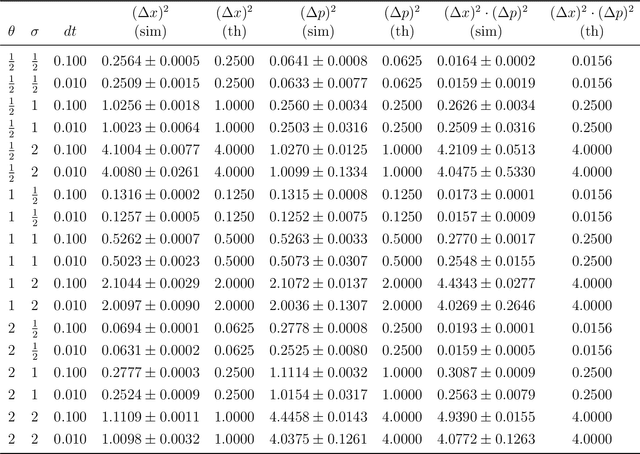
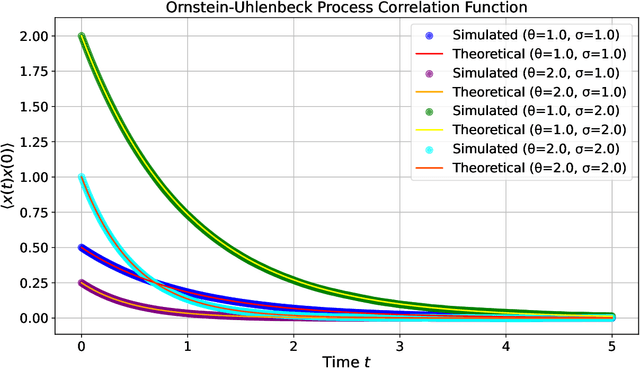
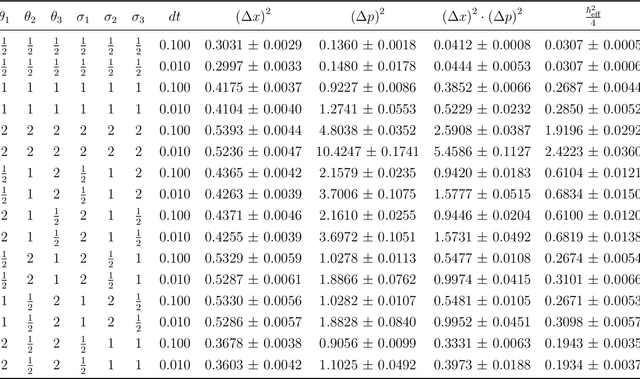
We demonstrate that any Euclidean-time quantum mechanical theory may be represented as a neural network, ensured by the Kosambi-Karhunen-Lo\`eve theorem, mean-square path continuity, and finite two-point functions. The additional constraint of reflection positivity, which is related to unitarity, may be achieved by a number of mechanisms, such as imposing neural network parameter space splitting or the Markov property. Non-differentiability of the networks is related to the appearance of non-trivial commutators. Neural networks acting on Markov processes are no longer Markov, but still reflection positive, which facilitates the definition of deep neural network quantum systems. We illustrate these principles in several examples using numerical implementations, recovering classic quantum mechanical results such as Heisenberg uncertainty, non-trivial commutators, and the spectrum.