 Add to Chrome
 Add to Firefox
 Add to Edge
CNN-Based Deep Architecture for Reinforced Concrete Delamination Segmentation Through Thermography
Apr 11, 2019

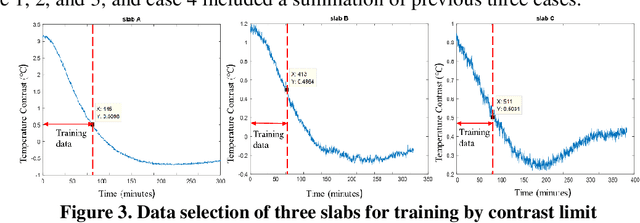
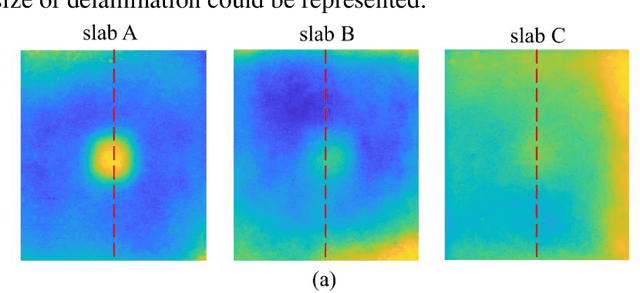
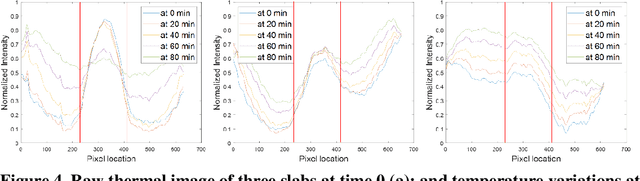
Delamination assessment of the bridge deck plays a vital role for bridge health monitoring. Thermography as one of the nondestructive technologies for delamination detection has the advantage of efficient data acquisition. But there are challenges on the interpretation of data for accurate delamination shape profiling. Due to the environmental variation and the irregular presence of delamination size and depth, conventional processing methods based on temperature contrast fall short in accurate segmentation of delamination. Inspired by the recent development of deep learning architecture for image segmentation, the Convolutional Neural Network (CNN) based framework was investigated for the applicability of delamination segmentation under variations in temperature contrast and shape diffusion. The models were developed based on Dense Convolutional Network (DenseNet) and trained on thermal images collected for mimicked delamination in concrete slabs with different depths under experimental setup. The results suggested satisfactory performance of accurate profiling the delamination shapes.

A Data Fusion Platform for Supporting Bridge Deck Condition Monitoring by Merging Aerial and Ground Inspection Imagery
Apr 10, 2019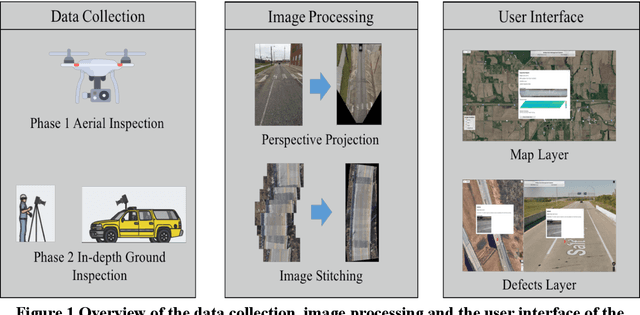
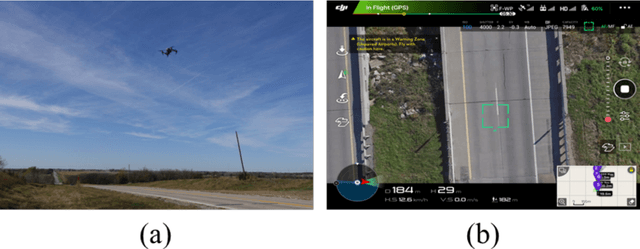
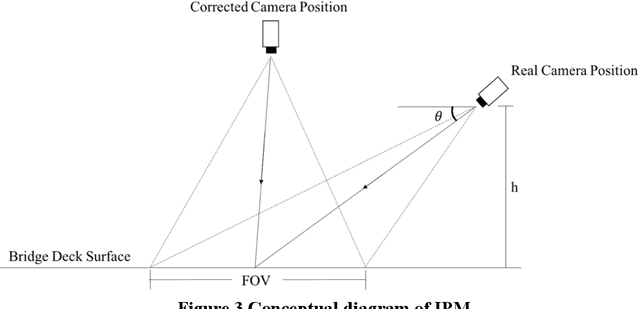
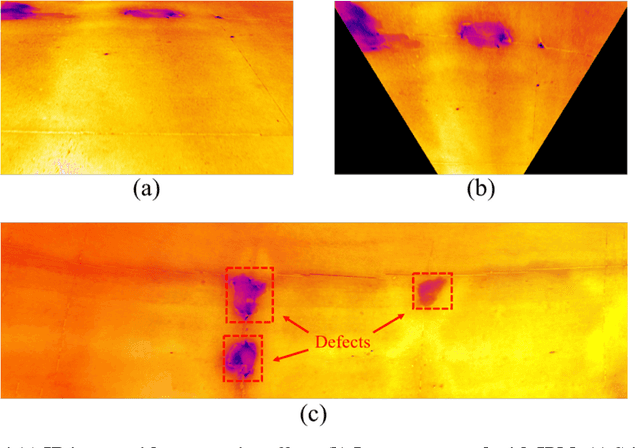
UAVs showed great efficiency on scanning bridge decks surface by taking a single shot or through stitching a couple of overlaid still images. If potential surface deficits are identified through aerial images, subsequent ground inspections can be scheduled. This two-phase inspection procedure showed great potentials on increasing field inspection productivity. Since aerial and ground inspection images are taken at different scales, a tool to properly fuse these multi-scale images is needed for improving the current bridge deck condition monitoring practice. In response to this need a data fusion platform is introduced in this study. Using this proposed platform multi-scale images taken by different inspection devices can be fused through geo-referencing. As part of the platform, a web-based user interface is developed to organize and visualize those images with inspection notes under users queries. For illustration purpose, a case study involving multi-scale optical and infrared images from UAV and ground inspector, and its implementation using the proposed platform is presented.
Detecting Concrete Abnormality Using Time-series Thermal Imaging and Supervised Learning
Apr 15, 2018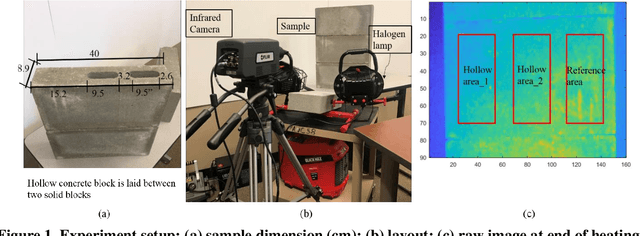
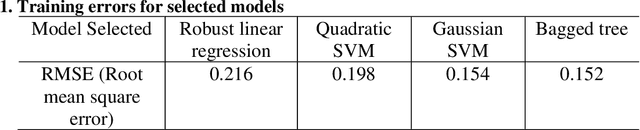
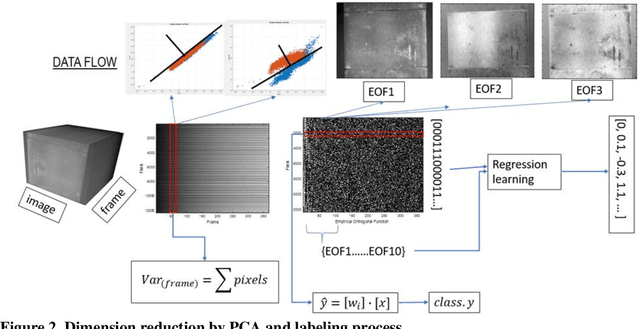
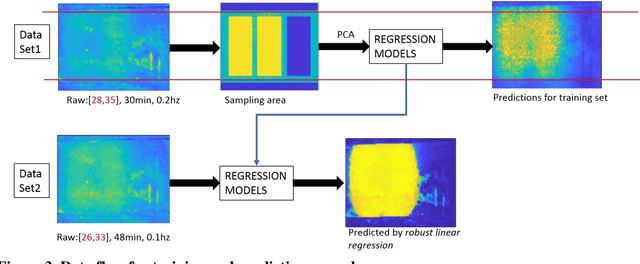
Nondestructive detecting defects (NDD) in concrete structures have been explored for decades. Although limited successes were reported, major limitations still exist. The major limitations are the high noises to signal ratio created from the environmental factors, such as cloud, shadow, water, surface texture etc. and the decision making still relies on the engineering judgment of interpretation of image content. Time-series approach, such as principle component thermography approach has been experimented with some improved results. Recent progress in image processing using machine learning approach made it possible for detecting defects thermal features in more quantitative ways. In this paper, we provide a procedure to represent the thermal feature in the time domain by principal component analysis and regress the prediction of detection by two schemes of supervised learning models. Three independent experiments were conducted in a similar laboratory setup but varied in conditions to illustrate the performance and generalization of models. Results showed the effectiveness for the detection purpose with appropriate tuning for parameters. Future studies will focus on implementing more sophisticated structured models to handle more realistic cases under natural conditions.