 Add to Chrome
 Add to Firefox
 Add to Edge
Dynamic Multi-Byte Prediction With Hierarchical Language Models
Aug 16, 2026
Byte-level hierarchical language models (LMs) have recently emerged as a robust alternative to their popular counterparts that use subword tokenization. However, generating one byte at a time remains a bottleneck for inference speed. To address this, we introduce multi-byte prediction (MBP), which generates multiple bytes in parallel, speeding up inference with minimal performance impact and no additional parameters. MBP builds on the popular multi-token prediction (MTP) paradigm with two crucial innovations. First, we introduce a variable-length prediction window that aligns with the latent tokens, or segments, of a hierarchical LM. Second, we implement a novel attention-masking scheme that enables parallel byte prediction without violating causality. We show that multi-byte prediction strikes a Pareto-optimal trade-off across multiple generative tasks, instruction following, question answering, summarization, and machine translation, achieving the best trade-off between performance and inference throughput.

Afrispeech-Dialog: A Benchmark Dataset for Spontaneous English Conversations in Healthcare and Beyond
Feb 06, 2025
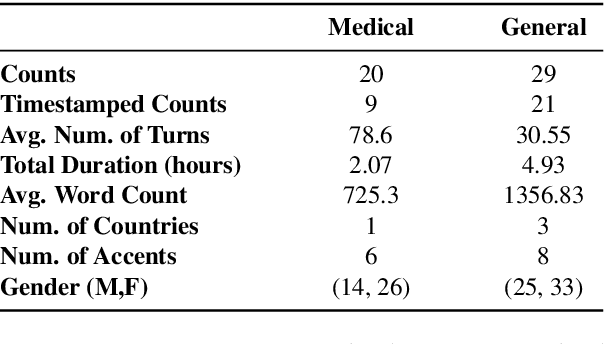
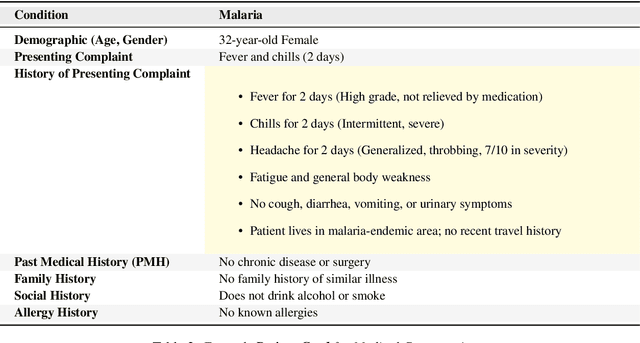
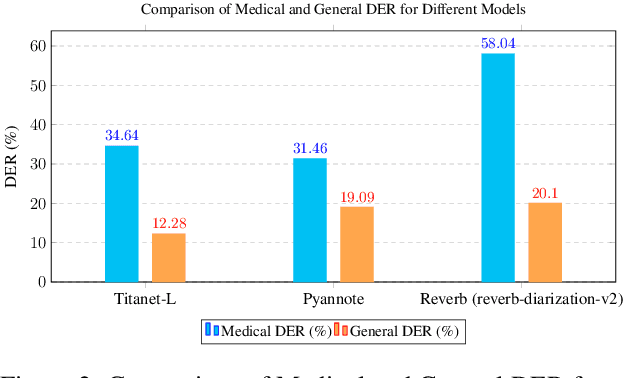
Speech technologies are transforming interactions across various sectors, from healthcare to call centers and robots, yet their performance on African-accented conversations remains underexplored. We introduce Afrispeech-Dialog, a benchmark dataset of 50 simulated medical and non-medical African-accented English conversations, designed to evaluate automatic speech recognition (ASR) and related technologies. We assess state-of-the-art (SOTA) speaker diarization and ASR systems on long-form, accented speech, comparing their performance with native accents and discover a 10%+ performance degradation. Additionally, we explore medical conversation summarization capabilities of large language models (LLMs) to demonstrate the impact of ASR errors on downstream medical summaries, providing insights into the challenges and opportunities for speech technologies in the Global South. Our work highlights the need for more inclusive datasets to advance conversational AI in low-resource settings.