 Add to Chrome
 Add to Firefox
 Add to Edge
Plan2Cleanse: Test-Time Backdoor Defense via Monte-Carlo Planning in Deep Reinforcement Learning
May 10, 2026
Ensuring the security of reinforcement learning (RL) models is critical, particularly when they are trained by third parties and deployed in real-world systems. Attackers can implant backdoors into these models, causing them to behave normally under typical conditions, but execute malicious behaviors when specific triggers are activated. In this work, we propose Plan2Cleanse, a test-time detection and mitigation framework that adapts Monte Carlo Tree Search to efficiently identify and neutralize RL backdoor attacks without requiring model retraining. Our approach recasts backdoor detection as a planning problem, enabling systematic exploration of temporally extended trigger sequences while maintaining black-box access to the target policy. By leveraging the detection results, Plan2Cleanse can further achieve efficient mitigation through tree-search preventive replanning. We evaluated our method in competitive MuJoCo environments, simulated O-RAN wireless networks, and Atari games. Plan2Cleanse achieves substantial improvements, increasing trigger detection success rates by more than 61.4 percentage points in stealthy O-RAN scenarios and improving win rates from 35\% to 53\% in competitive Humanoid environments. These results demonstrate the effectiveness of our test-time defense approach and highlight the importance of proactive defenses against backdoor threats in RL deployments. Our implementation is publicly available at https://github.com/rl-bandits-lab/RL-Backdoor.

Communications and Networking Technologies for Intelligent Drone Cruisers
Sep 25, 2019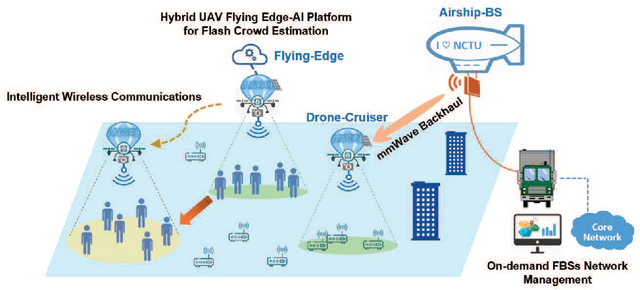
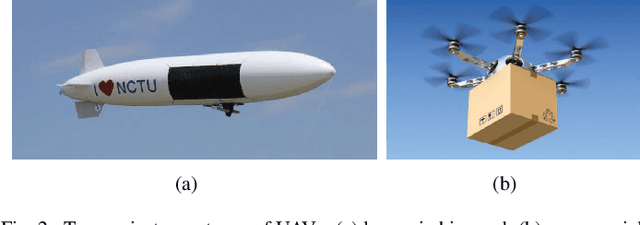
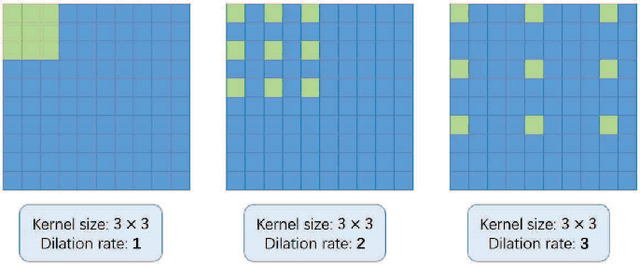
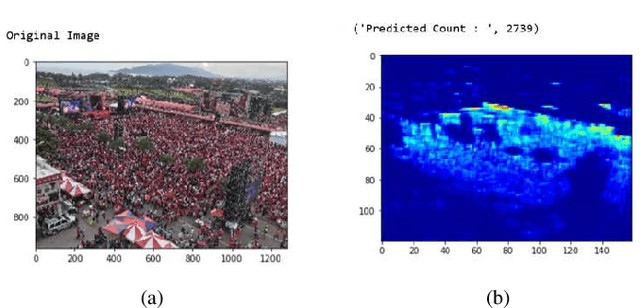
Future mobile communication networks require an Aerial Base Station (ABS) with fast mobility and long-term hovering capabilities. At present, unmanned aerial vehicles (UAV) or drones do not have long flight times and are mainly used for monitoring, surveillance, and image post-processing. On the other hand, the traditional airship is too large and not easy to take off and land. Therefore, we propose to develop an "Artificial Intelligence (AI) Drone-Cruiser" base station that can help 5G mobile communication systems and beyond quickly recover the network after a disaster and handle the instant communications by the flash crowd. The drone-cruiser base station can overcome the communications problem for three types of flash crowds, such as in stadiums, parades, and large plaza so that an appropriate number of aerial base stations can be accurately deployed to meet large and dynamic traffic demands. Artificial intelligence can solve these problems by analyzing the collected data, and then adjust the system parameters in the framework of Self-Organizing Network (SON) to achieve the goals of self-configuration, self-optimization, and self-healing. With the help of AI technologies, 5G networks can become more intelligent. This paper aims to provide a new type of service, On-Demand Aerial Base Station as a Service. This work needs to overcome the following five technical challenges: innovative design of drone-cruisers for the long-time hovering, crowd estimation and prediction, rapid 3D wireless channel learning and modeling, 3D placement of aerial base stations and the integration of WiFi front-haul and millimeter wave/WiGig back-haul networks.